

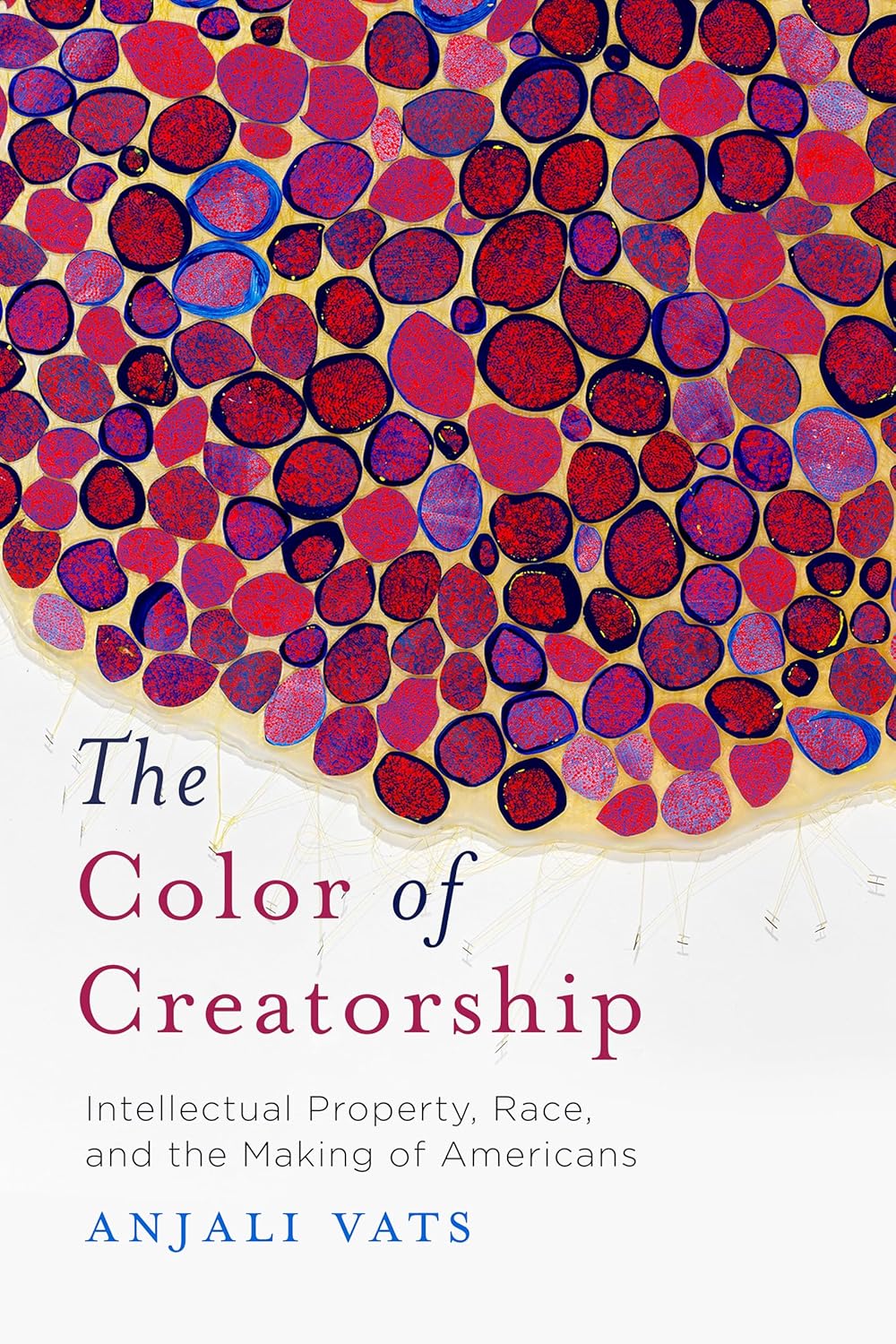
The Color of Creatorship: Intellectual Property, Race, and the Making
The Color of Creatorship: Intellectual Property, Race, and the Making
Price subject to change. Tap below for current.
Couldn't load pickup availability
In this review of The Color of Creatorship, the book proves essential for readers seeking to understand how legal doctrines around copyright, trademark, and patents have shaped American ideas of race and citizenship. Anjali Vats offers a sustained historical argument showing that debates over intellectual property did more than protect inventions and works - they helped define who counts as a legitimate creator and who is cast as an infringer. For scholars, activists, and law readers, the book's archival depth and critical framing make it a provocative, research-driven study worth reading.
Key Features
- Historical breadth: Traces intellectual property debates from 1790 onward, helping readers see long-term patterns in legal and cultural thinking.
- Interdisciplinary approach: Uses archival, legal, political, and popular culture texts to connect law with everyday ideas about labor and belonging.
- Critical race framework: Offers a theory of critical race intellectual property that explains how race shaped the definition of the citizen-creator.
- Case-driven analysis: Examines key moments in IP history to show continuity in racialized judgments about creators and infringers.
- Focus on civic identity: Historicizes the figure of the white male maker to reveal how IP discourse helped produce concepts of the good and bad citizen.
Who It's For
Scholars of law, history, sociology, and race studies will find this book especially useful as a rigorous study linking legal doctrine to broader social meanings. Graduate students and instructors can assign chapters to spark discussions about how legal categories shape cultural hierarchies.
Readers looking for a practical how-to on filing patents or trademarks should look elsewhere; this is a critical, historical academic work rather than a technical guide. General audiences comfortable with scholarly analysis will get more from it than those expecting light popular reading.
Pros & Cons
Pros
- Careful archival research provides strong primary-source grounding for its claims.
- Clear argument that ties intellectual property law to constructions of race and citizenship.
- Interdisciplinary evidence makes the book relevant across fields, from law to cultural studies.
Cons
- Its academic tone and dense legal history may be challenging for casual readers seeking a lighter overview.
Specifications
| Title | The Color of Creatorship: Intellectual Property, Race, and the Making of Americans |
| Author | Anjali Vats |
| Subject areas | Intellectual property, race, citizenship, legal history |
| Historical range | Key moments since 1790 |
| Approach | Archival, legal, political, and popular culture analysis |
| Intended audience | Scholars, students, researchers in law and social sciences |
Our Verdict
The Color of Creatorship is a significant scholarly contribution that demonstrates how intellectual property law has helped shape racialized ideas of creator and citizen. Readers who want a historically grounded, interdisciplinary critique of law and race will find strong value here; its archival rigor and theoretical clarity make it a worthwhile purchase for academic libraries and course syllabi.
Frequently Asked Questions
Does this book focus on a single branch of intellectual property?
Answer. No, it examines copyright, trademark, and patent discourses together to show their combined effects on race and citizenship.
Is the book primarily archival or theoretical?
Answer. It combines archival research with theoretical work, offering a theory of critical race intellectual property grounded in primary sources.
Who will benefit most from reading this book?
Answer. Legal scholars, historians, sociologists, and advanced students interested in law and race will gain the most from its arguments.
Editor's Take
Anjali Vats offers a rigorously researched, interdisciplinary study showing how intellectual property law helped shape racialized ideas of creator and citizen; recommended for scholars and advanced students interested in law and race.

Recently viewed
Recently viewed products will appear here as customers browse the store.