

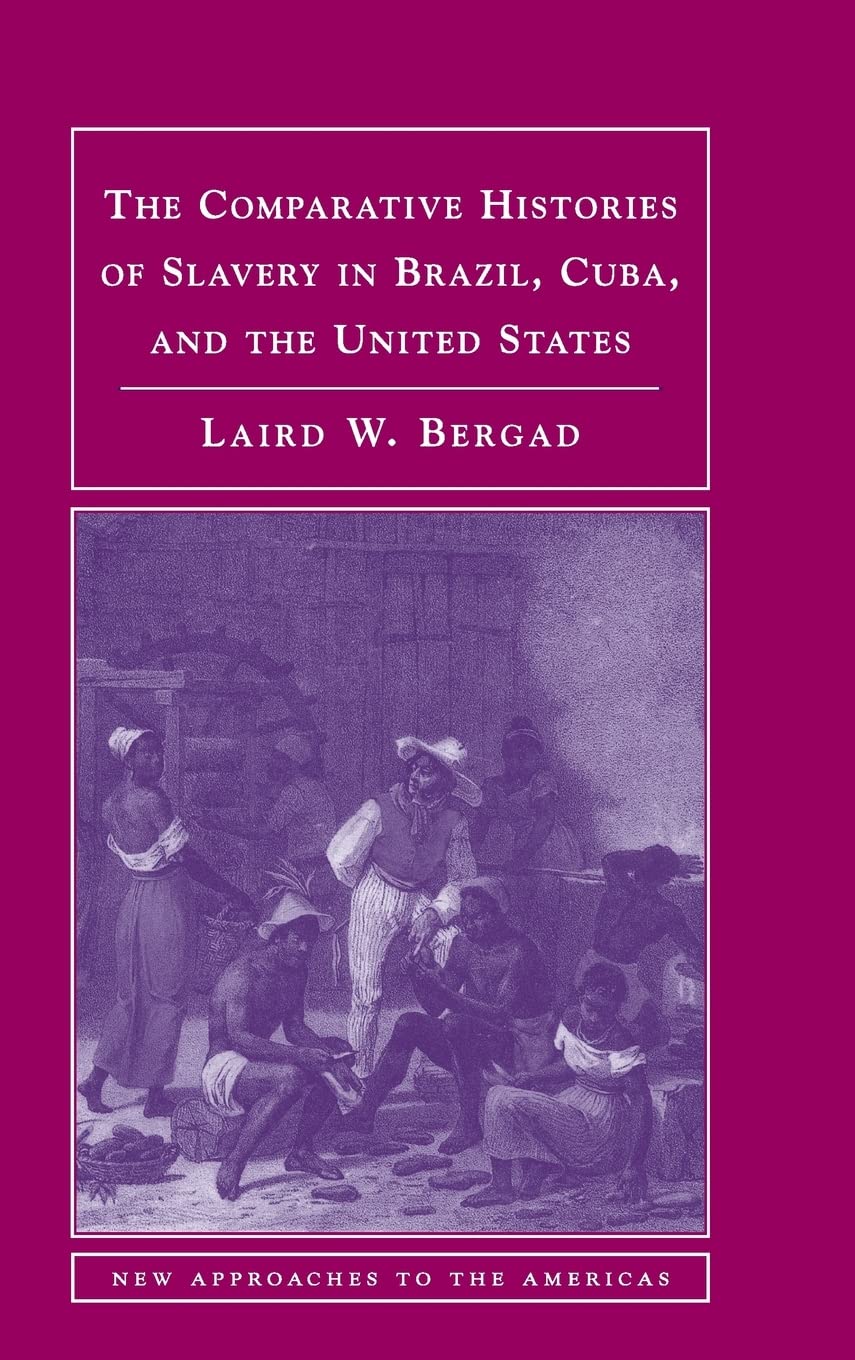
The Comparative Histories of Slavery in Brazil, Cuba, and the United
The Comparative Histories of Slavery in Brazil, Cuba, and the United
Price subject to change. Tap below for current.
Couldn't load pickup availability
In this review of The Comparative Histories of Slavery in Brazil, Cuba, and the United States, the book is recommended for readers who want a concise, comparative introduction to racial slavery across three major American societies. The biggest reason to buy is its systematic, side-by-side approach: it surveys slavery in Brazil, Cuba, and the United States with focused chapters on slave narratives, demography, economy, culture, resistance, and the causes of abolition, giving readers a single-volume framework to understand both shared patterns and national differences.
Key Features
- Comparative scope: Presents a unified look at slavery in Brazil, Cuba, and the United States so readers can trace parallels and contrasts across the three societies.
- Topical chapters: Each chapter concentrates on a major theme such as demography, economy, culture, and resistance, helping readers find focused analysis on specific aspects of slavery.
- Historical introduction: Sets early colonial timelines clearly, explaining when slavery took root in Brazil and Cuba and how it later shaped British colonial Virginia.
- Accessible synthesis: Written as an introductory history, the book is suitable for students and general readers who need a readable overview rather than a narrowly specialized monograph.
- First systematic survey: Offers the value of being the first work to treat these three nations in a systematic comparative fashion, useful for classroom use and comparative research starts.
Who It's For
The book is best for undergraduate students, instructors seeking a single comparative text, and general readers interested in Atlantic world history who want structured, theme-based chapters rather than a single-country deep dive. Historians beginning comparative projects will find its organized approach useful as a starting point.
Readers looking for exhaustive archival detail, extended case studies of local communities, or a heavily theoretical historiography should look elsewhere; this volume is designed as an introductory, synthetic survey rather than a specialized research volume.
Pros & Cons
Pros
- Clear comparative framework that highlights similarities and differences among Brazil, Cuba, and the United States.
- Well organized by theme, making it simple to locate discussion of narratives, demography, economy, culture, and resistance.
- Accessible tone suitable for classroom adoption and general readers seeking an overview.
Cons
- As an introductory survey, it may not satisfy readers seeking deep archival detail or exhaustive local studies.
Specifications
| Title | The Comparative Histories of Slavery in Brazil, Cuba, and the United States |
| Series | New Approaches to the Americas |
| Author | Laird Bergad |
| Scope | Comparative history of slavery across three nations |
| Main topics | Slave narratives, demography, economy, culture, resistance, abolition |
| Audience | Undergraduates, instructors, general readers |
Our Verdict
This volume is a strong value for readers who need a single, readable comparative introduction to slavery in the Americas; its organized chapters and thematic coverage make it a practical classroom text and a helpful starting point for comparative research on slavery, while specialists will likely supplement it with more focused studies.
Frequently Asked Questions
Does this book compare slavery in all three countries directly?
The book systematically surveys Brazil, Cuba, and the United States in parallel, with chapters that address common themes across the three societies.
Is this suitable for undergraduate courses?
Yes. Its accessible synthesis and thematic chapters make it appropriate as a primary or supplementary text in undergraduate history courses.
Will it provide detailed local case studies?
No. It is an introductory, comparative survey and does not focus on exhaustive local archival case studies.
Editor's Take
A readable, well organized comparative introduction to slavery in Brazil, Cuba, and the United States that works well for students and instructors as a thematic survey, though specialists may need deeper case studies.

Recently viewed
Recently viewed products will appear here as customers browse the store.