

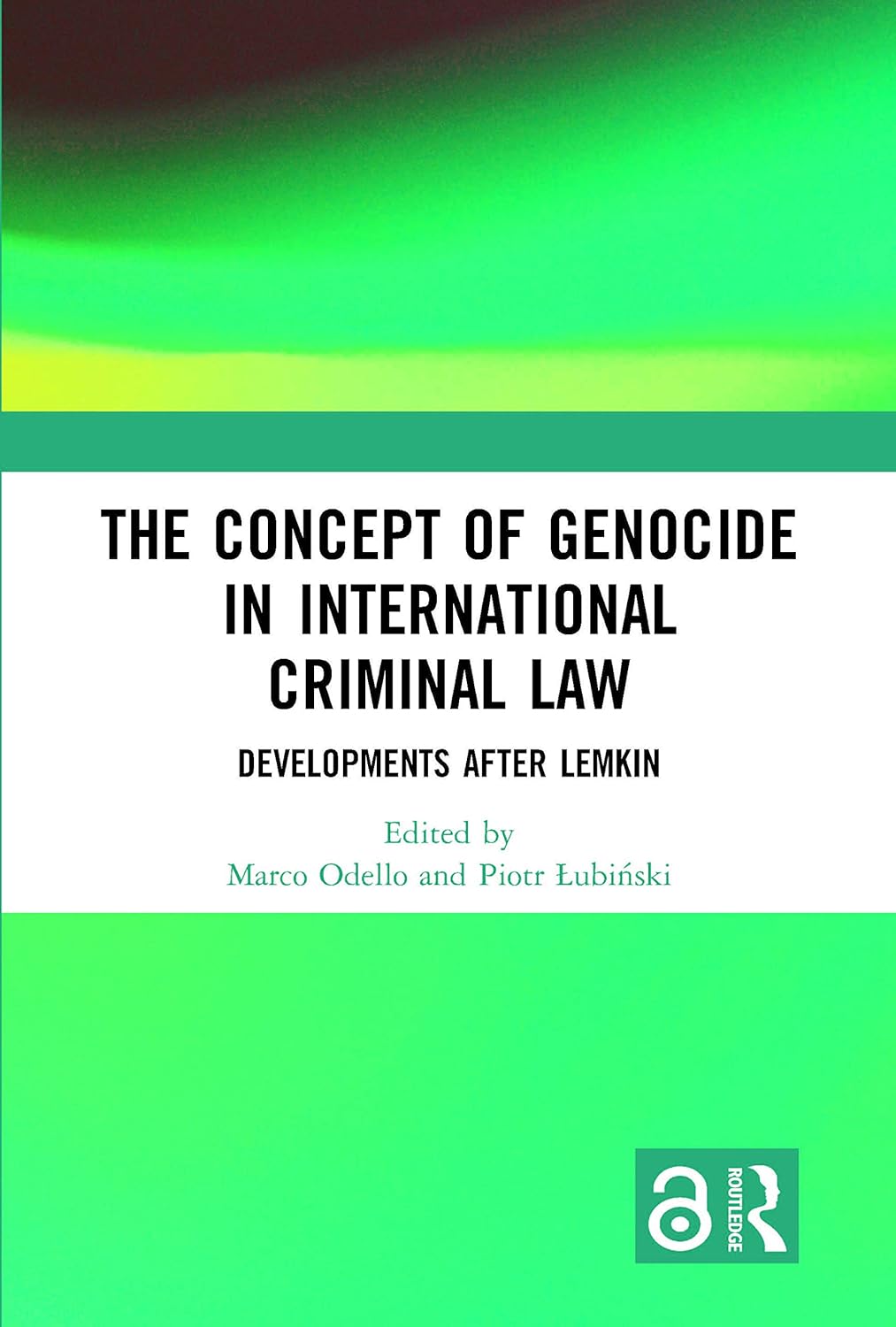
The Concept of Genocide in International Criminal Law - Scholarly
The Concept of Genocide in International Criminal Law - Scholarly
Price subject to change. Tap below for current.
Couldn't load pickup availability
Our review of The Concept of Genocide in International Criminal Law finds it a focused, scholarly examination best suited to readers who want a thoughtful legal analysis rather than a general history. The book traces the origin of the genocide concept to Raphael Lemkin and evaluates how the 1948 Convention has been interpreted and might evolve under contemporary international criminal law. For students, researchers and practitioners seeking a concise critique of legal definitions and their application, this volume provides clear historical grounding and reasoned argumentation.
Key Features
- Historical foundation: The book explains Lemkin's formulation of genocide and places the 1948 Convention in its historical context, helping readers understand the origin of the legal term.
- Legal interpretation: It examines how courts and tribunals have applied the definition, offering readers a practical view of interpretive challenges in international criminal law.
- Contemporary relevance: The authors assess emerging issues and possible developments, making the discussion relevant to current debates about expanding or refining the definition.
- Comparative perspective: The volume looks at how the concept might be used in different contexts, which benefits comparative law students and policymakers considering cross-jurisdictional implications.
- Concise critique: Rather than a sweeping textbook, the book presents a focused review of key legal issues, useful for readers who need a compact, argument-driven analysis.
Who It's For
This book is aimed at law students, academics, legal practitioners and policy analysts who require a rigorous look at the definition of genocide and its application under international criminal law. The review-style approach makes it a good supplemental text for graduate courses on international criminal law and genocide studies.
Readers looking for a broad, narrative history of events, a survivor memoir, or an accessible popular history of the Holocaust may prefer a different, more general audience title. This is a specialized legal examination rather than a general historical survey.
Pros & Cons
Pros
- Clear linkage to Lemkin's original concept provides valuable historical perspective.
- Focused analysis of the 1948 Convention and interpretive issues helps legal readers assess current doctrine.
- Discussion of emerging developments makes the book timely for ongoing policy debates.
Cons
- Its narrow, law-centered approach may feel dense to readers seeking general historical narrative or broader contextual storytelling.
Specifications
| Title | The Concept of Genocide in International Criminal Law |
| Authors | Marco Odello, Piotr ubinski |
| Subject | Genocide and international criminal law |
| Focus | Interpretation of the 1948 Convention and Lemkin's ideas |
| Intended readers | Law students, academics, practitioners |
| Approach | Scholarly review and legal analysis |
Our Verdict
The Concept of Genocide in International Criminal Law is a concise, well-argued legal review that scholars and practitioners should buy for its clear treatment of Lemkin's ideas and the 1948 Convention. It is good value for readers seeking focused legal analysis, though those wanting broad historical narrative should look elsewhere.
Frequently Asked Questions
Does this book cover Raphael Lemkin's original concept?
Yes; the volume traces Lemkin's formulation and compares it to the 1948 Convention definition.
Is the book suitable for non-lawyers?
It is written for readers with some familiarity with legal concepts; non-lawyers may find parts dense but can follow the main arguments.
Does it discuss modern developments in international criminal law?
Yes; the authors consider emerging issues and possible developments in the interpretation and application of genocide law.
Editor's Take
A concise, well-argued legal review that is recommended for scholars and practitioners who want a focused analysis of Lemkin's ideas and the 1948 Convention; not ideal for readers seeking broad historical narrative.

Recently viewed
Recently viewed products will appear here as customers browse the store.