

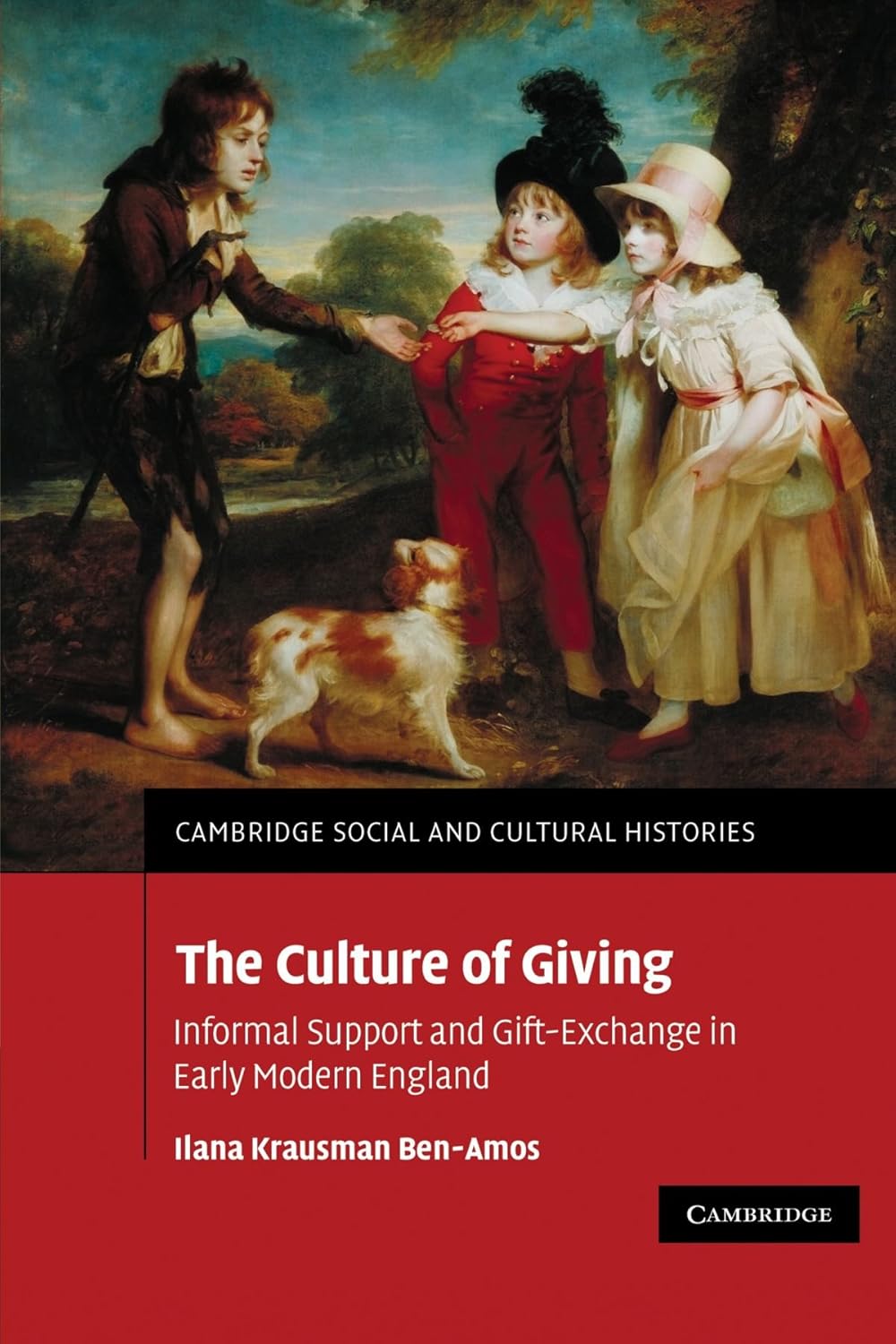
The Culture of Giving: Informal Support and Gift-Exchange in Early
The Culture of Giving: Informal Support and Gift-Exchange in Early
Price subject to change. Tap below for current.
Couldn't load pickup availability
In this review of The Culture of Giving readers get a focused historical analysis aimed at scholars and keen readers of social history; the book's single biggest reason to buy is its sustained, research-driven argument that informal gift-giving and personal obligations did not simply decline but were transformed across late 16th to early 18th century England. The reviewer finds the work particularly useful for those who want a nuanced view of charity, gifts and social networks that connects archival evidence to broader theories of reciprocity and social obligation.
Key Features
- Period coverage: Examines developments from the late sixteenth to the early eighteenth century, giving a long-term perspective on changing practices of informal support.
- Theoretical framing: Merges detailed historical research with theories of gift-giving to interpret the motivations and meanings behind exchanges.
- Social networks focus: Analyzes gift-exchange within families, associations and local groups, showing how obligations operated across different social circles.
- State and social change: Explores how the Reformation, poor laws and state formation interacted with informal giving to reshape support mechanisms.
- Urban and market contexts: Considers the effects of market expansion and urbanization as catalysts that altered practices of charity and mutual aid.
Who It's For
The Culture of Giving is best for historians, postgraduate students and informed general readers interested in early modern England, social welfare history and the comparative study of charity. Its combination of archival detail and theoretical discussion makes it a strong choice for seminar reading or for researchers tracing the evolution of social obligations.
Readers seeking a concise survey or a popular, narrative-driven history may find the book dense; those wanting quantitative modern welfare analysis or contemporary policy prescriptions should look elsewhere, as the work is focused on qualitative historical interpretation.
Pros & Cons
Pros
- Provides a comprehensive, long-range view that reinterprets assumed decline in voluntary giving through careful archival evidence.
- Bridges history and social theory, offering frameworks useful for further scholarly discussion of reciprocity and obligation.
- Examines multiple social spaces-families, associations and urban contexts-so readers see how practices varied by setting.
Cons
- The book's scholarly, analytical style can be dense for casual readers not familiar with historiography or theoretical approaches.
Specifications
| Title | The Culture of Giving: Informal Support and Gift-Exchange in Early Modern England |
| Series | Cambridge Social and Cultural Histories, Series Number 12 |
| Author | Ilana Krausman Ben-Amos |
| Geographic focus | England |
| Historical period | Late 16th to early 18th century |
| Main topics | Gift-giving, informal support, charity, social networks |
Our Verdict
Ilana Krausman Ben-Amos offers a rigorous reinterpretation of early modern English charity that will reward readers who want depth and scholarly argument; its value lies in reframing how informal support adapted amid religious, legal and economic change, making it a worthwhile purchase for students and researchers of social and cultural history.
Frequently Asked Questions
Does this book cover just churches and formal charity?
Answer. No, it focuses on informal support and gift-exchange across families, associations and local networks as well as interactions with formal institutions.
Is the book suitable for undergraduate courses?
Answer. Yes for advanced undergraduates in social or cultural history, though instructors may need to provide context for theoretical sections.
Does the author use primary sources?
Answer. Yes, the work is grounded in archival research and uses primary material to support its arguments about changing practices.
Editor's Take
Ilana Krausman Ben-Amos offers a rigorous reinterpretation of informal giving in early modern England, valuable for students and researchers who want a theory-informed, archival study of charity and social obligations.

Recently viewed
Recently viewed products will appear here as customers browse the store.