

The Digital Transformation of Labor - Investigative Academic
The Digital Transformation of Labor - Investigative Academic
Price subject to change. Tap below for current.
Couldn't load pickup availability
In this review of The Digital Transformation of Labor the authors examine whether digitalization reshapes job autonomy and market opportunities. The book is a collection of studies grounded in the debate started by a 2016 OECD report and is best for readers seeking a measured, research-driven account rather than popular futurism. The bottom line: this volume offers rigorous, evidence-focused perspectives on who benefits and who is at risk from digital change, making it a useful reference for researchers, policy makers, and advanced students exploring digital transformation in labor markets.
Key Features
- Research-driven approach: Each chapter presents empirical or conceptual studies that investigate how digitalization affects labor autonomy and task allocation.
- Policy relevance: The book synthesizes findings that can inform policy debates about which groups gain or lose from technological change.
- Comparative perspectives: Contributors consider multiple actors and sectors to illuminate varied impacts across the labor market.
- OECD-linked framing: The volume uses the 2016 OECD report as a starting point to assess competing claims about job creation versus labor-saving effects.
- Academic rigor: Methods and evidence are foregrounded, providing citations and analyses that support follow-up research.
Who It's For
The Digital Transformation of Labor is aimed at academics, labor economists, policy analysts, and graduate students who want a critical, evidence-based examination of technology and work. Its tone and structure assume familiarity with economic and labor-market concepts and a tolerance for scholarly exposition.
Readers seeking a practitioner guide, quick predictions about specific occupations, or light popular summaries should look elsewhere; the book is not a how-to manual for businesses or a general-audience futurist manifesto.
Pros & Cons
Pros
- Clear linkage to an influential OECD starting point offers a well-defined research question and comparative framing.
- Focus on which actors benefit or are put at risk gives practical value for policy and labor strategy discussions.
- Emphasis on autonomy and concrete labor functions helps translate technological change into workplace consequences.
Cons
- The academic style and depth of analysis may be dense for readers without a background in labor economics or related fields.
Specifications
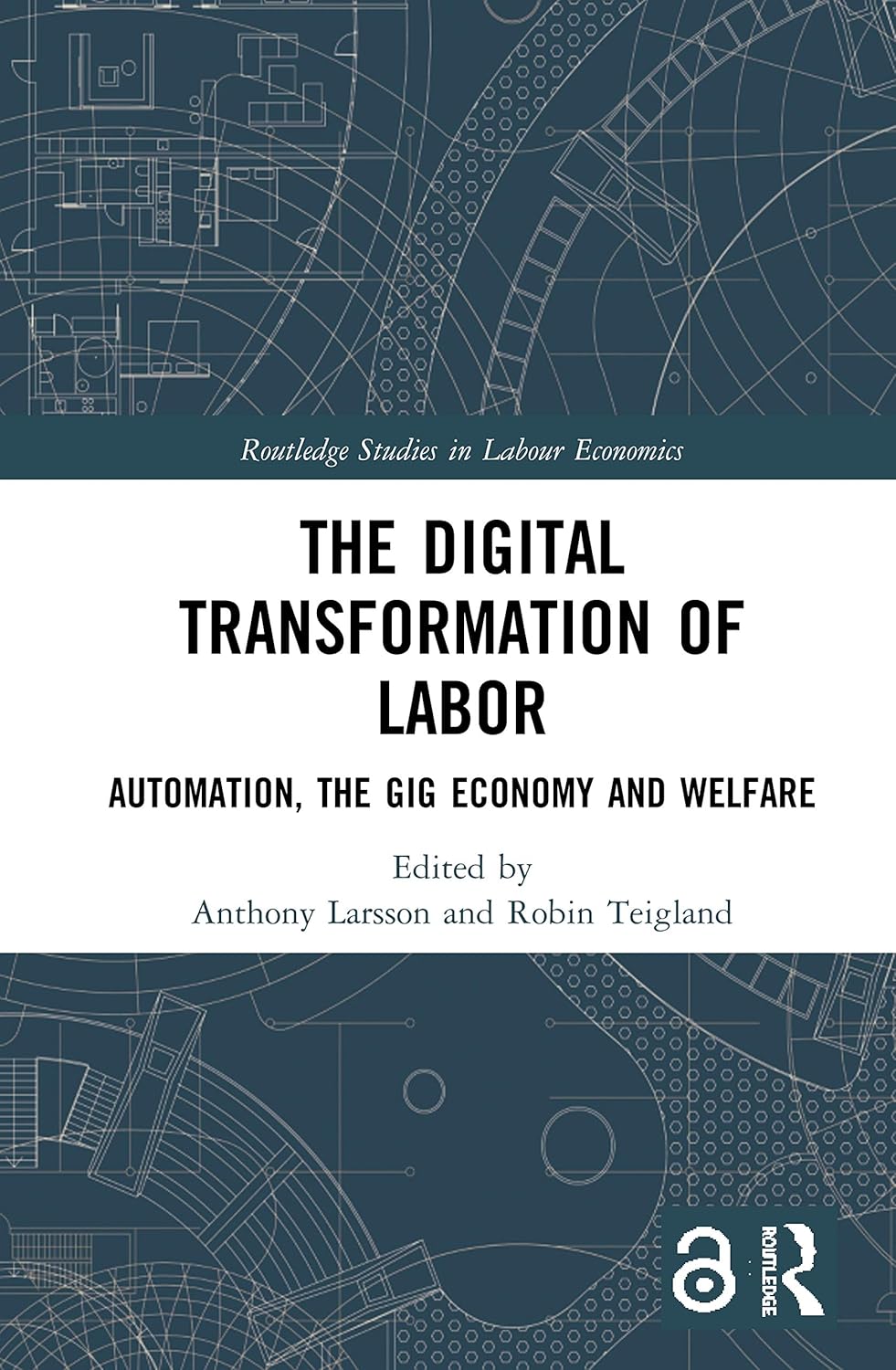
| Title | The Digital Transformation of Labor |
| Series | Routledge Studies in Labour Economics |
| Editors/Authors | Anthony Larsson, Robin Teigland |
| Focus | Impact of digitalization on labor autonomy and job opportunities |
| Starting point | 2016 OECD report on technology and labor |
| Audience | Researchers, policy makers, advanced students |
Our Verdict
The Digital Transformation of Labor is a thoughtful, research-oriented collection that is worth buying for those who need a nuanced, evidence-based exploration of how digital technologies alter job autonomy and labor-market winners and losers. It offers good value as a reference for scholars and policy analysts who want grounded perspectives rather than sensational claims.
Frequently Asked Questions
Does this book offer policy recommendations?
Yes, the studies emphasize implications for policy by identifying which groups benefit or are at risk from digitalization and suggesting areas for intervention.
Is this volume suitable for non-academic readers?
It is primarily academic in style; non-specialist readers may find the analysis dense and should expect scholarly exposition rather than popular summaries.
What research is the book based on?
The volume builds on empirical and conceptual studies and explicitly uses the 2016 OECD report as a framing device for its investigations.
Editor's Take
A thoughtful, research-oriented collection useful for scholars and policy analysts, offering evidence-based insights into how digitalization affects job autonomy and labor-market winners and losers.

Recently viewed
Recently viewed products will appear here as customers browse the store.