

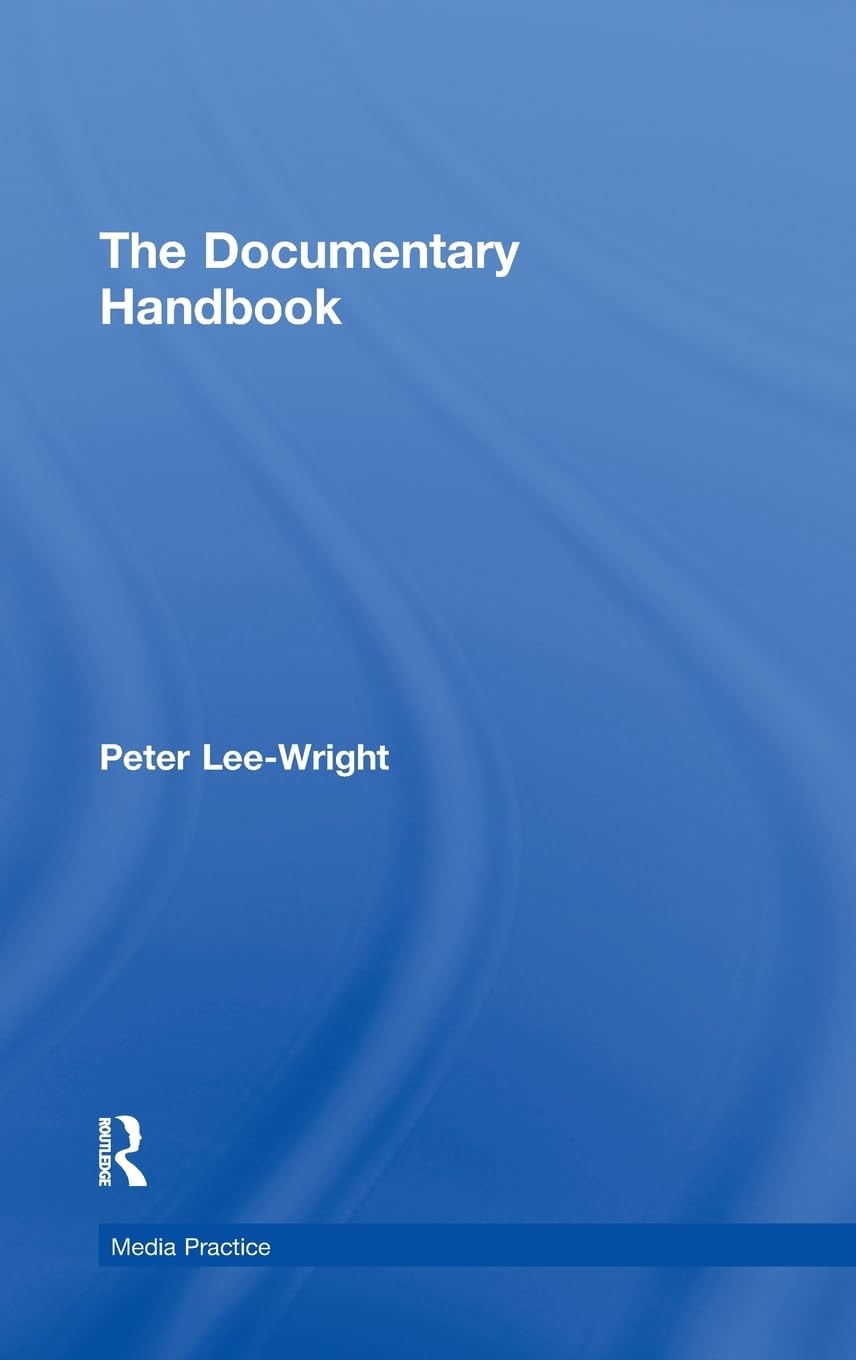
The Documentary Handbook - Essential Guide to Factual Media
The Documentary Handbook - Essential Guide to Factual Media
Price subject to change. Tap below for current.
Couldn't load pickup availability
In this review of The Documentary Handbook, the bottom line is simple: this is essential reading for anyone who wants a critical, practical grounding in documentary and factual media. Peter Lee-Wright combines historical perspective with hands-on guidance so the book works both as a classroom text and a field manual. Readers will appreciate a clear focus on how documentary evolved into a dominant television and new media format and the craft knowledge needed to participate in todays industry.
Key Features
- Critical history: Traces the evolution of documentary from screen art to a core television genre so readers understand contemporary forms in context.
- Industry perspective: Explains the transformation of means of production through economic and technical change, useful for professionals planning projects.
- Practical craft guidance: Offers expert advice on complex skills in documentary practice that students and practitioners can apply to real productions.
- Coverage of factual formats: Maps the many types of factual TV programme and emerging new media forms to help adapt storytelling approaches.
- Accessible critique: Balances theory and practice so readers gain both critical awareness and actionable methods.
Who It's For
The Documentary Handbook is aimed at media students, documentary makers and television producers who need a critical introduction plus practical techniques to work in factual formats. It suits classroom use and early-career professionals wanting a single-volume guide that connects theory to production.
Those seeking a how-to only handbook of checklists and templates may find the balance of critical analysis and craft less focused on step-by-step workflows; similarly, readers wanting a pictorial or equipment-heavy manual should look elsewhere.
Pros & Cons
Pros
- Combines historical and contemporary context so readers gain a clear understanding of the documentary's changing place in media.
- Practical sections provide usable craft guidance for real-world production challenges.
- Useful for both classroom study and professional reference because of its critical and applied approach.
Cons
- Not a substitute for a pure technical manual with extensive equipment lists or templates.
Specifications
| Title | The Documentary Handbook |
| Author / Brand | Peter Lee-Wright |
| Focus | Documentary theory, practice and factual television |
| Uses | Academic text, professional reference |
| Coverage | History, production means, factual formats, new media |
Our Verdict
The Documentary Handbook is a strong, well-balanced resource for students and practitioners who want both critical perspective and practical guidance. Its value lies in linking evolution of the form to contemporary production realities, making it good value for anyone serious about documentary and factual media work.
Frequently Asked Questions
Is this book suitable for beginners?
Yes. It introduces key theory while offering practical craft advice that is accessible to newcomers.
Does it cover television as well as film documentary?
Yes. The book specifically charts the documentary's shift into television and a range of factual TV programmes.
Is it a technical equipment guide?
No. It focuses on theory and production practice rather than detailed gear lists or technical templates.
Editor's Take
The Documentary Handbook is a well-balanced resource that links documentary history to contemporary production practice, making it a valuable text for students and practitioners of factual media.

Recently viewed
Recently viewed products will appear here as customers browse the store.