

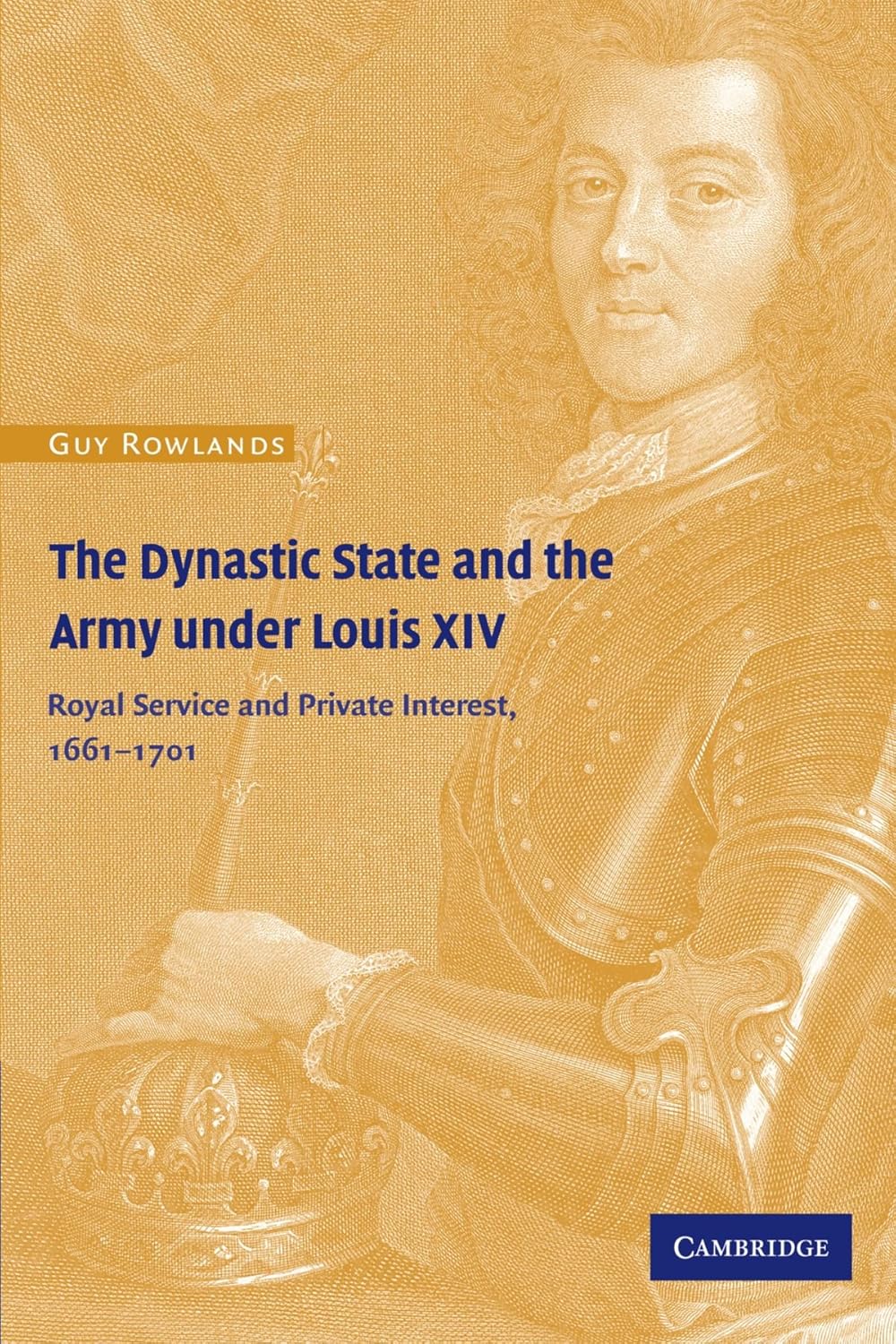
The Dynastic State and the Army under Louis XIV - Scholarly
The Dynastic State and the Army under Louis XIV - Scholarly
Price subject to change. Tap below for current.
Couldn't load pickup availability
Our review examines The Dynastic State and the Army under Louis XIV as a focused, archival study for readers who want a deep, contextual understanding of early modern military institutions. This book is best for historians and graduate students seeking an interpretation that treats the army as a political, social and economic organism; the single biggest reason to buy is the author's argument that royal accommodation of officer interests was central to army development under Louis XIV, built on extensive archival research and nuanced analysis.
Key Features
- Archival depth: The narrative is grounded in massive primary-source research, which gives empirical weight to the book's reinterpretation of army formation and officer motivations.
- Institutional perspective: Rowlands treats the army not only as a fighting force but as a political and social institution, clarifying how military structures reinforced Bourbon dynastic stability.
- Focus on officers: The book shows how the crown's efforts to satisfy the aspirations of officers shaped recruitment, promotion and the broader culture of service.
- Chronological clarity: Concentrating on 1661-1701 allows the author to trace developments across Louis XIV's personal rule without diluting the argument across later reforms.
- Interdisciplinary approach: Political, social and economic lenses are used together to explain military change, which benefits readers looking for synthesis rather than narrow military detail.
Who It's For
This book is ideal for academics, graduate students and serious readers of European history who want a rigorous, source-rich reinterpretation of the French army under Louis XIV and an explanation of how dynastic politics shaped military institutions. It will support research projects on state formation, officer culture and the interplay of private interest and royal policy.
Readers seeking a general-audience military narrative, a battlefield handbook, or an introductory survey for casual reading should look elsewhere; the prose and scope assume some prior familiarity with 17th-century French political history and historiographical debates.
Pros & Cons
Pros
- Thorough documentary research provides confidence in the central claims.
- Strong interpretive framework links military organization to dynastic politics and social aspiration.
- Clear chronological focus makes the argument coherent and traceable across four decades.
Cons
- The book's density and scholarly tone may be challenging for non-specialists.
Specifications
| Title | The Dynastic State and the Army under Louis XIV |
| Subtitle | Royal Service and Private Interest 1661-1701 |
| Series | Cambridge Studies in Early Modern History |
| Author | Guy Rowlands |
| Geographic focus | France |
| Historical period | 1661-1701 (personal rule of Louis XIV) |
Our Verdict
For scholars and advanced students of early modern Europe this is a valuable, well-evidenced work that reframes the French army as an instrument of dynastic governance shaped by the crown's engagement with officer aspirations. Its deep archival basis and interdisciplinary approach make it good value for research and graduate-level study, though casual readers may find it dense.
Frequently Asked Questions
Does this book rely on primary sources?
Yes, the study is based on massive archival research that underpins the main arguments about army development.
Is this a general military history or a scholarly reinterpretation?
It is a scholarly reinterpretation focusing on institutional, political and social factors rather than a general battlefield history.
Who benefits most from reading it?
Graduate students, historians and researchers interested in state formation, officer culture and 17th-century France will gain the most.
Editor's Take
A rigorous, archival reinterpretation that shows how Louis XIV's accommodation of officer aspirations shaped the French army; highly recommended for scholars and graduate students studying early modern state and military institutions.

Recently viewed
Recently viewed products will appear here as customers browse the store.