

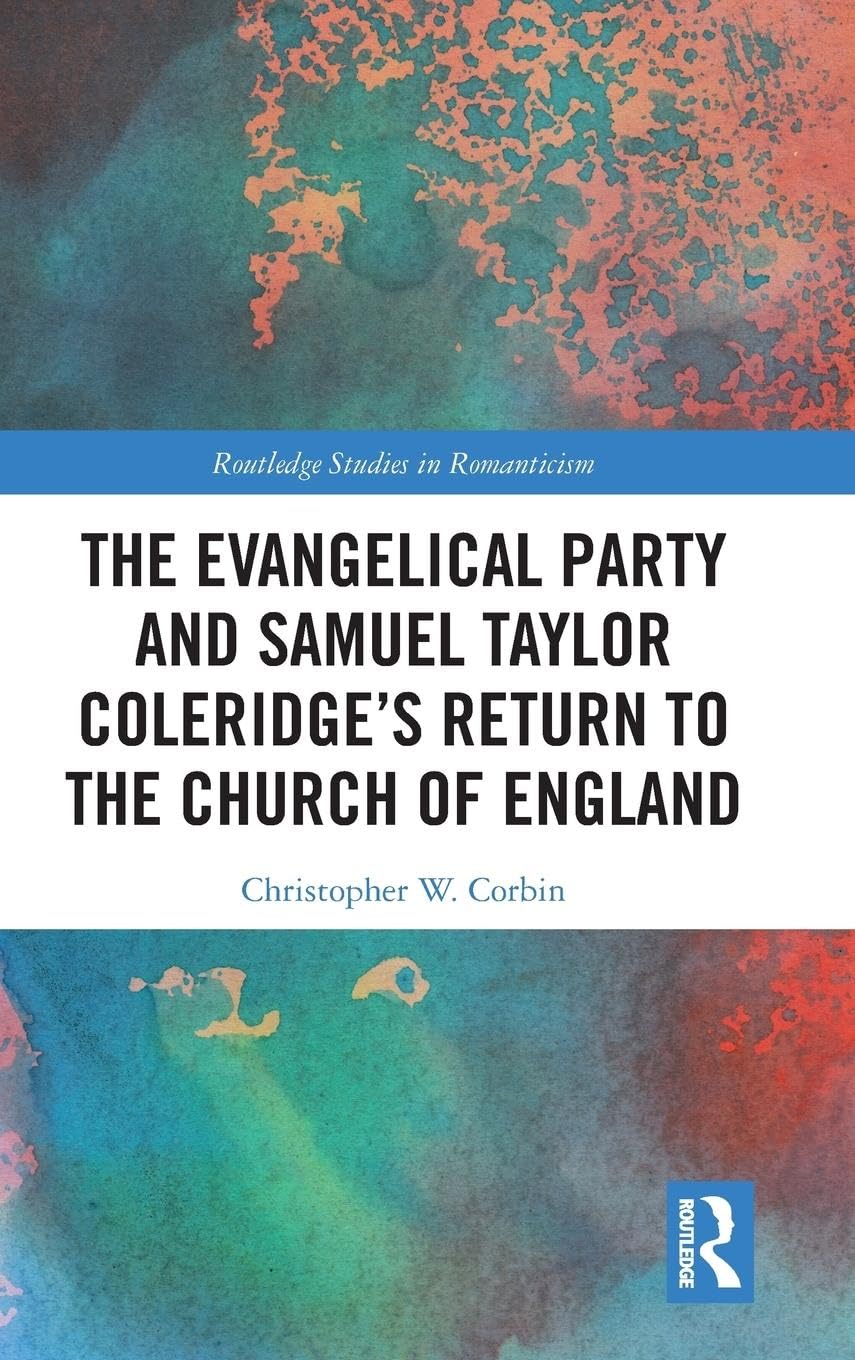
The Evangelical Party and Samuel Taylor Coleridges Return
The Evangelical Party and Samuel Taylor Coleridges Return
Price subject to change. Tap below for current.
Couldn't load pickup availability
In this review of The Evangelical Party and Samuel Taylor Coleridges Return to the Church of England, the reviewer finds a focused scholarly study best suited to readers of Romantic-era religious history. Christopher Corbin clarifies Coleridge's move from Unitarianism back to Anglicanism, arguing that his faith was a distinctive form of Christian orthodoxy closely aligned with moderate Anglican Evangelicalism; the single biggest reason to read it is its careful cultural approach to religious identity that treats language, networks, and practice as tools for locating Coleridge within his religious landscape.
Key Features
- Cultural approach: Corbin treats religious identity as culture, making it easier to see how language and networks shaped Coleridge's beliefs and practices.
- Reassessment of affiliation: The book situates Coleridge not simply by denominational labels but by identifiable movements, clarifying his alignment with moderate Anglican Evangelicalism.
- Focused scope: The study concentrates on Coleridge's return to the Church of England, providing depth rather than a diffuse biography.
- Historical context: Readers gain a clearer sense of the religious movements present in Coleridge's Britain and how they informed personal identity.
- Scholarly tone: The book offers argumentation and evidence aimed at specialists and advanced students interested in Romanticism and theology.
Who It's For
This book suits scholars, graduate students, and informed readers interested in Romantic-era religious history and the theological nuances of Samuel Taylor Coleridge. It is particularly useful for readers who value a cultural and network-based method of analysis over simple denominational biography.
Readers looking for a general Coleridge life story, an introduction for casual readers, or a broad survey of Anglican doctrine should look elsewhere, since the work prioritizes focused scholarly argument and assumes some prior familiarity with the period's religious vocabulary.
Pros & Cons
Pros
- Provides a precise account of Coleridge's religious identity by examining language and affiliation networks.
- Reframes the return to the Church of England as a move toward moderate Anglican Evangelicalism rather than simple orthodoxy.
- Well suited to specialists who want a targeted study of movements and period context.
Cons
- The focused, scholarly style may feel dense or narrowly aimed for casual readers or undergraduates.
Specifications
| Title | The Evangelical Party and Samuel Taylor Coleridges Return to the Church of England |
| Author | Christopher W Corbin |
| Series | Routledge Studies in Romanticism |
| Subject focus | Coleridge, religious identity, Anglican Evangelicalism |
| Approach | Cultural analysis of language, networks, beliefs, and practices |
| Intended audience | Scholars, graduate students, readers of literary criticism |
Our Verdict
Corbin's study is a valuable, tightly argued contribution for readers who want a nuanced understanding of Coleridge's religious position within early 19th-century British movements. Those engaged in Romantic studies or theological history will find it a rewarding, well-focused resource that reframes familiar assumptions about denominational labels.
Frequently Asked Questions
Does the book argue Coleridge became a conventional Anglican?
Corbin argues Coleridge accepted a form of Christian orthodoxy that was sui generis but closely aligned with moderate Anglican Evangelicalism rather than a simple conventional Anglican identity.
Is this book accessible to non-specialists?
The work is written in a scholarly tone and assumes familiarity with Romantic-era religious vocabulary, so non-specialists may find it dense.
What method does the author use to locate Coleridge's identity?
Corbin uses a cultural approach, examining language, networks of affiliation, beliefs, and practices to identify movements present in Coleridge's Britain.
Editor's Take
Corbin offers a focused, well-argued study that locates Coleridge within moderate Anglican Evangelicalism using cultural analysis; a strong choice for scholars of Romantic religious history.

Recently viewed
Recently viewed products will appear here as customers browse the store.