

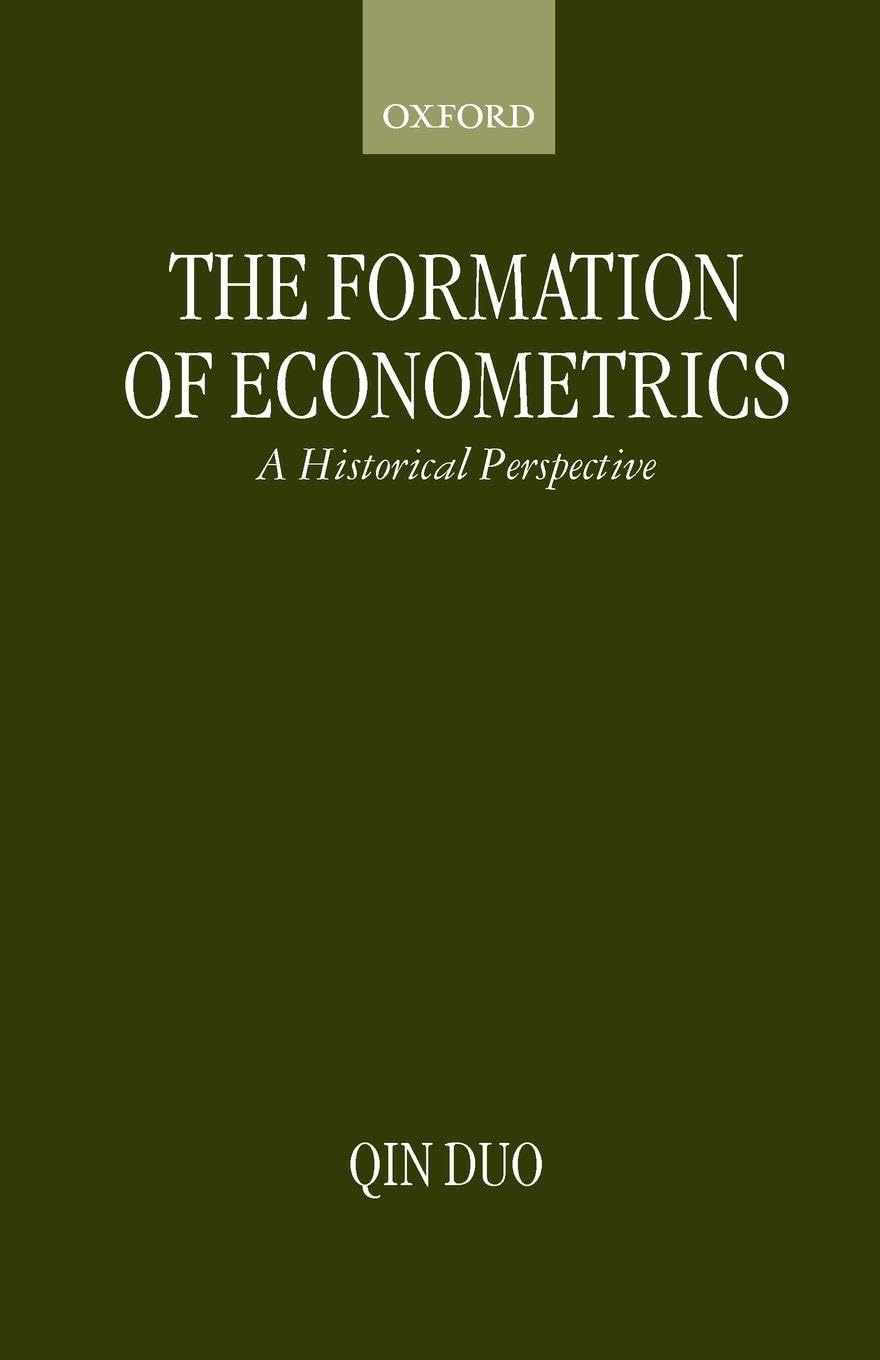
The Formation of Econometrics: A Historical Perspective - Scholarly
The Formation of Econometrics: A Historical Perspective - Scholarly
Price subject to change. Tap below for current.
Couldn't load pickup availability
In this review of The Formation of Econometrics: A Historical Perspective, the book is recommended for readers seeking a rigorous historical study of econometric thought and practice between 1930 and 1960. Duo Qin presents a focused examination of how mathematical and scientific processes were formalized to analyse economic problems, and the single biggest reason to read this work is its detailed tracing of the probability revolution and its incomplete legacy in econometric theory. The review highlights how the book helps scholars understand why certain methodological problems persisted.
Key Features
- Historical focus: Provides a concentrated study of the period 1930-1960, clarifying how earlier debates shaped later econometric practice.
- Theoretical analysis: Traces the formalization of mathematical and scientific processes, which helps readers see how theory influenced empirical work.
- Probability foundations: Examines the probability revolution of the early 1940s and explains why its incompleteness affected later methodological outcomes.
- Core issues covered: Discusses estimation, identification, testing, and model construction to show how foundational concerns were addressed in practice.
- Scholarly argument: Argues that incomplete theoretical shifts underlay various problems and failures, providing a coherent interpretive framework for historians and methodologists.
Who It's For
This book is best suited to graduate students, historians of economics, and econometricians who want a careful, literature-informed account of how econometric methods were formalized during a key institutional period. Researchers interested in the intellectual development of estimation and identification will find clear, scholarly discussion useful for situating technical advances in their historical context.
Readers seeking an introductory textbook, practitioner guide to modern software or a step-by-step applied manual should look elsewhere; the book is a historical and theoretical study rather than a how-to resource for applied modeling or contemporary computational techniques.
Pros & Cons
Pros
- Illuminates a crucial era in econometrics with focused historical and theoretical analysis.
- Explains the role of the probability revolution in shaping later methodologies, aiding conceptual clarity for scholars.
- Covers central topics such as estimation, identification, testing, and model specification in a historically grounded way.
- Offers an interpretive argument about why certain methodological failures occurred, useful for critical reflection.
Cons
- Not intended as a practical guide to modern econometric techniques, so it may disappoint readers seeking applied instruction.
- The focus on 1930-1960 limits coverage of later developments and contemporary methodological debates.
Specifications
| Title | The Formation of Econometrics: A Historical Perspective |
| Author | Duo Qin |
| Subject | History of econometrics and methodology |
| Period covered | 1930-1960 |
| Primary themes | Probability foundations, estimation, identification, testing, model specification |
| Audience | Graduate students, historians of economics, econometricians |
Our Verdict
For readers who want a serious, historically grounded account of how econometric theory developed, Duo Qin's study is a strong value: it clarifies the intellectual roots of common methodological problems and situates technical debates within their historical moment. It is recommended for scholars and advanced students rather than practitioners seeking applied instruction.
Frequently Asked Questions
Is this book a practical econometrics textbook?
No. It is a historical and theoretical analysis of the formation of econometric thought, not a how-to manual for applied modeling.
Which years does the book focus on?
The study concentrates on developments between 1930 and 1960, with special attention to the early 1940s probability revolution.
Who will benefit most from reading it?
Graduate students, historians of economics, and researchers interested in the conceptual and methodological history of econometrics will benefit most.
Editor's Take
Duo Qin's historical study clarifies how econometric theory and practice were formalized between 1930 and 1960, explaining the incomplete probability revolution and its effects; recommended for scholars and advanced students interested in methodological history.

Recently viewed
Recently viewed products will appear here as customers browse the store.