

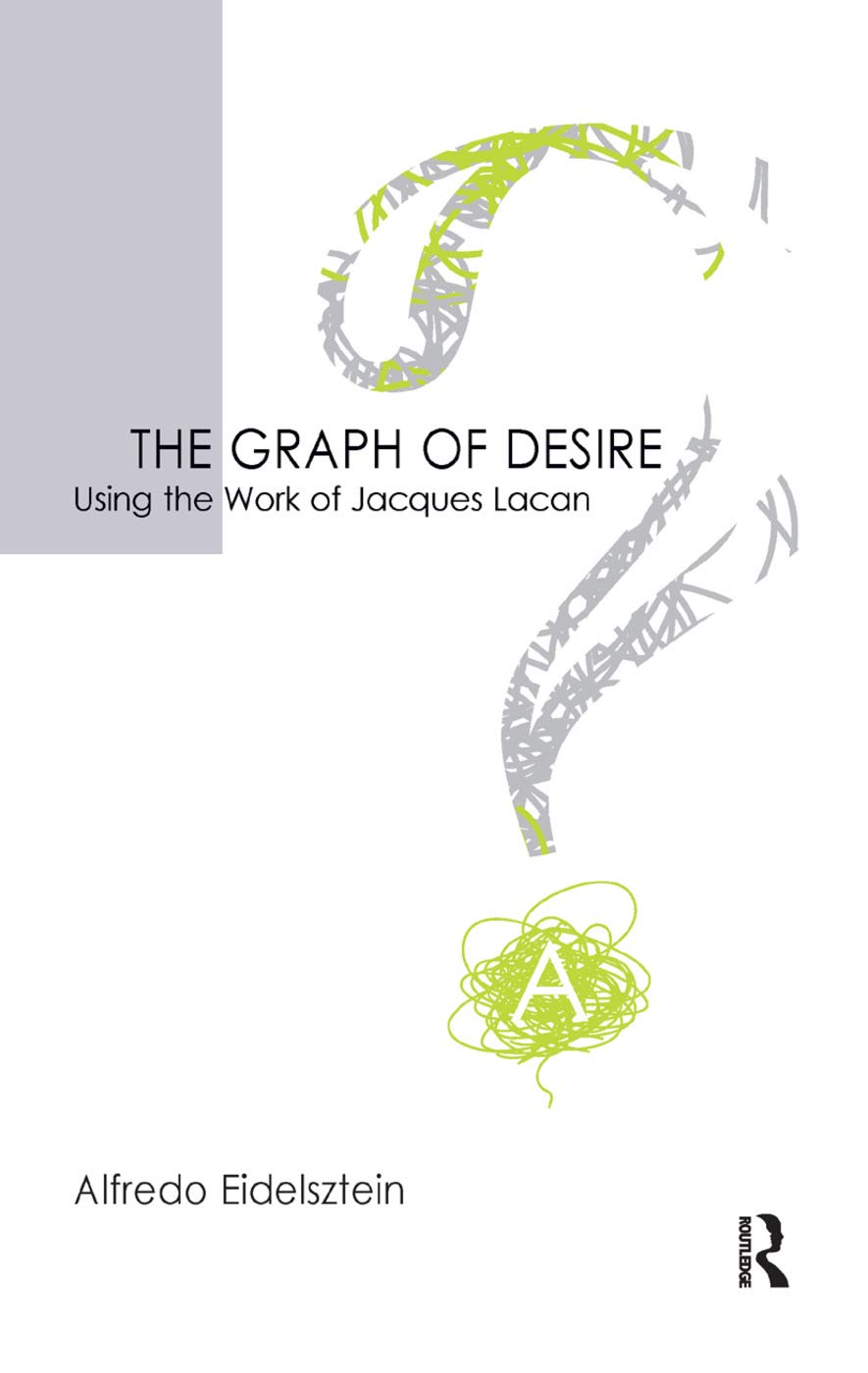
The Graph of Desire - Clear Guide to Lacanian Graphs
The Graph of Desire - Clear Guide to Lacanian Graphs
Price subject to change. Tap below for current.
Couldn't load pickup availability
In this review of The Graph of Desire the reviewer finds a focused, scholarly exploration best suited for students and practitioners of Lacanian psychoanalysis. The single biggest reason to buy is its step-by-step unpacking of a complex diagram, which turns an abstruse theoretical object into a readable sequence of formulations and relations. Readers seeking a concise, interpretive treatment of the graph will appreciate the book's clarity and disciplined approach to an essential Lacanian reference.
Key Features
- Systematic analysis: The book presents the graph in a progressive sequence from simple to complex, making each stage intelligible and connected to the next.
- Focused scope: The treatment concentrates on the graph of desire itself, allowing for depth without detours into unrelated topics.
- Scholarly tone: The author addresses formulations and relations with a rigorous emphasis that benefits readers engaged in academic study or clinical reflection.
- Practical orientation: Step-by-step exposition helps readers apply the graph as a point of reference in psychoanalytic work and interpretation.
- Concise length: The book avoids unnecessary padding and stays on topic, which aids concentrated study sessions or course reading.
Who It's For
The Graph of Desire is aimed at graduate students, clinicians, and scholars already familiar with Lacanian vocabulary who want a compact, concentrated account of one of Lacan's principal diagrams. Therapists using Lacanian concepts in practice will find the stepwise presentation helpful for clinical formulation and lecture preparation.
This is not a general introduction to psychoanalysis nor a broad history of Lacanian thought; readers new to Lacan or seeking a panoramic textbook should look for an introductory volume that covers terminology and context in more breadth.
Pros & Cons
Pros
- Clear, step-by-step exposition makes a difficult diagram accessible for focused study.
- Concentrated scope delivers depth on the graph without distracting tangents.
- Useful for clinicians and students needing a compact reference to the graph of desire.
Cons
- The specialized focus assumes prior familiarity with Lacanian terms, so newcomers may struggle without supplemental introductory material.
Specifications
| Title | The Graph of Desire |
| Author | Alfredo Eidelsztein |
| Subject | Lacanian psychoanalysis, graph of desire |
| Approach | Step-by-step analysis from simple to complex |
| Intended audience | Students, clinicians, scholars in psychoanalysis |
| Focus | Formulations and relations of the graph |
Our Verdict
The Graph of Desire is a valuable, compact study for readers already versed in Lacanian concepts who need a precise, navigable account of the graph. Its disciplined, stepwise approach delivers strong practical and scholastic value, making it a recommended purchase for graduate courses or clinicians seeking a focused reference.
Frequently Asked Questions
Is this book suitable for beginners?
It assumes familiarity with Lacanian terminology, so beginners should pair it with a general introduction to Lacan.
Does the book explain clinical applications?
The emphasis is analytical and conceptual, but the clear exposition aids clinicians in applying the graph in practice.
How is the book structured?
It moves from the simplest formulations of the graph to increasingly complex relations in a step-by-step sequence.
Editor's Take
The Graph of Desire is a compact, disciplined study that clarifies Lacan's graph through step-by-step analysis, making it a strong reference for students and clinicians familiar with Lacanian concepts.

Recently viewed
Recently viewed products will appear here as customers browse the store.