

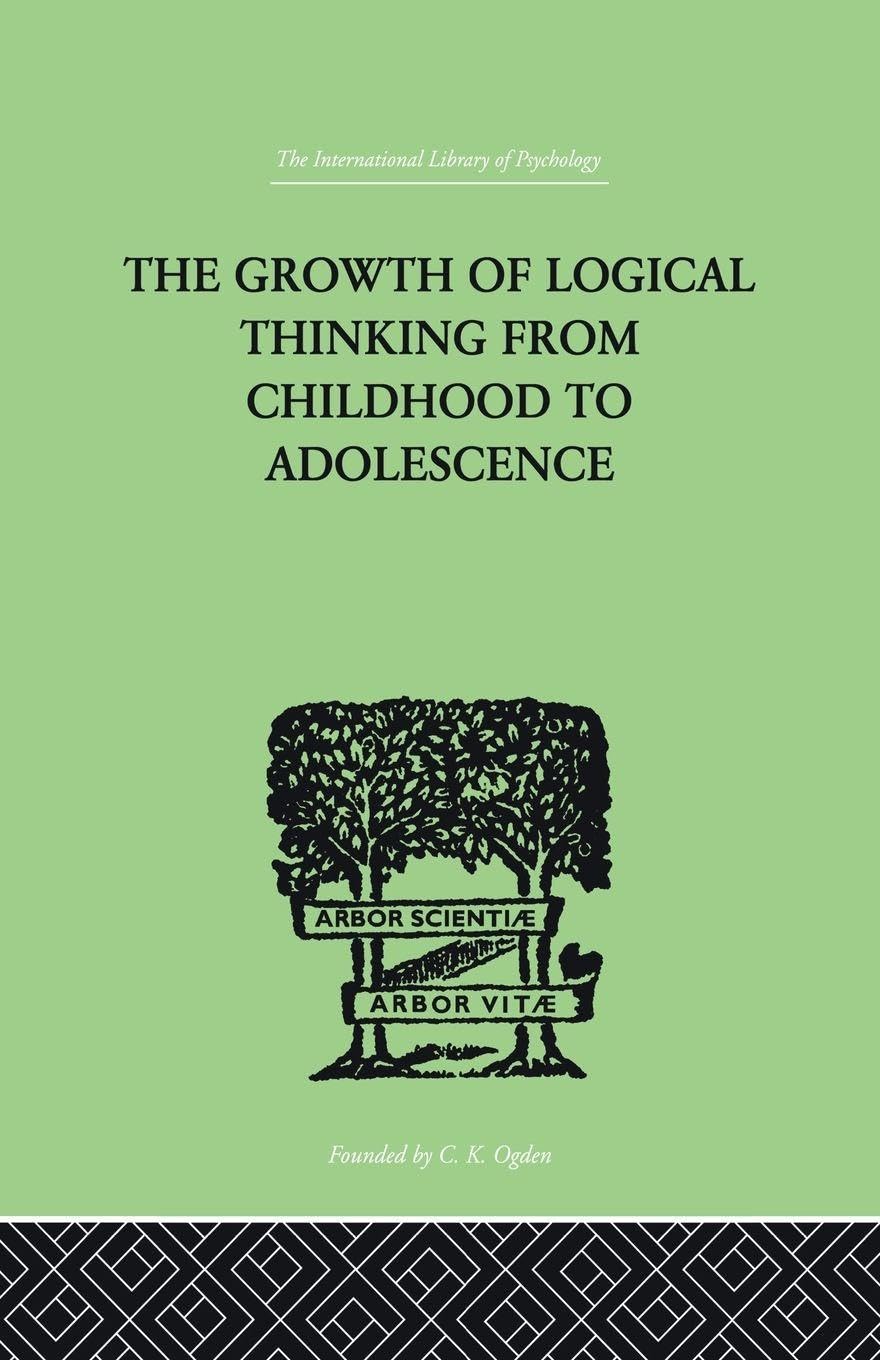
The Growth Of Logical Thinking From Childhood To Adolescence - Classic
The Growth Of Logical Thinking From Childhood To Adolescence - Classic
Price subject to change. Tap below for current.
Couldn't load pickup availability
In this review of The Growth Of Logical Thinking From Childhood To Adolescence the reviewer finds a dense, scholarly translation that will most benefit psychology students and researchers interested in cognitive development. Originally published in 1958 and translated from French, this volume explains how children construct formal operational structures and integrates propositional logic with operational schemata. The bottom line: it is an essential historical text for those studying Piagetian theory and the emergence of formal thought, though its academic tone limits casual reading.
Key Features
- Historical translation: Presents an English translation of a 1958 essay, allowing readers access to foundational work in developmental psychology.
- Theoretical focus: Explores the construction of formal operational structures, useful for understanding how logical reasoning emerges in childhood.
- Propositional logic analysis: Offers a clear account of how propositional logic is integrated with a child's operational schemata, aiding advanced study and critique.
- Academic scope: Serves as Volume XXII in a developmental psychology series, making it a coherent pick for scholars collecting the set or studying the field historically.
- Concise essay format: The book's essay form focuses tightly on construction of logic, helping readers concentrate on core theoretical claims without extraneous material.
Who It's For
This volume is aimed at graduate students, researchers, and instructors in developmental and cognitive psychology who need primary sources on the emergence of formal thought and Piagetian frameworks. It is especially valuable for historians of psychology and readers compiling a comprehensive library of classic texts.
Readers seeking a modern textbook, an introductory overview for lay audiences, or a practical classroom workbook should look elsewhere, as the translation preserves an academic, essay-driven style that assumes familiarity with psychological theory and logical terminology.
Pros & Cons
Pros
- Provides a faithful English translation of a seminal essay on child logic, useful for academic citation and study.
- Focuses on the integration of propositional logic with operational schemata, offering conceptual clarity for advanced readers.
- Compact format as part of a larger developmental series makes it easy to cross-reference related volumes.
- Valuable historical perspective on theories of cognitive development from the mid-20th century.
Cons
- The academic tone and depth make it a challenging read for beginners or casual readers.
- Limited practical exercises or contemporary updates, since the text represents a historical translation rather than a modern reinterpretation.
Specifications
| Title | The Growth Of Logical Thinking From Childhood To Adolescence |
| Series | International Library of Psychology, Volume XXII |
| Authors / Editors | Jean & Inhelder Piaget |
| Original Publication | 1958 (translation from French) |
| Subject | Developmental psychology; formal operational thought |
| Format | Scholarly essay translation within a collected series |
Our Verdict
The Growth Of Logical Thinking From Childhood To Adolescence is a valuable historical and theoretical resource for advanced students and researchers focused on formal thought and Piagetian development. While not approachable for beginners, it offers concentrated analysis of propositional logic in child cognition and is good value for anyone building a scholarly collection or researching the origins of modern developmental theory.
Frequently Asked Questions
Is this book a modern textbook?
Answer. No; it is a translated essay from 1958 aimed at scholars and students seeking original theoretical material rather than an introductory textbook.
Who authored the work?
Answer. The volume is from Jean & Inhelder Piaget and appears as part of the International Library of Psychology series.
Does it include practical exercises?
Answer. The text is an academic essay focused on theory and analysis and does not provide contemporary exercises or classroom activities.
Editor's Take
A valuable, scholarly translation of a 1958 essay on how children construct formal operational thought; ideal for graduate students and researchers but too academic for casual readers.

Recently viewed
Recently viewed products will appear here as customers browse the store.