

The Hounds Of Actaeon: Origins of Public Relations
The Hounds Of Actaeon: Origins of Public Relations
Price subject to change. Tap below for current.
Couldn't load pickup availability
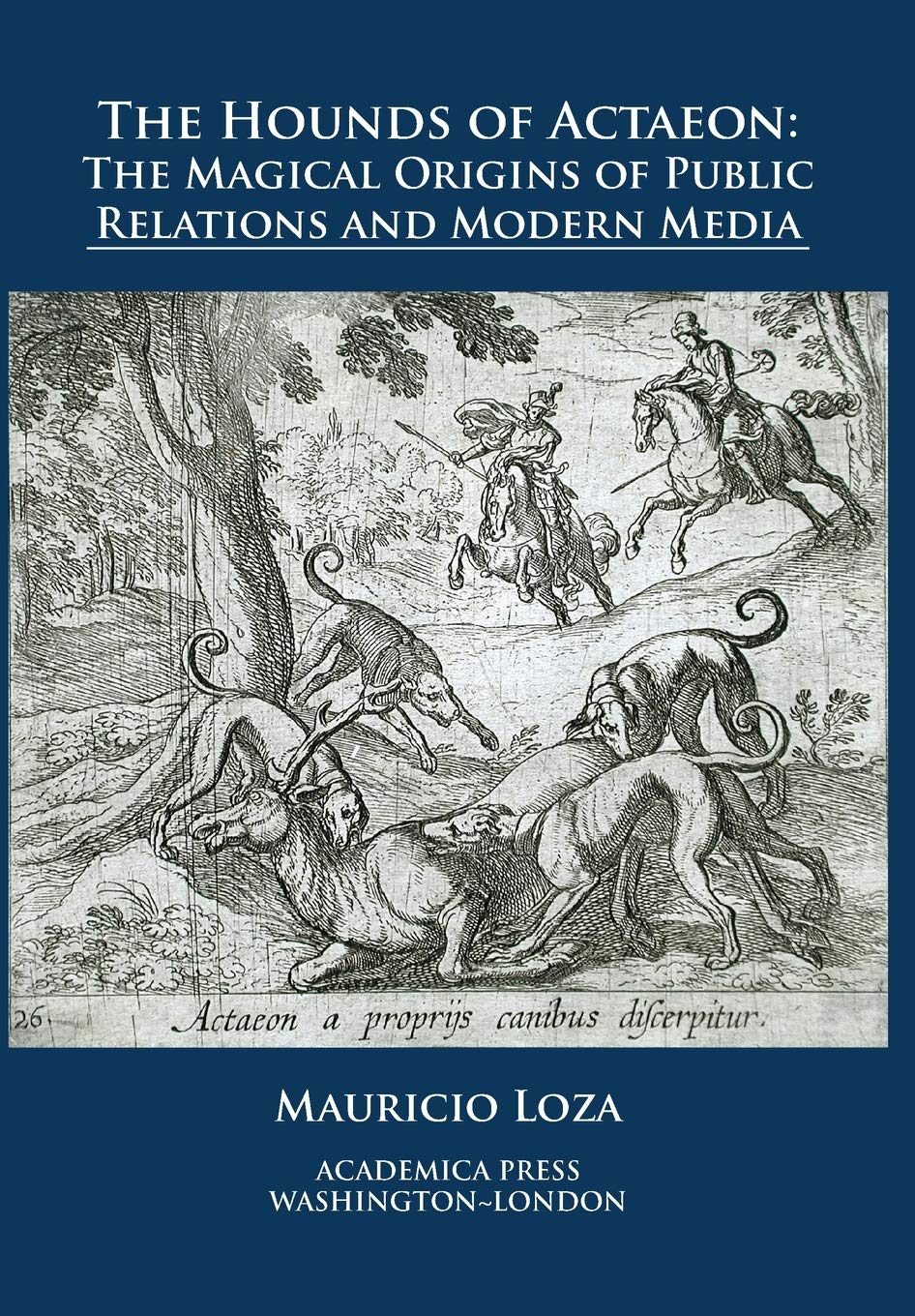
In this review of The Hounds Of Actaeon, Mauricio Loza presents a provocative intellectual history linking Renaissance magic to the rise of modern media and psychological thought. Readers seeking a dense, scholarly argument about the unseen antecedents of public relations and mass persuasion will find the book rewarding; its single biggest reason to buy is the author's unusual thesis that names like Marsilio Ficino and Giordano Bruno matter to the genealogy of indirect censorship and media trusts. The tone is investigative rather than celebratory, aimed at readers who enjoy cross-disciplinary scholarship and historical reinterpretation.
Key Features
- Original Thesis: Traces the claim that Renaissance magical arts helped shape the impersonal systems of media and indirect censorship, offering a fresh angle on cultural history.
- Wide Intellectual Reach: Connects figures from Marsilio Ficino and Giordano Bruno to modern thinkers such as Sigmund Freud and Guy Debord, showing intellectual continuity across centuries.
- Interdisciplinary Approach: Combines cultural history, media theory and the history of psychology to make its argument accessible to readers from several fields.
- Focused Case Studies: Revisits Ioan Culianu's prototype of media systems, using specific historical examples to ground the theoretical claims.
- Compact Argumentation: Delivers a sustained argument rather than a sprawling survey, which helps maintain clarity across complex material.
Who It's For
Scholars and serious readers interested in the history of ideas, media studies, the history of psychology, or Renaissance intellectual culture will get the most value from this book. It is suited to those who appreciate thematic tracing rather than comprehensive social history, and who are comfortable with dense, referential prose.
Readers looking for an introductory textbook, light popular history, or a handbook of contemporary public relations practice should look elsewhere; the book assumes familiarity with names and schools of thought and emphasizes theoretical linkage over practical guidance.
Pros & Cons
Pros
- Offers a distinctive, well-argued thesis that reframes the origins of media and psychological systems.
- Draws clear intellectual lines between Renaissance magicians and twentieth-century theorists, enriching the reader's perspective.
- Interdisciplinary tone makes the book valuable to readers across media studies, history and psychology.
Cons
- The argument is dense and assumes background knowledge, which may limit accessibility for casual readers.
Specifications
| Title | The Hounds Of Actaeon: The Magical Origins Of Public Relations And Modern Media |
| Author | Mauricio Loza |
| Focus | Renaissance magic to modern media and psychology |
| Central Thesis | Renaissance magical arts as prototype of impersonal media systems |
| Key Figures Discussed | Marsilio Ficino, Giordano Bruno, Sigmund Freud, Guy Debord |
| Approach | Interdisciplinary intellectual history |
Our Verdict
Loza's study is a stimulating, concentrated read for anyone curious about the deep intellectual roots of media and mass persuasion; it repays careful reading by revealing unexpected continuities from Renaissance occult thought to modern systems of control, making it a strong value for students and specialists who want a provocative reinterpretation rather than a mainstream textbook.
Frequently Asked Questions
Does the book require prior knowledge of Renaissance thinkers?
The book benefits from familiarity with figures like Ficino and Bruno but includes enough context for attentive readers to follow the argument.
Is this a practical guide to public relations?
No, it is a historical and theoretical study focused on origins and intellectual lineage rather than contemporary practice.
Which modern thinkers are used to link past and present?
Loza connects Renaissance figures to modern thinkers including Sigmund Freud, Wilhelm Reich and Guy Debord to trace his thesis.
Editor's Take
Loza's study offers a provocative, well-argued tracing of Renaissance magic to modern media and psychology; it is best for specialists and serious readers who seek a theoretical reinterpretation rather than a practical handbook.

Recently viewed
Recently viewed products will appear here as customers browse the store.