

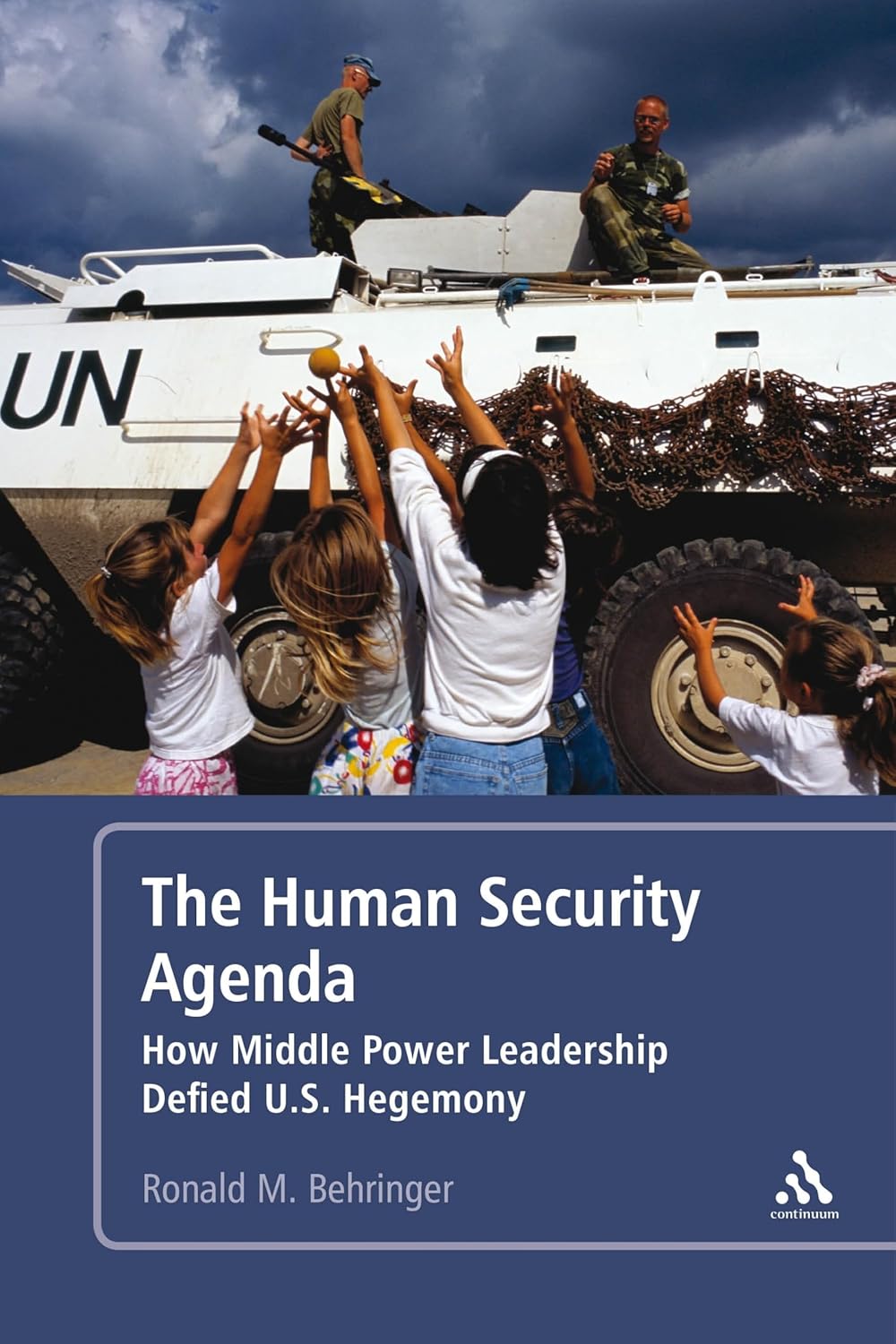
The Human Security Agenda: How Middle Power Leadership Defied U.S
The Human Security Agenda: How Middle Power Leadership Defied U.S
Price subject to change. Tap below for current.
Couldn't load pickup availability
Our review of The Human Security Agenda argues this book is essential reading for students and practitioners of international relations who want to understand how states smaller than great powers can reshape global norms. Ronald M. Behringer presents focused case studies showing middle powers driving initiatives such as the Ottawa Mine Ban Treaty and the International Criminal Court, and the book's central claim - that a human security agenda can sidestep traditional state-centric power politics - is consistently supported by detailed historical examples and policy analysis.
Key Features
- Case study approach: Five concrete cases illustrate how coalitions of middle powers translated shared norms into institutional change.
- Human security focus: The book reframes security debates around threats to people rather than the state, clarifying motivations behind middle power leadership.
- Historical depth: Events like the formation of SHIRBRIG are traced with enough context to follow how policy networks formed and acted.
- Norm diffusion: Readers see how treaties and institutions such as the International Criminal Court emerged from sustained diplomatic work.
- Accessible analysis: The prose links theory and practice in a way that benefits both scholars and policy-minded readers.
Who It's For
This book is best suited to graduate students, policy analysts, and diplomats interested in international norms and the instruments through which mid-level states shape global governance. It is a useful classroom supplement for courses on security studies, international law, and global civil society.
Readers seeking a prescriptive handbook for immediate field operations or a comprehensive history of any single treaty should look elsewhere; the work is analytic and comparative rather than a procedural manual or exhaustive event chronology.
Pros & Cons
Pros
- Clear demonstration of how middle powers can lead on issues neglected by great powers.
- Well-chosen case studies provide transferable lessons about coalition building and norm adoption.
- Useful synthesis of international law developments, including the Ottawa Treaty and ICC.
Cons
- The focus on thematic cases means readers wanting exhaustive archival detail on any single event may find the treatment concise.
Specifications
| Title | The Human Security Agenda: How Middle Power Leadership Defied U.S. Hegemony |
| Author | Ronald M. Behringer |
| Primary focus | Middle power leadership and human security |
| Case studies included | SHIRBRIG, Ottawa Mine Ban Treaty, International Criminal Court, small arms regulation, Responsibility to Protect |
| Topics covered | Norm diffusion, coalition diplomacy, international institutions |
| Intended audience | Scholars, policy analysts, graduate students |
Our Verdict
The Human Security Agenda is a thoughtful, well-argued study that demonstrates how mid-level states drive important normative change in global politics; it is good value for readers who want a comparative, policy-relevant analysis of how treaties and institutions like the ICC and R2P emerged from coalition efforts.
Frequently Asked Questions
Does the book focus on specific treaties?
Yes; it examines the Ottawa Mine Ban Treaty, the ICC, small arms regulation and other key initiatives as part of its five case studies.
Who wrote this book and why does it matter?
Ronald M. Behringer authored the work to highlight middle power agency and the shift toward human-centered security in international policy making.
Is this suitable for classroom use?
Yes; the comparative case study format makes it suitable as a supplement for courses in security studies, international law, and global governance.
Editor's Take
A thoughtful comparative study showing how middle powers drove major international norms and institutions; recommended for scholars and policy analysts who want a policy-relevant analysis of human security leadership.

Recently viewed
Recently viewed products will appear here as customers browse the store.