

The Implications of Induction - Rigorous Analysis of Inductive Logic
The Implications of Induction - Rigorous Analysis of Inductive Logic
Price subject to change. Tap below for current.
Couldn't load pickup availability
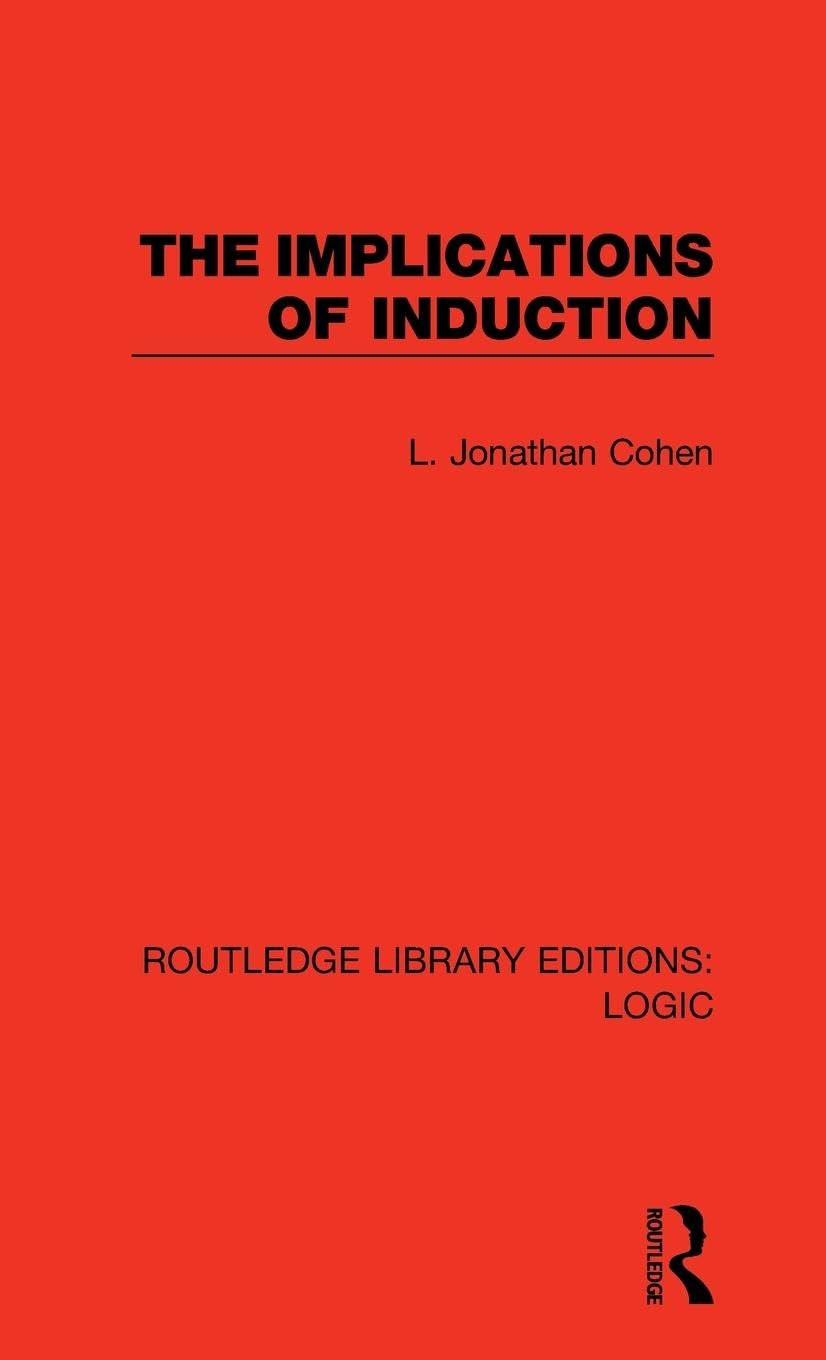
In this review of The Implications of Induction, the reviewer finds a careful, philosophically rigorous treatment best suited to readers with serious interest in the logic of scientific reasoning. Originally published in 1973, L. Jonathan Cohen sets out an alternative to mathematical probability and offers a structured account of inductive support for hypotheses; the single biggest reason to buy is the book's methodical criteria of adequacy and the final system of logical syntax, which make it valuable as a reference for scholars and advanced students studying inductive logic.
Key Features
- Alternative to probability: Presents a valid mode of reasoning that differs from mathematical probability and explains its implications for scientific inquiry.
- Criteria of adequacy: Lays out and examines clear criteria for assessing inductive support, helping readers evaluate hypotheses more systematically.
- Philosophical depth: Discusses paradoxes and philosophical problems about experimental support, giving historical and conceptual context.
- Logical syntax: Concludes with a coherent system of logical syntax for induction, useful as a technical toolbox for formal analysis.
- Reader aids: Each section opens with a summary and the book includes a glossary of technical terms to assist comprehension.
Who It's For
The Implications of Induction is primarily for philosophers of science, advanced students in logic, and researchers who want a methodical alternative to probability-based accounts of support. Its emphasis on criteria and formal syntax makes it suitable as a secondary text in graduate seminars or as a reference for writing on inference and justification.
Those seeking an introductory or casually readable overview of probability should look elsewhere; the book assumes some prior familiarity with philosophical issues and technical vocabulary, even though the glossary and summaries ease navigation.
Pros & Cons
Pros
- Careful exposition of an alternative inductive framework that challenges standard probability accounts.
- Thorough analysis of criteria of adequacy, supporting rigorous evaluation of hypotheses.
- Clear structure with section summaries and a glossary, which aid comprehension of dense material.
Cons
- The material is dense and assumes background in philosophy of science, so it may not suit casual readers.
Specifications
| Title | The Implications of Induction |
| Series | Routledge Library Editions: Logic |
| Author | L. Jonathan Cohen |
| Originally Published | 1973 |
| Subject Focus | Inductive logic, scientific investigation, justification |
| Includes | Section summaries and glossary of technical terms |
| Final Content | System of logical syntax for induction |
Our Verdict
The Implications of Induction is a rewarding, rigorous read for scholars and advanced students who need a structured alternative to probability-based accounts of confirmation. Its careful criteria and formal syntax make it a durable reference for work on scientific justification, offering good value for readers committed to deep study of inductive support.
Frequently Asked Questions
Is this book technical?
The book is philosophically and formally detailed and best approached with some background in logic or philosophy of science.
Does it include helpful study aids?
Yes; each section begins with a summary and the volume includes a glossary of technical terms to aid understanding.
Will it teach probability theory?
No; the work presents an alternative to mathematical probability rather than teaching standard probability theory.
Editor's Take
A rigorous, scholarly treatment of inductive logic that offers clear criteria and a formal syntax; recommended for philosophers and advanced students seeking an alternative to probability-based confirmation.

Recently viewed
Recently viewed products will appear here as customers browse the store.