

The Interface Envelope: Gaming, Technology, Power - Critical
The Interface Envelope: Gaming, Technology, Power - Critical
Price subject to change. Tap below for current.
Couldn't load pickup availability
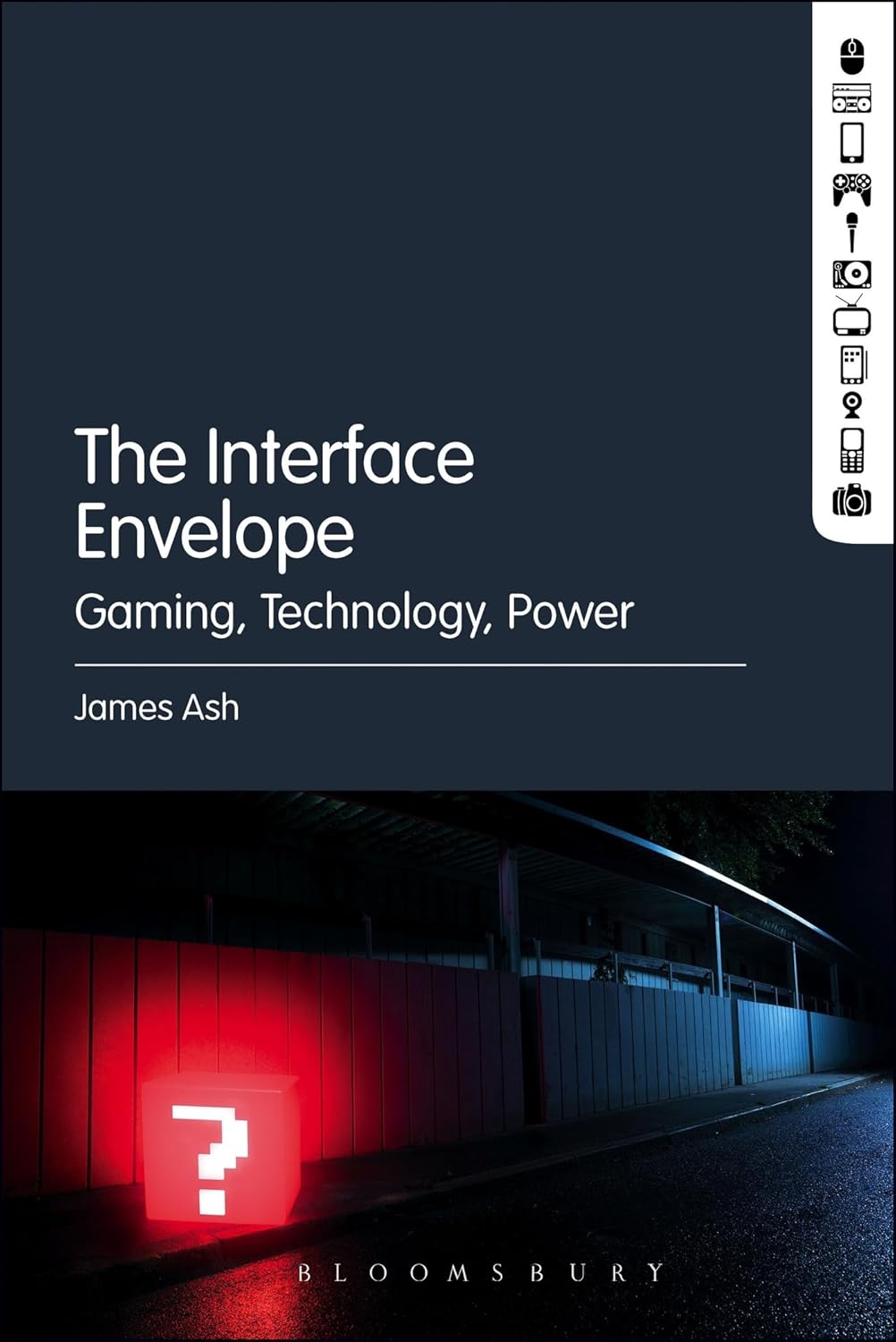
In this review of The Interface Envelope, James Ash offers a dense, theory-driven study for readers interested in how videogame interfaces shape perception and behavior. The book is best for scholars, designers and critical players who want a conceptual framework that links interface design to notions of psychopower and neuropower. Ash's central claim - that interfaces create localized "envelopes" organizing bodily and perceptual capacities for economic ends - is the single biggest reason to buy this book, since it reframes everyday UI elements as tools of power rather than neutral affordances.
Key Features
- Theoretical framing: Ash weaves post-phenomenology, speculative realism and new materialism into a unified account that explains how interfaces alter perception in time and space.
- Focus on videogames: The book uses videogame design examples to show how interface choices shape player experience and economic activity.
- Concept of envelope power: Ash develops envelope power to describe how designers produce perceptual environments that orient users toward specific actions.
- Engagement with contemporary theory: By modifying Bernard Stiegler and Warren Neidich, the book situates game interfaces within wider debates about psychopower and neuropower.
- Scholarly voice: The text is written for an academic or professional audience, offering dense argumentation useful for research and teaching.
Who It's For
The Interface Envelope is aimed at game designers, media theorists, philosophers and social scientists who want a rigorous account of how interfaces condition perception and economic behavior. Readers who appreciate close theoretical engagement and examples drawn from videogame practice will find the book particularly valuable.
Those who prefer light, how-to style books or practical UI toolkits should look elsewhere; Ash's work is conceptual rather than prescriptive and assumes familiarity with contemporary continental and media theory.
Pros & Cons
Pros
- Sharp theoretical synthesis that connects videogame interfaces to larger debates in philosophy and media studies.
- Concrete examples from game design that illustrate the abstract concept of envelope power.
- Useful for teaching and research, offering vocabulary for critique and analysis of interface effects.
Cons
- The writing is dense and assumes prior knowledge of post-phenomenology and critical theory, which may limit accessibility for general readers.
Specifications
| Title | The Interface Envelope: Gaming, Technology, Power |
| Author | James Earle AshJames Ash |
| Primary focus | Videogame interfaces and perceptual effects |
| Key concept | Envelope power (interfaces as localized foldings of space-time) |
| Theoretical influences | Post-phenomenology, speculative realism, new materialism, media theory |
| Audience | Scholars, designers, media theorists |
Our Verdict
The Interface Envelope is a rigorous, conceptually rich book that reorients how one reads game interfaces by linking design choices to perceptual and economic power. It is good value for academics and designers seeking a strong theoretical lens, but less suited to readers wanting practical UI guidance.
Frequently Asked Questions
Does the book use videogame examples?
Yes; Ash draws upon videogame design to illustrate how interfaces create perceptual envelopes.
Is this a practical design manual?
No; the book is theoretical and aimed at scholars and critical practitioners rather than providing step-by-step UI techniques.
Which theories does the author engage?
Ash modifies ideas from Bernard Stiegler and Warren Neidich and places them alongside post-phenomenology, speculative realism and new materialism.
Editor's Take
The Interface Envelope reframes videogame interfaces as tools of perceptual and economic power; a rigorous, theory-rich book well suited to scholars and designers, though dense for general readers.

Recently viewed
Recently viewed products will appear here as customers browse the store.