

The Languages of Japan and Korea - Compact Reference for Scholars
The Languages of Japan and Korea - Compact Reference for Scholars
Price subject to change. Tap below for current.
Couldn't load pickup availability
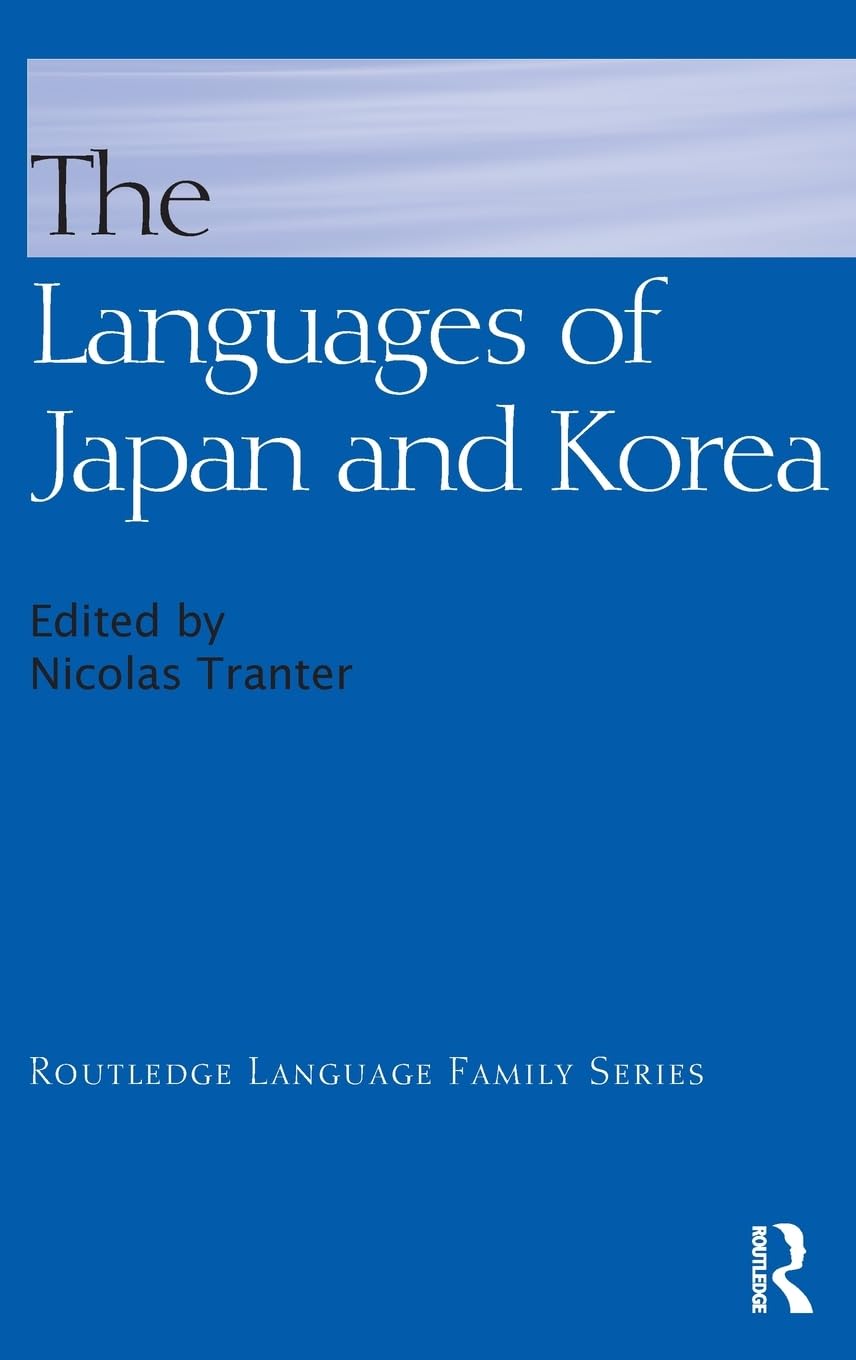
In this review of The Languages of Japan and Korea the book is presented as a focused scholarly reference for linguists, graduate students, and advanced readers interested in East Asian language structures. The single biggest reason to buy is its unified, comparative presentation: detailed sketches of Korean, Japanese, Ainu and Ryukyuan varieties organized in a consistent format make it easy to locate phonology, orthography, morphology, syntax and lexicon information across languages. This practical layout suits researchers who need a reliable introductory reference rather than a beginner textbook.
Key Features
- Comparative sketches: Each language variety is presented in the same structured format so readers can compare phonology, morphology and syntax across entries with minimal effort.
- Range of varieties: The volume covers modern and pre-modern forms of Korean, Japanese, Ainu and representative Ryukyuan languages, providing breadth for regional study.
- Syntactic emphasis: Sections highlight topics of syntactic interest such as speech levels, honorifics and classifiers that matter to typologists and field linguists.
- Orthography and transcription: Entries include Roman-based transcription and discuss each language's native script or IPA where relevant, aiding phonetic and orthographic analysis.
- User-friendly layout: Division into phonology, orthography, morphology, syntax and lexicon makes it straightforward to extract specific information for research or teaching.
Who It's For
This book is best suited to linguistics students, researchers, and instructors needing a compact reference that compares language varieties of Japan and Korea within a single volume. It is particularly helpful for those working on syntax, honorific systems, or cross-linguistic typology who value consistent chapter structure and clear transcription.
Those seeking a language-learning textbook, classroom exercises, or extensive lexical databases should look elsewhere; the focus here is descriptive and comparative rather than pedagogical or vocabulary-heavy.
Pros & Cons
Pros
- Comprehensive coverage of key language families gives a rare single-source overview for the region.
- Consistent chapter format speeds up cross-linguistic comparison and targeted lookup.
- Detailed attention to speech levels and honorifics supports syntactic and sociolinguistic work.
Cons
- Not designed as a beginner course or practical learning guide, so learners need supplementary materials.
Specifications
| Title | The Languages of Japan and Korea |
| Series | Routledge Language Family Series |
| Author | Nicolas Tranter |
| Coverage | Korean, Japanese, Ainu, Ryukyuan varieties (modern and pre-modern) |
| Structure | Language sketches with sections on phonology, orthography, morphology, syntax and lexicon |
| Transcription | Roman-based transcription with native script and IPA where applicable |
Our Verdict
The Languages of Japan and Korea is a well-structured, compact reference that earns its place on the shelf of linguists and graduate students working on East Asian languages. Its comparative format and focused syntactic material deliver strong value for researchers who need clear, accessible sketches rather than teaching materials.
Frequently Asked Questions
Does the book include phonetic transcription?
Yes, entries use Roman-based transcription and discuss native orthography and IPA where relevant for phonetic clarity.
Are teaching exercises or lesson plans included?
No, the volume is descriptive and comparative in nature and does not provide classroom exercises or language-teaching materials.
Which language varieties are covered?
The book covers Korean, Japanese, Ainu and representative members of the Ryukyuan chain, including both modern and pre-modern forms.
Editor's Take
A well-structured comparative reference ideal for linguists and graduate students, offering consistent language sketches of Korean, Japanese, Ainu and Ryukyuan varieties with useful syntactic emphasis.

Recently viewed
Recently viewed products will appear here as customers browse the store.