

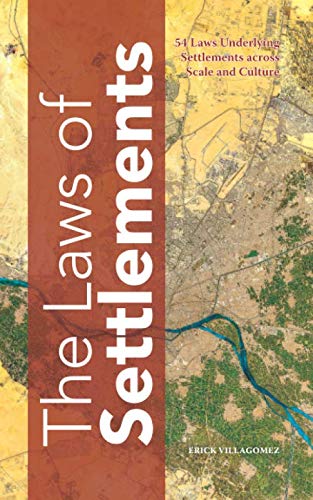
The Laws of Settlements: 54 Laws Underlying Settlements
The Laws of Settlements: 54 Laws Underlying Settlements
Price subject to change. Tap below for current.
Couldn't load pickup availability
In this review of The Laws of Settlements, Erick Villagomez offers a thoughtful, updated look at the 54 laws that govern human settlements across scale and culture. The book is for readers interested in urban theory, architecture, and land use planning who want a concise, principle-driven framework rather than a how-to manual; its biggest reason to buy is the clear restatement of Doxiadis ideas made relevant to 21st century challenges including sustainability and transport. The review finds the book succinct, timely, and ethically minded thanks to its donation pledge.
Key Features
- Universal framework: Presents 54 laws distilled from classic ekistics that help readers understand patterns common to villages, towns and cities.
- Contemporary update: Revises and refreshes older ideas to address modern issues like sustainable transportation and renewable energy.
- Cross-cultural scope: Explores principles that apply across different societies and settlement sizes for comparative insight.
- Practical focus: Emphasizes concepts that planners and designers can use to critique or guide urban and rural projects.
- Charitable commitment: Donates 25 percent of proceeds to an environmental nonprofit, aligning the book with ecological values.
Who It's For
The Laws of Settlements is best for students of architecture, urban planners and engaged citizens who want a principled lens for assessing settlements rather than step-by-step design instructions. It suits readers who appreciate theory with ethical grounding and those curious about how historical ideas can inform sustainable policy.
Those looking for richly illustrated case studies, technical specifications for building systems, or a hands-on manual for municipal engineering should look elsewhere, as the book focuses on overarching laws and concepts rather than detailed implementation guides.
Pros & Cons
Pros
- Clear synthesis of classic ekistics makes complex ideas accessible to non-specialists.
- Relevant modern framing ties the laws to sustainability, transportation and renewable energy.
- Generous proceeds donation reinforces the book's environmental ethic and social commitment.
Cons
- Limited technical detail means practitioners seeking engineering guidance will need additional resources.
Specifications
| Title | The Laws of Settlements: 54 Laws Underlying Settlements |
| Author | Erick Villagomez |
| Core content | 54 laws of settlements updated from Doxiadis |
| Focus areas | Urban theory, sustainable transportation, renewable energy |
| Charitable pledge | 25% of proceeds to the David Suzuki Foundation |
| Scope | All sizes and cultures of human settlements |
Our Verdict
The Laws of Settlements is a concise, principled read that updates a seminal framework for contemporary concerns; it is recommended for planners, students and thoughtful citizens who want a concept-driven guide to settlements and sustainability. Its charitable angle adds ethical value, though those needing technical design detail should supplement it with practical manuals.
Frequently Asked Questions
Does this book cover practical design details?
No, the book focuses on overarching laws and concepts rather than technical engineering or construction specifications.
Who benefits from the proceeds?
Twenty-five percent of proceeds are donated to the David Suzuki Foundation to support environmental protection.
Is the book relevant to modern sustainability issues?
Yes, the author updates the original laws to address sustainable transportation, renewable energy and other 21st century challenges.
Editor's Take
A concise, principled update of Doxiadis ideas, The Laws of Settlements is ideal for planners and students who want a concept-driven guide to settlements and sustainability; it adds ethical value with a donated share of proceeds.

Recently viewed
Recently viewed products will appear here as customers browse the store.