

The Legality of Economic Activities in Occupied Territories
The Legality of Economic Activities in Occupied Territories
Price subject to change. Tap below for current.
Couldn't load pickup availability
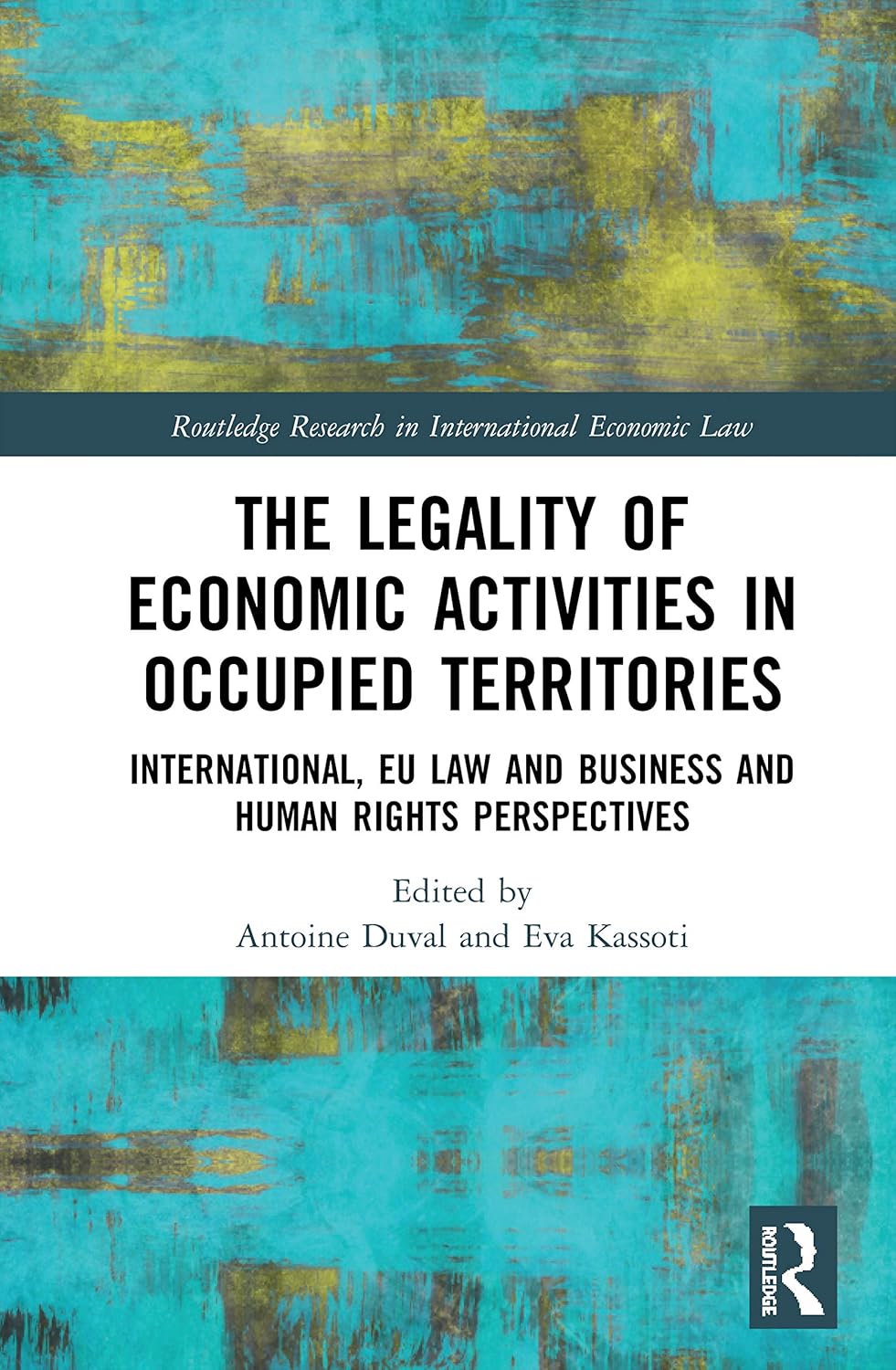
In this review of The Legality of Economic Activities in Occupied Territories, the editors Antoine Duval and Eva Kassoti present a rigorous, multi-disciplinary examination aimed at academics, legal practitioners and policy makers. The single biggest reason to buy is its thorough analysis of how international law, EU law and business and human rights frameworks intersect when assessing economic activity in occupied territories; this makes the volume a valuable reference for anyone needing a consolidated source of legal reasoning and case-focused discussion rather than a simple primer.
Key Features
- Multi-level analysis: Chapters combine perspectives from international law, EU law and business and human rights to clarify complex legal interactions.
- Edited volume format: Contributions by multiple authors provide diverse approaches and case studies that illuminate different practical and doctrinal responses.
- Focus on natural resources: Specific discussion of exploitation of natural resources links jus in bello, jus ad bellum and human rights law in concrete contexts.
- Thematic structure: The book is divided into three parts so readers can follow international, regional and corporate law treatments separately and comparatively.
- Policy relevance: Examination of practices and policies makes the work useful for lawyers and policy makers assessing real-world economic conduct in occupied areas.
Who It's For
This volume is well suited to scholars of international economic law, human rights lawyers, graduate students and governmental or NGO advisers who require a detailed, doctrine-focused treatment of legality questions in occupation contexts. It serves as a research reference when preparing legal opinions, academic articles or litigation strategies that touch on resource exploitation and occupation.
Readers seeking a brief introduction, a practitioner's handbook with checklists, or an accessibly written guide for non-specialists should look elsewhere; the tone and depth here are scholarly and assume familiarity with legal concepts and terminology.
Pros & Cons
Pros
- Comprehensive cross-disciplinary coverage helps readers see the interplay between jus in bello, jus ad bellum and human rights law.
- Edited format provides multiple case-oriented perspectives rather than a single viewpoint.
- Useful for policy and litigation contexts because it discusses relevant practices and policies.
Cons
- The academic depth and legal jargon limit accessibility for general readers or those new to international law.
Specifications
| Title | The Legality of Economic Activities in Occupied Territories |
| Series | Routledge Research in International Economic Law |
| Editors/Authors | Antoine Duval, Eva Kassoti |
| Scope | International law, EU law, business and human rights perspectives |
| Structure | Three parts covering international, regional and business/human rights approaches |
| Focus areas | Exploitation of natural resources and legal frameworks in occupied territories |
Our Verdict
The Legality of Economic Activities in Occupied Territories is a strong purchase for legal scholars, practitioners and policy advisers who need a detailed, multi-layered analysis of occupation-related economic activity. Its value lies in synthesizing international, EU and business and human rights perspectives into a research-oriented resource; it represents good value for those who will use its doctrinal depth in academic or advisory work.
Frequently Asked Questions
Does this book cover cases as well as theory?
The volume includes case-focused chapters and discussion of practices and policies alongside doctrinal analysis.
Is this suitable for non-lawyers?
The book is written at a scholarly level and is best suited to readers with some legal background rather than general audiences.
Which legal fields are addressed?
Contributions deal with international law, EU law and business and human rights approaches to economic activities in occupied territories.
Editor's Take
This edited volume offers a rigorous, multi-disciplinary examination of the lawfulness of economic activities in occupied territories; it is best for legal scholars, practitioners and policy advisers who need detailed doctrinal and case-focused analysis.

Recently viewed
Recently viewed products will appear here as customers browse the store.