

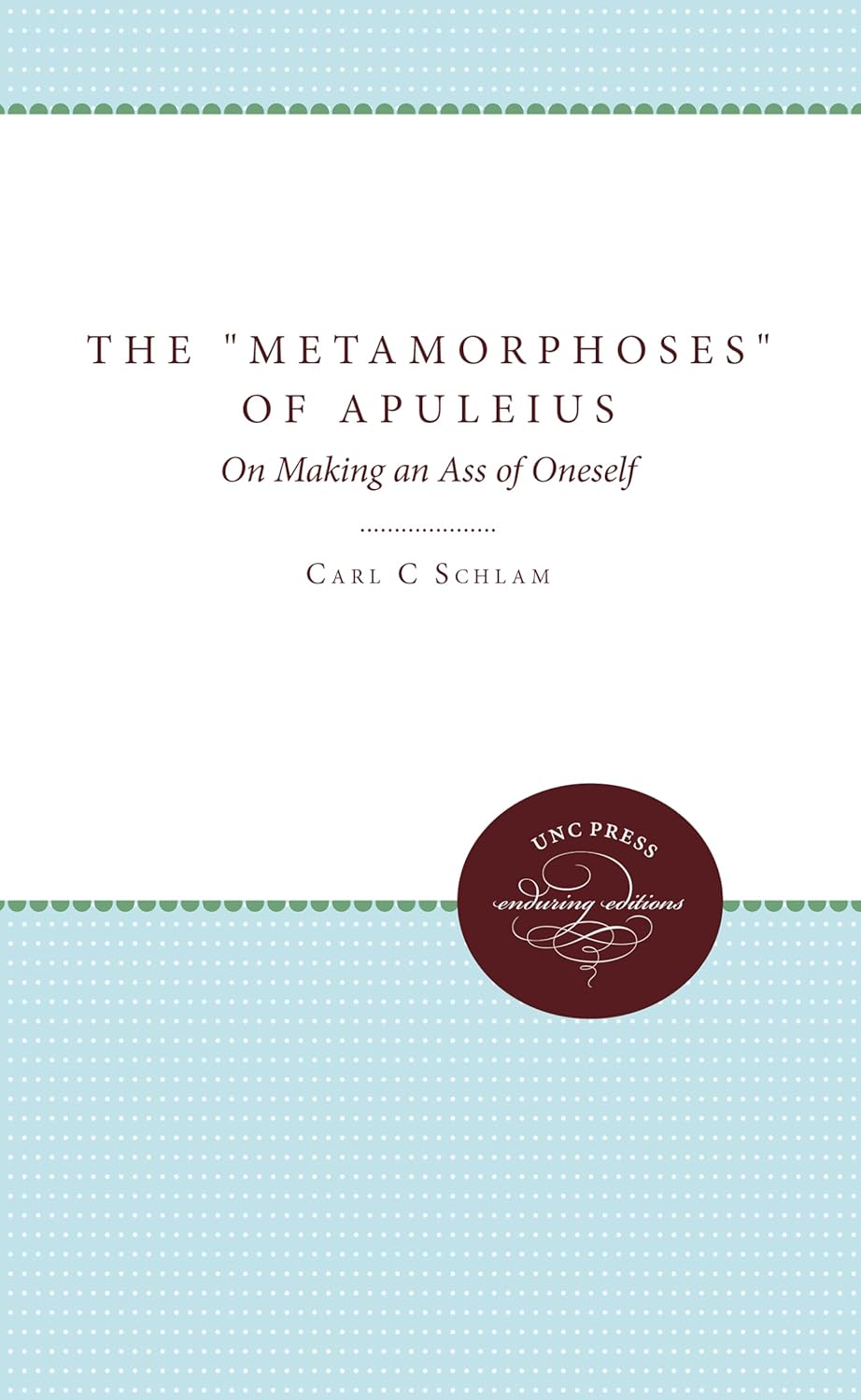
The Metamorphoses of Apuleius: On Making an Ass of Oneself - Scholarly
The Metamorphoses of Apuleius: On Making an Ass of Oneself - Scholarly
Price subject to change. Tap below for current.
Couldn't load pickup availability
In this review of The Metamorphoses of Apuleius: On Making an Ass of Oneself readers familiar with classical literature will find a thoughtful, measured examination of one of the Roman novel's most debated works. Carl C Schlam's essay collection is best for students and informed general readers who want rigorous interpretation rather than a simple plot summary, because the book balances attention to the novel's bawdy entertainment with a careful reading of its moral and religious dimensions. The review highlights Schlam's central claim that the narrative coherence reveals possibilities of grace and salvation beneath comic surface episodes.
Key Features
- Balanced interpretation: Schlam argues the novel cannot be read as purely comic or wholly serious, offering readers a nuanced framework to approach Apuleius.
- Thematic focus: The book traces patterns of narrative and thematic structure that give coherence to Lucius's adventures, helping readers see links between disparate tales.
- Attention to the eleventh tale: Schlam gives sustained analysis of Lucius's initiation into the cult of Isis and how it reframes earlier episodes.
- Accessible scholarship: The writing aims to serve both students and curious lay readers by explaining classical context without excessive jargon.
- Interpretive depth: The essays combine literary and philosophical readings to illuminate the novel's moral dimensions and comic art.
Who It's For
This book is for readers of ancient and classical literature, especially undergraduates, graduate students, and teachers seeking a compact but substantial treatment of Apuleius's Golden Ass that goes beyond summary to interpretive argument. It suits those who appreciate scholarship that links narrative form with ethical and religious meaning.
Readers who want a line-by-line translation, a broad survey of Roman novels, or a light popular introduction may want a different volume; Schlam assumes familiarity with the work's episodes and focuses on close readings rather than serving as a beginner's primer.
Pros & Cons
Pros
- Offers a convincing case for coherence across comic and serious episodes, making the novel's structure clearer for readers.
- Provides focused analysis of Lucius's transformation and initiation, illuminating the religious stakes in the text.
- Balances literary and philosophical perspectives so readers gain multiple lenses on the material.
Cons
- Not a substitute for a full translation or a comprehensive textbook, so newcomers may need supplementary materials.
Specifications
| Title | The Metamorphoses of Apuleius: On Making an Ass of Oneself |
| Author / Editor | Carl C Schlam |
| Series | Unc Press Enduring Editions |
| Subject focus | Literary and philosophical analysis of Apuleius's novel |
| Main character examined | Lucius (transformed into an ass) |
| Key themes | Comedy, narrative coherence, initiation, grace, salvation |
Our Verdict
Schlam's study is a worthwhile purchase for readers who want a rigorous, interpretive account that restores unity to Apuleius's novel; it delivers clear, thoughtful argumentation that makes the work feel both entertaining and morally significant, offering good value to students and instructors of classical literature.
Frequently Asked Questions
Does this book include a translation of the Golden Ass?
No. Schlam's volume is interpretive scholarship focused on themes and structure rather than a new translation of the text.
Is prior knowledge of Apuleius required?
Some familiarity with the novel helps; the essays assume readers know the broad outline of Lucius's adventures and focus on analysis.
Who benefits most from this edition?
Students, teachers, and readers wanting a deeper scholarly reading of comedy, initiation, and religious motifs in Apuleius will benefit most.
Editor's Take
Schlam's study restores unity to Apuleius's novel with clear interpretive argument showing how comedy and initiation point toward themes of grace and salvation; recommended for students and instructors.

Recently viewed
Recently viewed products will appear here as customers browse the store.