

The Military and Domestic Politics - Concordance Theory Explained
The Military and Domestic Politics - Concordance Theory Explained
Price subject to change. Tap below for current.
Couldn't load pickup availability
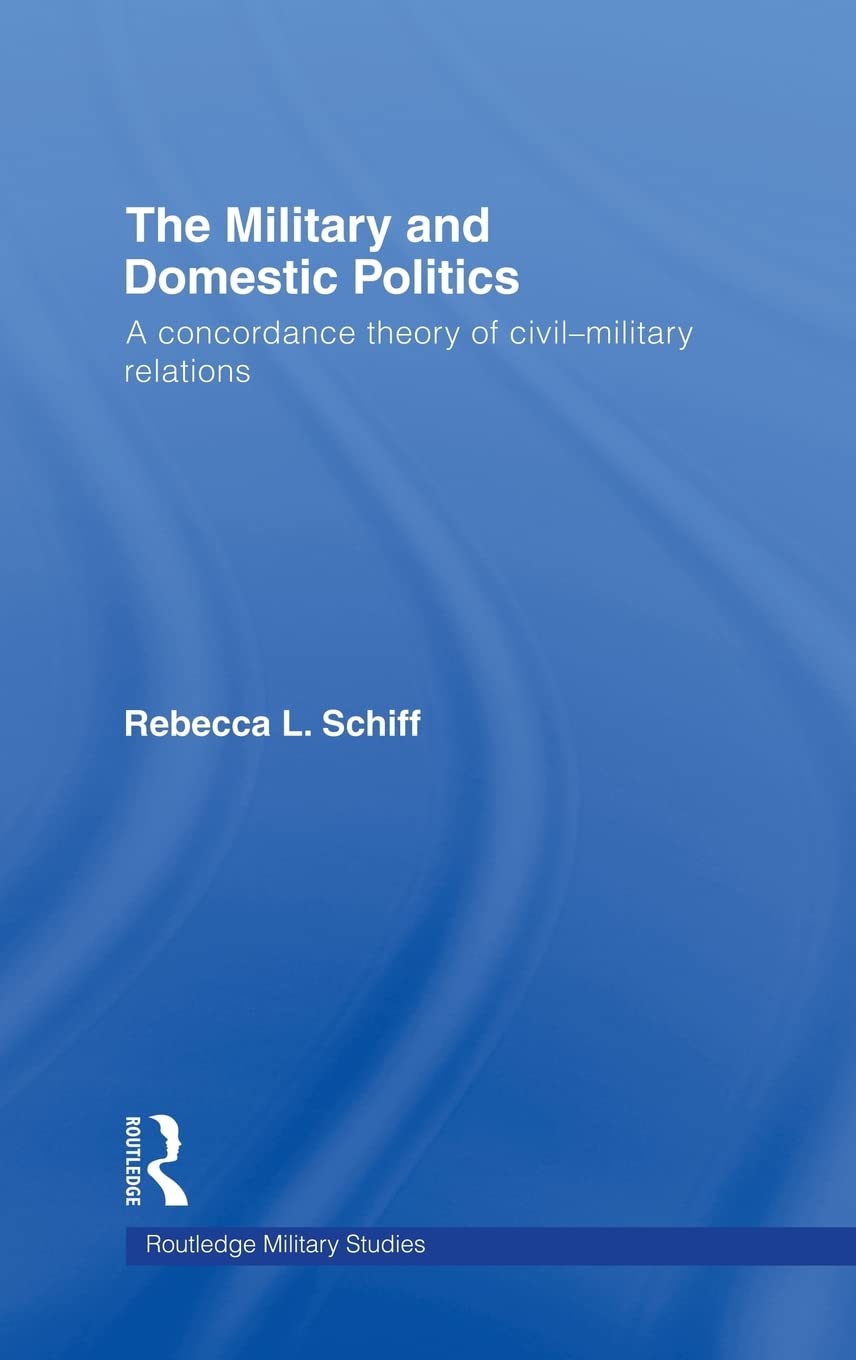
In this review of The Military and Domestic Politics, the bottom line is clear: this book is for readers who want a thoughtful, comparative account of how armed forces shape national life. Rebecca L. Schiff presents a focused argument that concordance theory offers a better tool than broad Western-centered models for predicting military intervention in politics, and the book's case studies give practical context for scholars, advanced students, and policy analysts seeking nuance rather than one-size-fits-all prescriptions.
Key Features
- Concordance theory: Explains a predictive model that treats military involvement as contingent on historical and institutional balances rather than universal patterns.
- Comparative cases: Uses five diverse national studies to illustrate how context alters military roles in civilian life, improving the reader's ability to generalize cautiously.
- Non-Western focus: Challenges Western-centric frameworks by centering countries where historical and cultural realities change outcomes.
- Institutional nuance: Examines how differences in civil institutions and military structures influence the likelihood and form of intervention.
- Accessible analysis: Keeps conceptual discussions grounded in concrete examples so readers can see theory applied to real political histories.
Who It's For
This book is best suited to graduate students, researchers in civil-military relations, and policy professionals who need a conceptual framework that accommodates variation across national contexts. The focus on detailed case studies makes it useful for those comparing India, Pakistan, Israel, Argentina, and early American military-politics interactions.
Readers looking for a quick primer or a global statistical survey should look elsewhere; this is a deliberative, theory-driven study that favors depth over breadth and is aimed at readers comfortable with comparative political analysis and historical particulars.
Pros & Cons
Pros
- Provides a coherent concordance framework that helps predict variations in military intervention across different national contexts.
- Grounds theory in five well-chosen case studies, which makes abstract points tangible and historically anchored.
- Pushes back against Western-centric assumptions, broadening the lens for scholars of civil-military relations.
Cons
- Not a quick-read overview; the comparative and theoretical focus demands sustained attention from the reader.
- Readers seeking extensive quantitative data or a global dataset will find the qualitative case approach limiting.
Specifications
| Title | The Military and Domestic Politics |
| Series | Cass Military Studies |
| Author | Rebecca L. Schiff |
| Scope | Comparative case studies and theory |
| Featured cases | India, Pakistan, Israel, Argentina, Post-Revolutionary America |
| Focus | Concordance theory and civil-military relations |
Our Verdict
Rebecca L. Schiff's book is a strong choice for readers who need a nuanced, theory-driven exploration of how militaries interact with politics across different societies. Its comparative case studies and emphasis on historical and institutional context make it good value for scholars and practitioners who prefer explanatory depth to broad generalizations.
Frequently Asked Questions
Does the book include case studies?
The book analyzes five cases: India, Pakistan, Israel, Argentina, and Post-Revolutionary America to show how concordance theory applies.
Is this a quantitative study?
No; the work is qualitative and comparative, focusing on theory and historical institutional detail rather than large-scale statistical analysis.
Who benefits most from this book?
Graduate students, researchers, and policy analysts in civil-military relations will gain the most from its conceptual depth and case-driven approach.
Editor's Take
Rebecca L. Schiff offers a nuanced, case-driven defense of concordance theory that helps explain when and how militaries intervene in politics; recommended for researchers and advanced students seeking contextual depth.

Recently viewed
Recently viewed products will appear here as customers browse the store.