

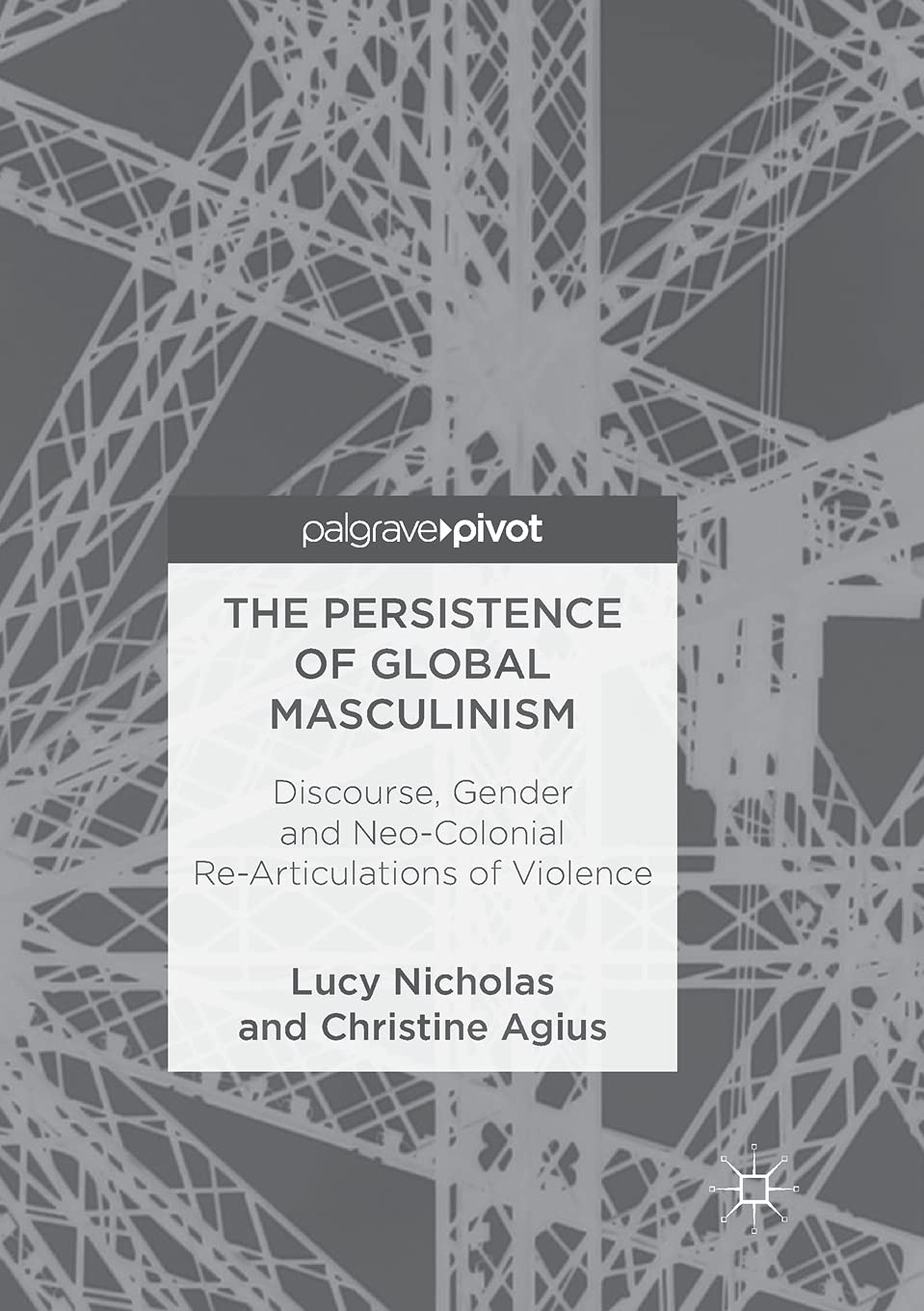
The Persistence of Global Masculinism: Critical and Analysis
The Persistence of Global Masculinism: Critical and Analysis
Price subject to change. Tap below for current.
Couldn't load pickup availability
In this review of The Persistence of Global Masculinism, the authors Lucy Nicholas and Christine Agius present an interdisciplinary examination that will matter most to students and scholars of gender studies and international relations. The book's single biggest selling point is its sustained conceptualisation of masculinism and how that framework illuminates contemporary responses to gendered violence, human rights discourse and intervention practices; readers seeking evidence-based analysis of anti-feminist movements and the security underpinnings of protection will find a substantive, research-driven contribution.
Key Features
- Conceptual clarity: The book introduces an innovative conceptualisation of masculinism that helps readers trace persistent discourses and their adaptations across contexts.
- Interdisciplinary approach: Drawing on gender studies, sociology and security studies, the text offers varied analytical lenses that enrich understanding across disciplines.
- Four case studies: The focused case studies provide concrete examples, showing how masculinist practices appear in mens rights movements, responses to gender-based violence and international interventions.
- Critical treatment of rights discourse: The authors interrogate the masculinist underpinnings of human rights language, offering a critical perspective useful for graduate seminars and policy critique.
- Contemporary relevance: Discussions of drone warfare and protection interventions connect theoretical work to current international security practices and debates.
Who It's For
This book is best suited to graduate students, researchers and instructors in gender studies, security studies and international relations who want a theoretically informed, case-based analysis of masculinist discourses. It is also useful to sociologists and policy analysts interested in how gendered narratives shape responses to violence and intervention logic.
Readers seeking a textbook-style introduction or a handbook with extensive methodological tools should look elsewhere; the book assumes some familiarity with critical theory and contemporary debates in human rights and security and prioritises conceptual and case-based critique over step-by-step methodology.
Pros & Cons
Pros
- Provides a clear, innovative framework for understanding masculinism across domestic and international contexts.
- Interdisciplinary synthesis strengthens arguments by connecting sociology, gender studies and international relations.
- Case studies give concrete, contemporary examples that illuminate abstract concepts.
- Engages critically with human rights discourse and modes of intervention, offering new angles for research and teaching.
Cons
- The book assumes prior familiarity with theoretical debates, so it may feel dense for introductory readers.
Specifications
| Title | The Persistence of Global Masculinism: Discourse, Gender and Neo-Colonial Re-Articulations of Violence |
| Authors | Lucy Nicholas, Christine Agius |
| Subject areas | Gender studies; Sociology; Security and international relations |
| Approach | Interdisciplinary analysis with four case studies |
| Key themes | Masculinist discourses, anti-feminist movements, human rights, intervention |
| Intended audience | Students and scholars in gender studies, security studies and sociology |
Our Verdict
This book is a valuable, research-driven contribution for scholars and advanced students who want a rigorous interrogation of how masculinist discourses persist and adapt globally. Its interdisciplinary case studies and critical treatment of human rights and intervention make it a good scholarly investment for those studying gendered dimensions of security and social policy.
Frequently Asked Questions
Is this book suitable for undergraduate courses?
It can be used in upper-level undergraduate seminars, but its theoretical density makes it better suited to graduate courses and specialist modules.
Does the book include empirical case studies?
Yes, the authors analyse four case studies to illustrate masculinist practices across domestic and international contexts.
Will this help with policy analysis on gendered violence?
Yes; the critical engagement with human rights discourse and intervention modes offers useful perspectives for policy critique and analysis.
Editor's Take
A research-driven, interdisciplinary examination of masculinist discourses and their persistence; recommended for graduate students and scholars in gender studies and security for its case studies and critical treatment of human rights and intervention.

Recently viewed
Recently viewed products will appear here as customers browse the store.