

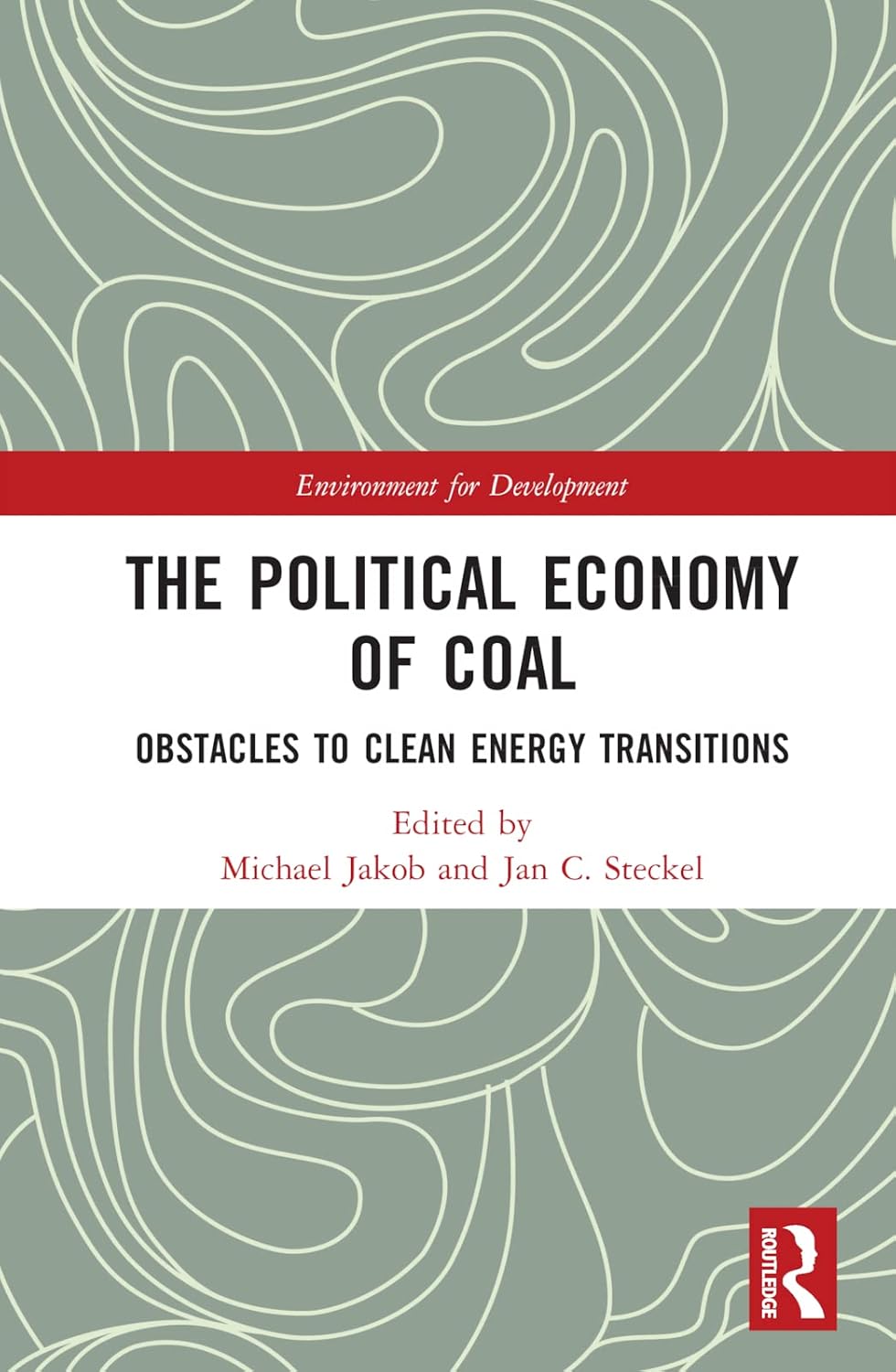
The Political Economy of Coal: Obstacles to Clean Energy Transitions
The Political Economy of Coal: Obstacles to Clean Energy Transitions
Price subject to change. Tap below for current.
Couldn't load pickup availability
In this review of The Political Economy of Coal: Obstacles to Clean Energy Transitions the reviewer finds a rigorous, case-study driven analysis best suited to researchers and policy professionals exploring why coal remains dominant despite cheaper renewables. The book's single biggest reason to buy is its focus on the political forces and institutional dynamics that shape energy policy, offering comparative evidence from multiple countries rather than abstract prescriptions. This makes it a useful reference for anyone wanting a nuanced explanation of coal lock-in and realistic levers for policy change.
Key Features
- Comparative case studies: The volume assembles diverse national examples that illustrate how political structures influence continued coal use.
- Policy-focused analysis: Chapters link political economy factors directly to policy outcomes, helping readers see why renewables have not replaced coal in many contexts.
- Global perspective: The book covers both industrial and developing nations, providing a broad view of coal's role across different economic settings.
- Climate relevance: The text frames coal in terms of its contribution to energy-related CO2 emissions and implications for the Paris Agreement.
- Edited scholarly volume: Multiple contributors offer varied expertise, so readers gain a range of methodological and regional insights rather than a single-author view.
Who It's For
This book is aimed at academics, graduate students, energy policy analysts, and government advisors who need a detailed, politically informed account of why coal persists. It is particularly valuable for those working on transition strategies who require case-based evidence about institutional obstacles and stakeholder power.
Readers seeking a practical how-to manual for building renewable projects or a beginner's primer on renewable technology should look elsewhere; the volume prioritizes political and institutional analysis over technical or operational guidance.
Pros & Cons
Pros
- Offers a rigorous, comparative treatment that clarifies political drivers of coal dependence.
- Connects national case studies to global climate implications, useful for policy debate.
- Includes contributions from multiple experts, giving breadth and methodological variety.
Cons
- The edited format means chapters vary in style and depth, so readers may find uneven treatment across cases.
Specifications
| Title | The Political Economy of Coal: Obstacles to Clean Energy Transitions |
| Editors | Michael Jakob, Jan C. Steckel |
| Subject | Political economy of coal and energy policy |
| Scope | Comparative national case studies in industrial and developing countries |
| Focus | Institutional and political factors affecting coal use and clean energy transitions |
| Climate context | Coal's role in energy-related CO2 emissions and Paris Agreement implications |
Our Verdict
The Political Economy of Coal is a valuable reference for policy researchers and practitioners who need empirically grounded explanations of coal lock-in. Its comparative, politics-first approach delivers insight into why economic signals alone have not ended coal use, making it good value for anyone designing politically realistic transition strategies.
Frequently Asked Questions
Does this book include international case studies?
Yes, it covers a range of industrial and developing country cases to illustrate political economy dynamics.
Is the book focused on technical renewable solutions?
No, the emphasis is on political and institutional barriers rather than technical guidance for renewable deployment.
Who edited this volume?
The book is edited by Michael Jakob and Jan C. Steckel.
Editor's Take
This comparative, policy-focused volume explains why coal remains dominant by examining political and institutional barriers; recommended for researchers and practitioners designing realistic transition strategies.

Recently viewed
Recently viewed products will appear here as customers browse the store.