

The Political Economy of Populism - Informed of Causes
The Political Economy of Populism - Informed of Causes
Price subject to change. Tap below for current.
Couldn't load pickup availability
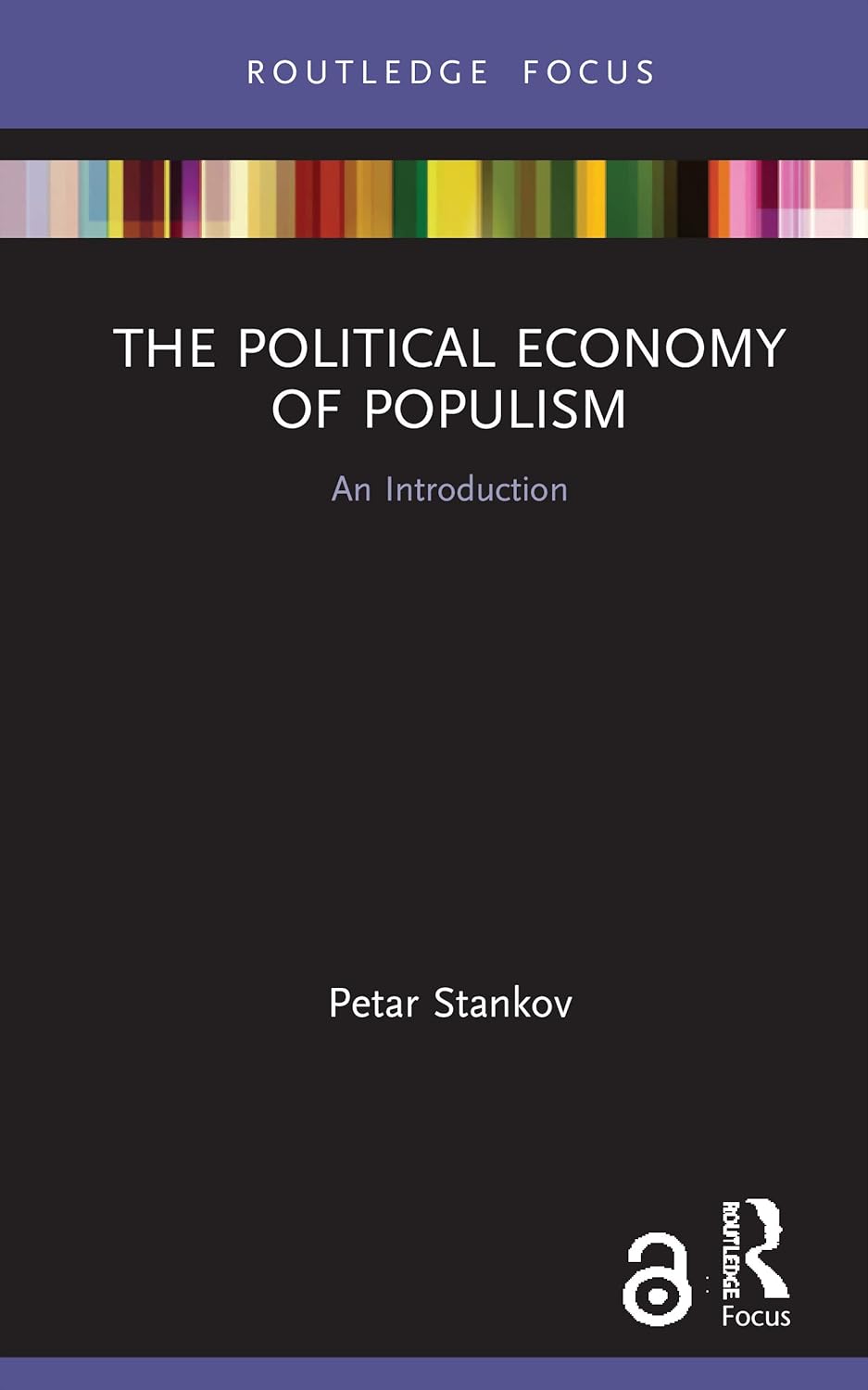
In this review of The Political Economy of Populism the reviewer finds a focused, evidence-driven study best suited for readers who want a historical and analytical account of how identity and economic forces shape populist politics. Petar Stankov presents a long-term view that links data on populist incumbencies with macroeconomic and democratic history, making the book valuable for scholars and informed readers who seek a rigorous explanation rather than a polemic. The single biggest reason to buy is its synthesis of political science, economics and historical data into a coherent, testable narrative about populist dynamics.
Key Features
- Historical scope: Traces populist votes and incumbencies from the early 20th century to show long-term patterns and continuities across eras.
- Data-driven analysis: Uses data on populist incumbencies and macroeconomic indicators to link economic conditions to political outcomes.
- Interdisciplinary synthesis: Draws on political science, economics and other social sciences to explain the interplay of identity and distributional outcomes.
- Focus on identity conflicts: Explains how political entrepreneurs exploit identity divisions to mobilize support, clarifying mechanisms behind populist surges.
- Consequences of governance: Examines political and economic implications of populist incumbencies, highlighting distributional effects favoring elites in many cases.
Who It's For
This book is aimed at graduate students, researchers and policy analysts who need a historical and empirical account of populism that goes beyond contemporary case studies. Readers interested in the intersection of economics and political identity will appreciate the methodological rigor and the use of long-run data.
It is less suited for casual readers seeking quick summaries, biographies or prescriptive political advice; those audiences should look for shorter overviews or narrative-driven accounts rather than this dense, scholarly synthesis.
Pros & Cons
Pros
- Provides a broad historical lens that helps place modern populism in long-term context.
- Combines macroeconomic and democratic data with political theory to offer testable explanations.
- Interdisciplinary approach strengthens arguments by drawing on several social science traditions.
Cons
- Scholarly density and data focus may make it demanding for readers without background in political economy.
Specifications
| Title | The Political Economy of Populism |
| Series | Routledge Frontiers of Political Economy |
| Author | Petar Stankov |
| Scope | Historical data on populist incumbencies, macro economy and democracy |
| Approach | Interdisciplinary political science and economics analysis |
| Key themes | Identity, inequality, distributional consequences of governance |
Our Verdict
For readers who want a rigorous, historically grounded explanation of why and how populism rises and what it does in office, this book is a sound investment. Its value lies in the careful linkage of identity politics to economic and democratic data, making it particularly useful for scholars and policy-focused readers who need depth rather than a brief overview.
Frequently Asked Questions
Does this book use empirical data?
Yes. It links data on populist incumbencies with historical macroeconomic and democracy indicators to support its conclusions.
Is the book accessible to non-academics?
It is written in a scholarly style and best suits readers with some background in political economy; casual readers may find it dense.
What is the main argument?
Populism gains traction when political entrepreneurs exploit identity conflicts and distributional outcomes that often favor elites, and these dynamics can be traced across historical periods.
Editor's Take
A rigorous, historically grounded study that links identity and economic data to explain populist dynamics; ideal for scholars and policy analysts seeking depth rather than a brief overview.

Recently viewed
Recently viewed products will appear here as customers browse the store.