

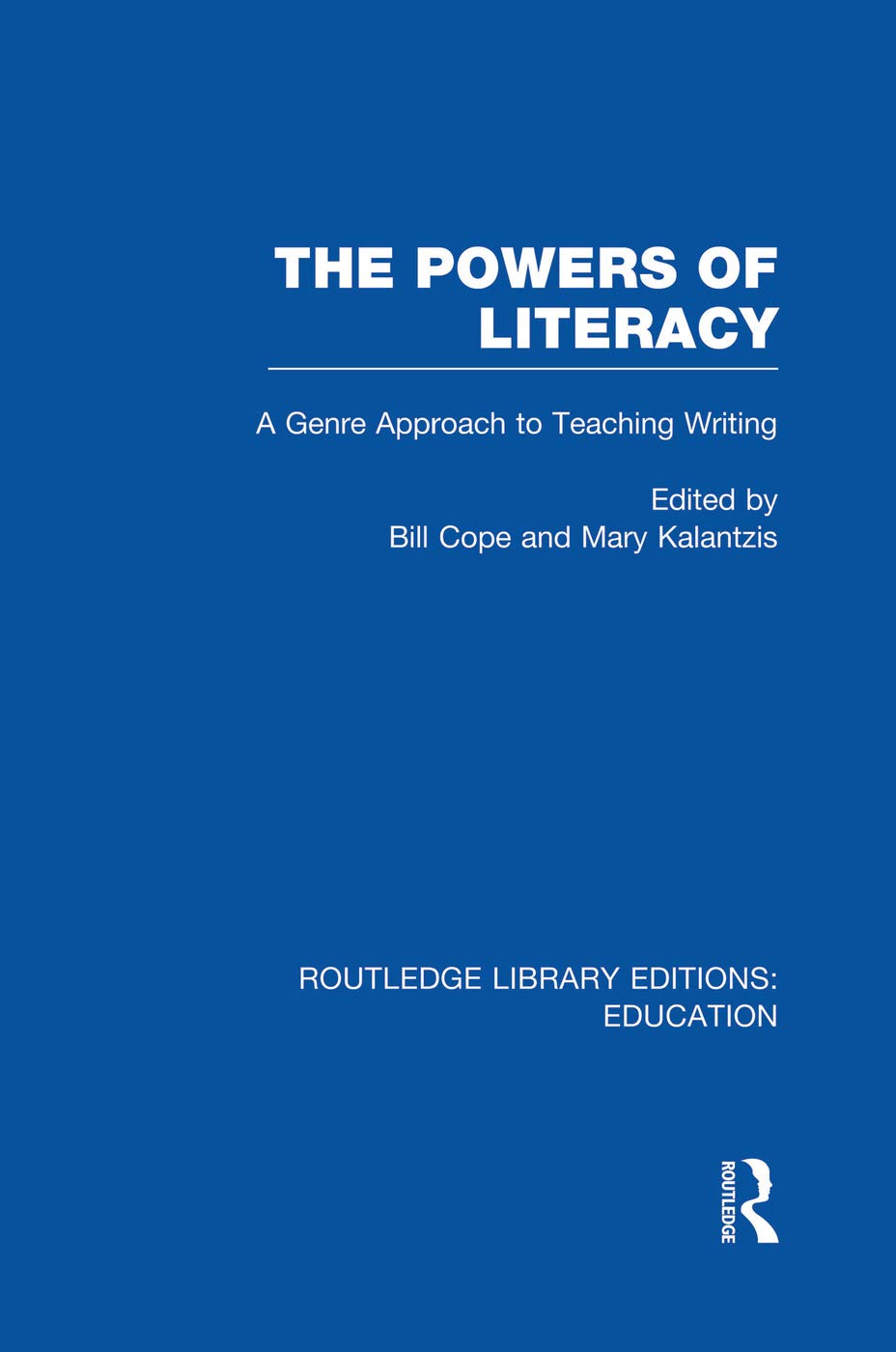
The Powers of Literacy (RLE Edu I) - Critical Perspectives on
The Powers of Literacy (RLE Edu I) - Critical Perspectives on
Price subject to change. Tap below for current.
Couldn't load pickup availability
In this review of The Powers of Literacy (RLE Edu I), the book is presented as a rigorous, interdisciplinary exploration of how literacy intersects with language, culture and power. Readers seeking a critical, theory-driven account of literacy debates will find its essays valuable because they map the contested assumptions shaping educational policy and classroom practice. The review highlights the book's scholarly reach and the way contributors draw on fields such as cultural studies, sociolinguistics and comparative education to challenge taken-for-granted ideas about literacy and teaching.
Key Features
- Interdisciplinary approach: Essays combine perspectives from critical social theory, poststructuralism and feminisms to broaden what literacy can mean in education.
- Focus on power and ideology: The collection links literacy to questions of knowledge, discourse and social control, helping readers rethink policy assumptions.
- Use of sociolinguistics and ethnography: Contributors use sociolinguistic methods and the ethnography of communication to ground theoretical claims in real language practices.
- Historical and comparative context: Social history and comparative education chapters situate literacy debates in broader institutional and historical frames.
- Critical interrogation: The book persistently questions taken-for-granted assumptions that guide research and classroom practice, prompting reflective scholarship.
Who It's For
The Powers of Literacy is best for graduate students, researchers and advanced practitioners in education who want a critical, theory-rich examination of literacy beyond basic pedagogical technique. Scholars of language, culture and policy will appreciate the book's engagement with ideology, discourse and power.
Teachers seeking lesson-level, step-by-step classroom materials or a quick how-to guide on literacy instruction should look elsewhere; this volume is analytical and conceptual rather than a practical methods manual for immediate classroom use.
Pros & Cons
Pros
- Provides a broad theoretical toolkit linking literacy to social theory, useful for advanced study and policy critique.
- Draws on diverse disciplines so readers gain multiple lenses on language, culture and learning.
- Grounds arguments in sociolinguistics and ethnography, adding empirical depth to conceptual claims.
Cons
- Not aimed at novice teachers seeking practical classroom strategies, which limits its immediate applicability for everyday instruction.
Specifications
| Title | The Powers of Literacy (RLE Edu I) |
| Author / Editor | Mary Kalantzis (brand contributor) |
| Subject | Literacy, education theory, language and culture |
| Approach | Critical theory, cultural studies, sociolinguistics, ethnography |
| Intended audience | Researchers, graduate students, education theorists |
| Use case | Scholarly critique of policy and pedagogical assumptions |
Our Verdict
The Powers of Literacy (RLE Edu I) is a valuable, intellectually rigorous collection for those who study literacy as a social and political phenomenon. It is good value for researchers and advanced students because it brings together diverse theoretical and empirical perspectives that deepen understanding of how literacy intersects with language, culture and power, though practitioners seeking immediate classroom techniques may find it less practical.
Frequently Asked Questions
Is this book suitable for classroom teachers?
The volume is primarily theoretical and best suited to teachers interested in deepening their conceptual understanding rather than finding step-by-step lesson plans.
Does it include empirical studies?
Yes, contributors draw on sociolinguistics and ethnography to ground theoretical discussions in observed language practices.
Who edited or contributed to the collection?
Mary Kalantzis is the named brand contributor, and the book gathers essays from scholars across social theory, cultural studies and education.
Editor's Take
The Powers of Literacy is a rigorous, interdisciplinary collection that links literacy to language, culture and power; recommended for researchers and advanced students seeking conceptual depth rather than classroom how-to guidance.

Recently viewed
Recently viewed products will appear here as customers browse the store.