

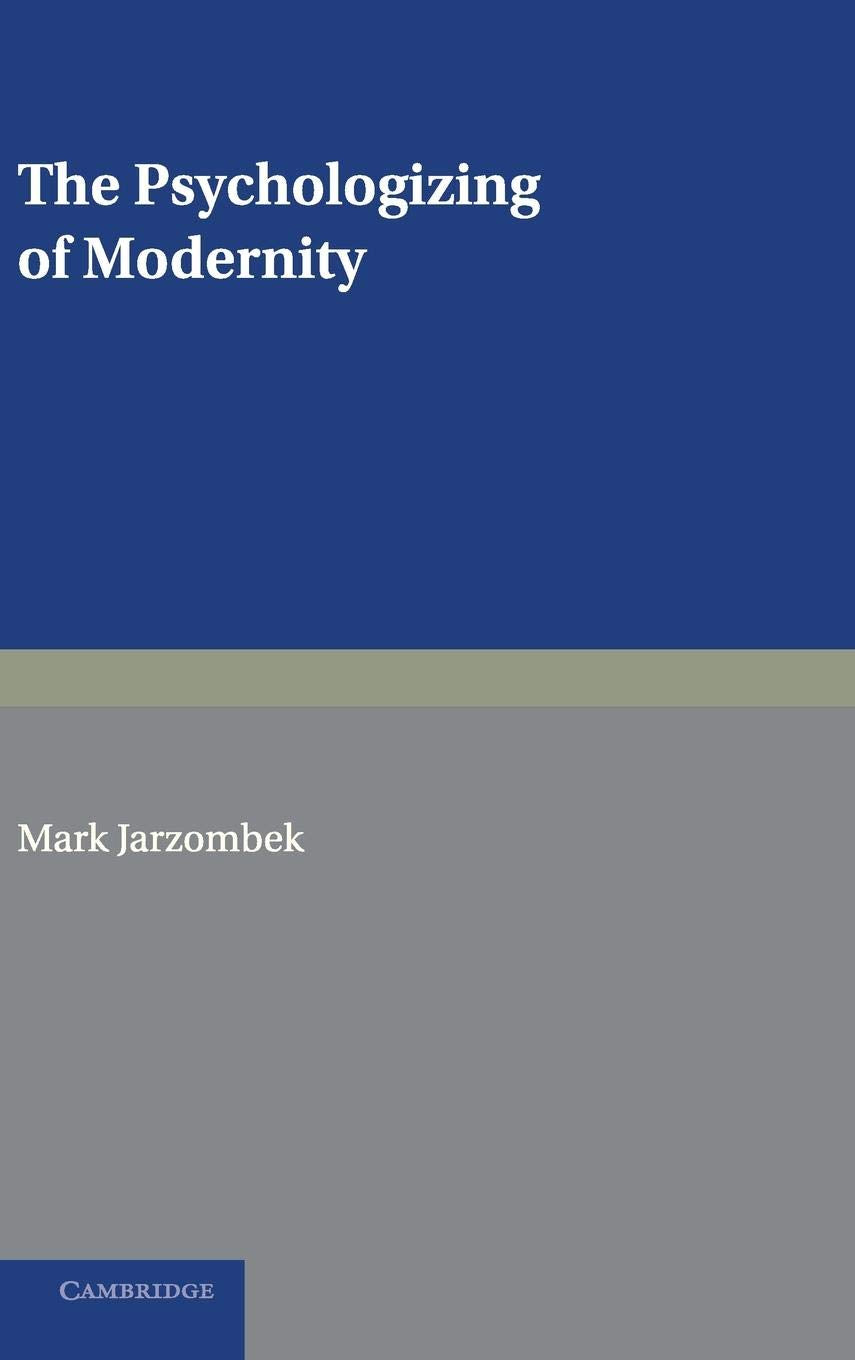
The Psychologizing of Modernity: Art, Architecture and History
The Psychologizing of Modernity: Art, Architecture and History
Price subject to change. Tap below for current.
Couldn't load pickup availability
In this review of The Psychologizing of Modernity, Mark Jarzombek offers a focused study that will appeal to readers interested in how psychological thought shaped twentieth-century aesthetics. The book's single biggest strength is its careful tracing of the relationship among psychology, art history and avant-garde practices, especially across pre-World War II Germany and postwar America, making it worth reading for scholars and serious students who want a historically grounded account rather than a broad survey.
Key Features
- Historical focus: Detailed examination of pre-World War II Germany and postwar America provides context for shifts in artistic theory and practice.
- Interdisciplinary analysis: Explores the interface between psychology, art history and avant-gardist practices to reveal how ideas migrated across fields.
- Theory tracing: Shows the transition from reliance on psychology to later turns toward philosophy and theory, clarifying intellectual trajectories.
- Cultural critique: Reflects on the persistence of the myth of aesthetic individuality and how it influenced both art and history writing.
- Focused case studies: Uses specific examples such as theories of empathy and Entartung to ground broader claims in concrete historical moments.
Who It's For
The Psychologizing of Modernity is best for graduate students, scholars and informed general readers who already have some familiarity with modern art history, critical theory or intellectual history and want a concentrated account of psychology's role in shaping aesthetic discourse.
Readers seeking a beginner's primer on modern art or a richly illustrated coffee-table book should look elsewhere; this is a text-driven, analytical study aimed at those comfortable with scholarly argument and historical detail.
Pros & Cons
Pros
- Offers a rigorous, historically grounded account of the interplay between psychology and aesthetics.
- Interdisciplinary approach clarifies links among psychology, art history and avant-garde practice.
- Focus on specific periods and theories gives readers concrete examples to follow the argument.
Cons
- Density and academic tone may be challenging for casual readers or those new to the subject.
Specifications
| Title | The Psychologizing of Modernity: Art, Architecture and History |
| Author | Mark Jarzombek |
| Primary focus | Impact of psychology on twentieth-century aesthetics |
| Geographic emphasis | Pre-World War II Germany and postwar America |
| Key topics | Theories of empathy, Entartung, shifts to philosophy and theory |
| Intended audience | Students, scholars, and informed readers |
Our Verdict
Jarzombek's study is a compact, thoughtful contribution for readers who want a historically specific account of how psychology intersected with modern art and historiography. Its value lies in tracing intellectual shifts with precision, making it a worthwhile purchase for researchers and graduate students who need a focused, well-argued treatment rather than a general overview.
Frequently Asked Questions
Does this book cover illustrations or images?
Answer. The work is a text-driven scholarly study focused on argument and historical analysis rather than an illustrated volume.
Which periods and places does the book emphasize?
Answer. The main emphasis is on pre-World War II Germany and postwar America, examining theories and their influence in those contexts.
Is this suitable for undergraduate coursework?
Answer. It can be used in advanced undergraduate or graduate seminars, but undergraduates new to the topic may need supplemental readings for background.
Editor's Take
Jarzombek's study offers a focused, historically grounded account of psychology's influence on twentieth-century aesthetics, making it valuable for scholars and advanced students seeking a precise interdisciplinary analysis.

Recently viewed
Recently viewed products will appear here as customers browse the store.