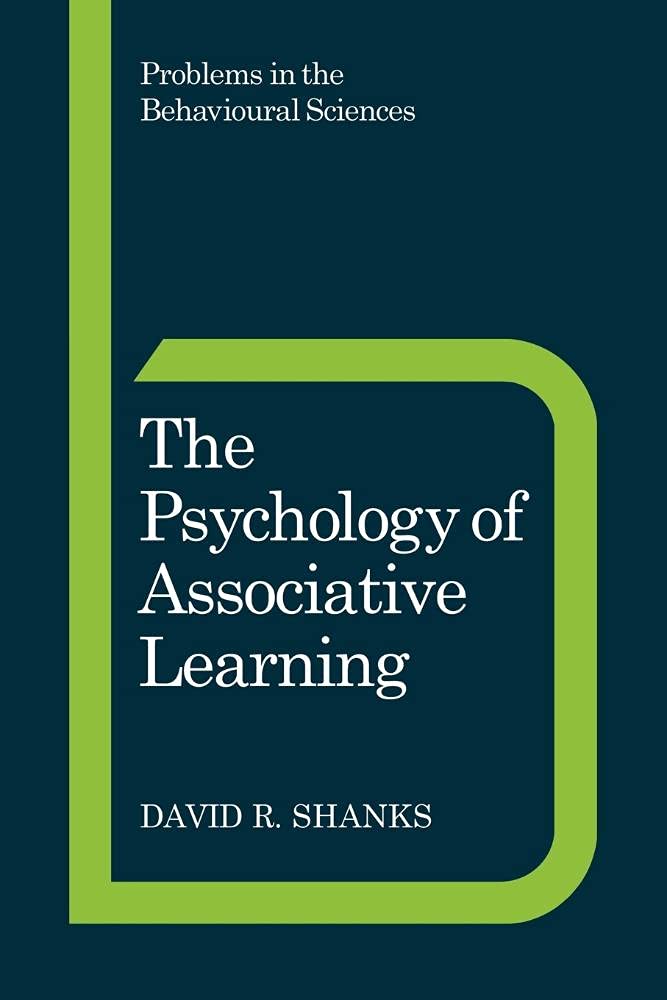
The Psychology of Associative Learning: A Deep Dive into Behavior
The Psychology of Associative Learning: A Deep Dive into Behavior
Price subject to change. Tap below for current.
Couldn't load pickup availability
The Psychology of Associative Learning is a comprehensive exploration of how individuals form connections between stimuli and responses. This book, part of the Problems in the Behavioural Sciences series, delves into the intricate mechanisms that govern learning processes. Readers will find a wealth of information that is both insightful and applicable to various fields.
One of the standout features of this book is its detailed examination of associative learning theories. The author, David R. Shanks, presents complex concepts in a clear and engaging manner, making it accessible to both students and professionals. The text is rich with examples that illustrate how associative learning plays a crucial role in everyday decision-making.
In addition to theoretical insights, the book provides practical applications of associative learning principles. Whether you are a psychologist, educator, or simply interested in understanding human behavior, this book offers valuable perspectives that can enhance your understanding of learning processes. The author emphasizes the importance of context in shaping associations, which is a key takeaway for anyone studying behavior.
The structure of the book is well-organized, allowing readers to easily navigate through various topics related to behavioral sciences. Each chapter builds upon the last, creating a cohesive narrative that guides the reader through the complexities of associative learning. The inclusion of case studies and empirical research further enriches the content, providing a solid foundation for the theories discussed.
Moreover, the book addresses common misconceptions about learning and behavior, challenging readers to rethink their assumptions. Shanks encourages critical thinking and invites readers to engage with the material on a deeper level. This approach not only fosters a better understanding of associative learning but also promotes a more nuanced view of human behavior.
For those interested in the intersection of psychology and education, this book serves as an essential resource. The insights gained from the Psychology of Associative Learning can be applied to teaching strategies, helping educators create more effective learning environments. By understanding how students form associations, teachers can tailor their approaches to enhance retention and comprehension.
In conclusion, The Psychology of Associative Learning is a must-read for anyone interested in the dynamics of learning and behavior. Its thorough exploration of associative learning, combined with practical applications and engaging writing, makes it a valuable addition to the field of behavioral sciences. Whether you are a seasoned professional or a curious learner, this book will undoubtedly deepen your understanding of the psychological processes that shape our interactions with the world.
Share