

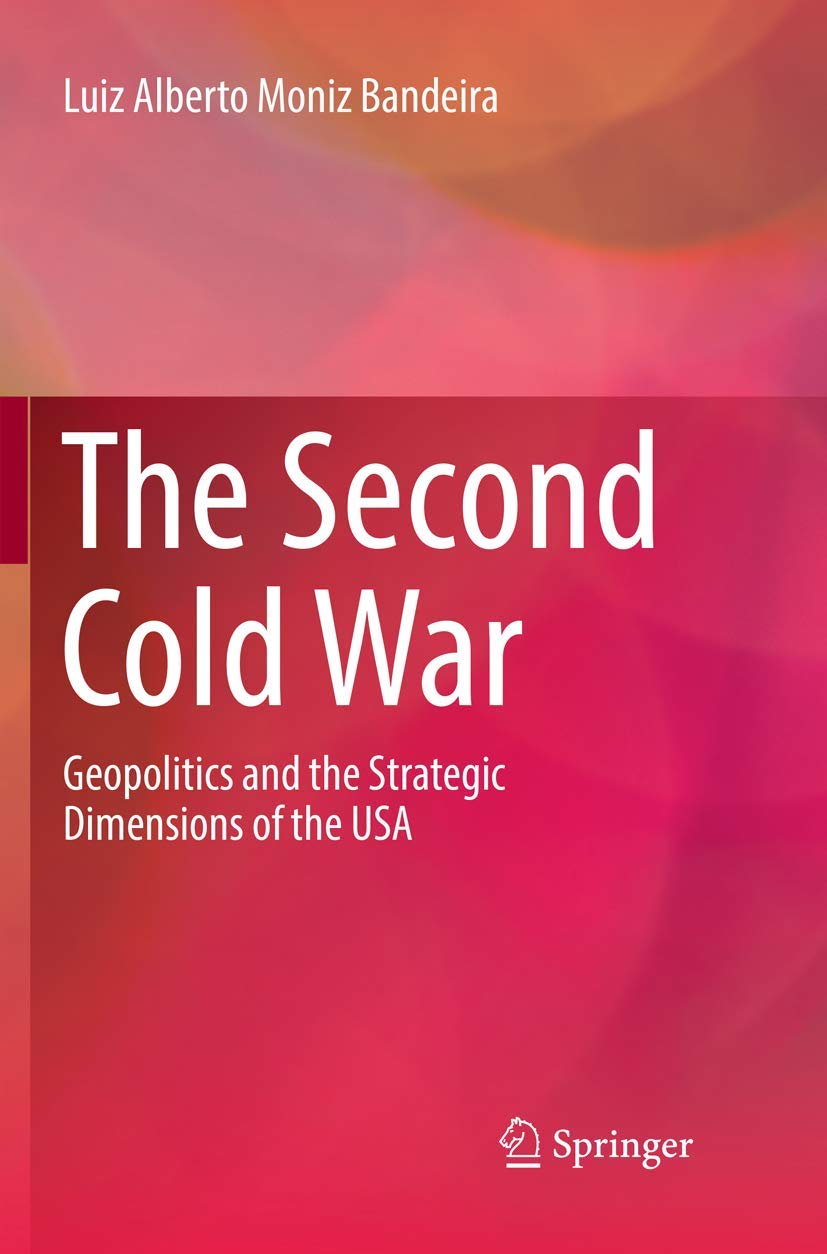
The Second Cold War: Geopolitics and the Strategic Dimensions
The Second Cold War: Geopolitics and the Strategic Dimensions
Price subject to change. Tap below for current.
Couldn't load pickup availability
In this review the reader will find a clear, scholarly appraisal of The Second Cold War by Luiz Alberto Moniz Bandeira, a book aimed at students, researchers and informed readers interested in recent geopolitics. The book's single biggest reason to read it is its detailed, historically grounded account of US strategic policy across the George W. Bush and Barack Obama years and how those policies intersected with upheavals in Northern Africa, the Middle East and Central Asia; the author supports arguments with a wide range of empirical and historical sources that give the narrative weight and credibility.
Key Features
- Focused geopolitical analysis: The book lays out how US foreign policy during two administrations shaped regional dynamics across Northern Africa, the Middle East and Central Asia.
- Historical grounding: Bandeira draws on a wide base of empirical and historical sources to connect contemporary events to longer geopolitical trends.
- Comparative Great Game perspective: The narrative situates tensions between the USA/NATO and Russia within a broader geo-economical competition, clarifying strategic motives.
- Case studies of the Arabellions: The author examines the so-called Arabellions in detail, showing how external influences and internal dynamics combined to produce unrest.
- Policy-focused interpretation: Readers gain insight into the influence of US strategy on political processes over the last two decades, useful for policy analysis and teaching.
Who It's For
This book will suit graduate students, policy analysts and general readers seeking a serious, historically informed exploration of US strategic behavior and its global consequences; it is strongest for those who want an interpretive framework linking US policy to regional upheavals. It is also a useful reference for instructors assembling reading lists on contemporary geopolitics and international relations.
Readers expecting a short, introductory overview or a highly journalistic, anecdote-driven account may prefer a different title; this work assumes interest in strategic analysis and some prior familiarity with recent international events and actors.
Pros & Cons
Pros
- Thorough examination of US strategic aims across two administrations that clarifies long-term patterns.
- Evidence-based approach using empirical and historical sources to back interpretations.
- Effective comparative frame placing USA/NATO and Russia interactions inside a wider Great Game narrative.
Cons
- The book's detailed, academic tone may be dense for casual readers seeking a light overview.
Specifications
| Title | The Second Cold War: Geopolitics and the Strategic Dimensions of the USA |
| Author | Luiz Alberto Moniz Bandeira |
| Scope | US foreign policy during George W. Bush and Barack Obama terms |
| Regional focus | Northern Africa, the Middle East, Central Asia |
| Analytical frame | Geopolitics and geo-economical Great Game between USA/NATO and Russia |
| Method | Empirical and historical source analysis |
Our Verdict
Luiz Alberto Moniz Bandeira offers a rigorous, well-documented account of recent US strategic behavior that rewards readers who want depth and context; students and policy-minded readers will find it good value for its clarity and sourcing, while casual readers may find the tone demanding rather than conversational.
Frequently Asked Questions
Does this book cover both Bush and Obama administrations?
Yes. The book specifically investigates US policy across George W. Bush and Barack Obama administrations.
Which regions are emphasized?
The author emphasizes Northern Africa, the Middle East and Central Asia in relation to geopolitical competition.
Is the book mainly historical or policy analysis?
It blends both: historical and empirical sources are used to support a policy-focused geopolitical analysis.
Editor's Take
A rigorous, well-documented geopolitical study of US strategy across the Bush and Obama years that offers valuable context for students and policy analysts, though its academic tone may be dense for casual readers.

Recently viewed
Recently viewed products will appear here as customers browse the store.