

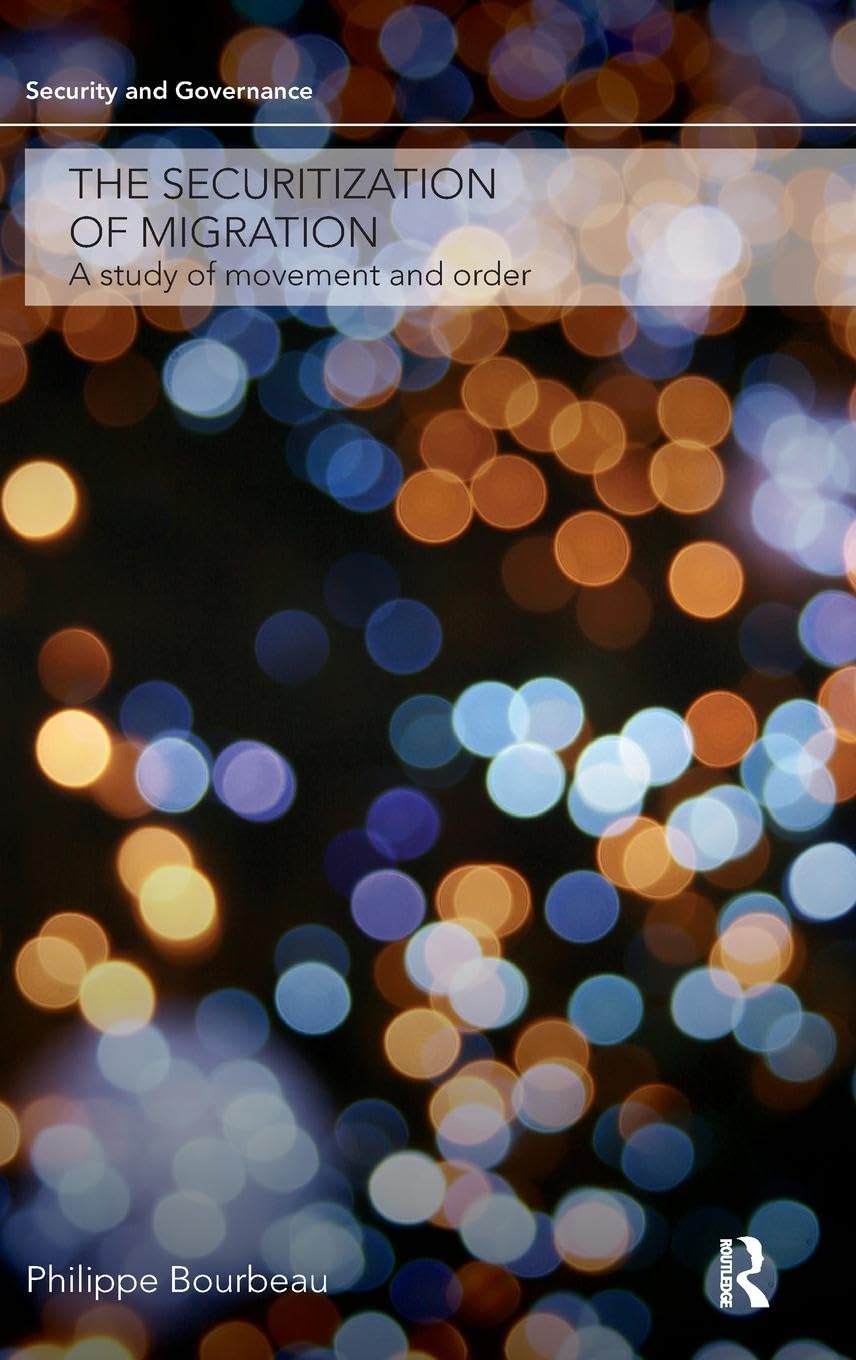
The Securitization of Migration - Comparative of Canada & France
The Securitization of Migration - Comparative of Canada & France
Price subject to change. Tap below for current.
Couldn't load pickup availability
In this review of The Securitization of Migration, the book is recommended for readers who want a careful, scholarly account of how migration becomes framed as a security problem. Philippe Bourbeau offers a measured, comparative study that explains why Western states, notably Canada and France, reconfigure policy and institutions around notions of policing and defence. The single biggest reason to read it is its clear use of Securitization Theory to connect discourse, institutions, and practice - useful for students, policy analysts, and informed readers seeking depth rather than polemic.
Key Features
- Comparative focus: The Canada and France comparison highlights how different institutional legacies shape securitization trajectories and policy responses.
- Theoretical framework: Drawing on Securitization Theory and social theory, the book links abstract concepts to concrete migration governance changes.
- Policy analysis: The text examines how migration is institutionally integrated into policing and defence, helping readers understand real-world policy shifts.
- Interdisciplinary approach: By combining migration studies with political and social theory, the work provides layered explanations rather than a single-cause narrative.
- Focused case studies: Detailed attention to Canada and France allows readers to see parallels and contrasts in practice and rhetoric.
Who It's For
This book is best for graduate students, researchers, policy makers, and public affairs professionals who need a rigorous account of how migration becomes framed as a security issue. Its use of social theory and case comparison makes it especially valuable for readers seeking analytical tools to interpret policy debates.
Readers looking for a general-interest history, a handbook of immigration law, or a how-to guide for activism should look elsewhere; the text assumes familiarity with social science concepts and focuses on discourse and institutional change rather than step-by-step policy prescriptions.
Pros & Cons
Pros
- Clear comparative lens that makes institutional differences between Canada and France intelligible and useful for cross-national inference.
- Strong theoretical grounding that helps connect rhetoric to concrete policy shifts in policing and defence contexts.
- Interdisciplinary treatment that draws on migration studies, social theory, and securitization research for a nuanced argument.
Cons
- The writing assumes familiarity with social theory, which may challenge casual readers without prior background in the field.
Specifications
| Title | The Securitization of Migration |
| Author | Philippe Bourbeau |
| Scope | Comparative study of Canada and France |
| Primary subjects | Securitization Theory, migration, security, governance |
| Approach | Discursive and institutional analysis |
| Intended audience | Students, researchers, policy analysts |
Our Verdict
The Securitization of Migration is a thoughtful, scholarly account that will repay readers who want to understand how migration was reframed as a security problem in Western democracies. Its comparative focus and theoretical clarity make it good value for students and analysts seeking to trace the ties between rhetoric, institutions, and policy in Canada and France.
Frequently Asked Questions
Does this book focus on a single country?
It provides a comparative analysis specifically of Canada and France to show similarities and differences in securitization processes.
Is technical theory explained for non-academics?
The book uses social and securitization theory throughout and is best suited to readers comfortable with academic analysis rather than casual readers.
Will it cover policy recommendations?
The emphasis is on explaining how migration is integrated into security frameworks rather than offering a step-by-step set of policy prescriptions.
Editor's Take
A thoughtful, comparative study that explains how migration is reframed as a security problem in Canada and France; ideal for students and policy analysts seeking theoretical and institutional insight.

Recently viewed
Recently viewed products will appear here as customers browse the store.