

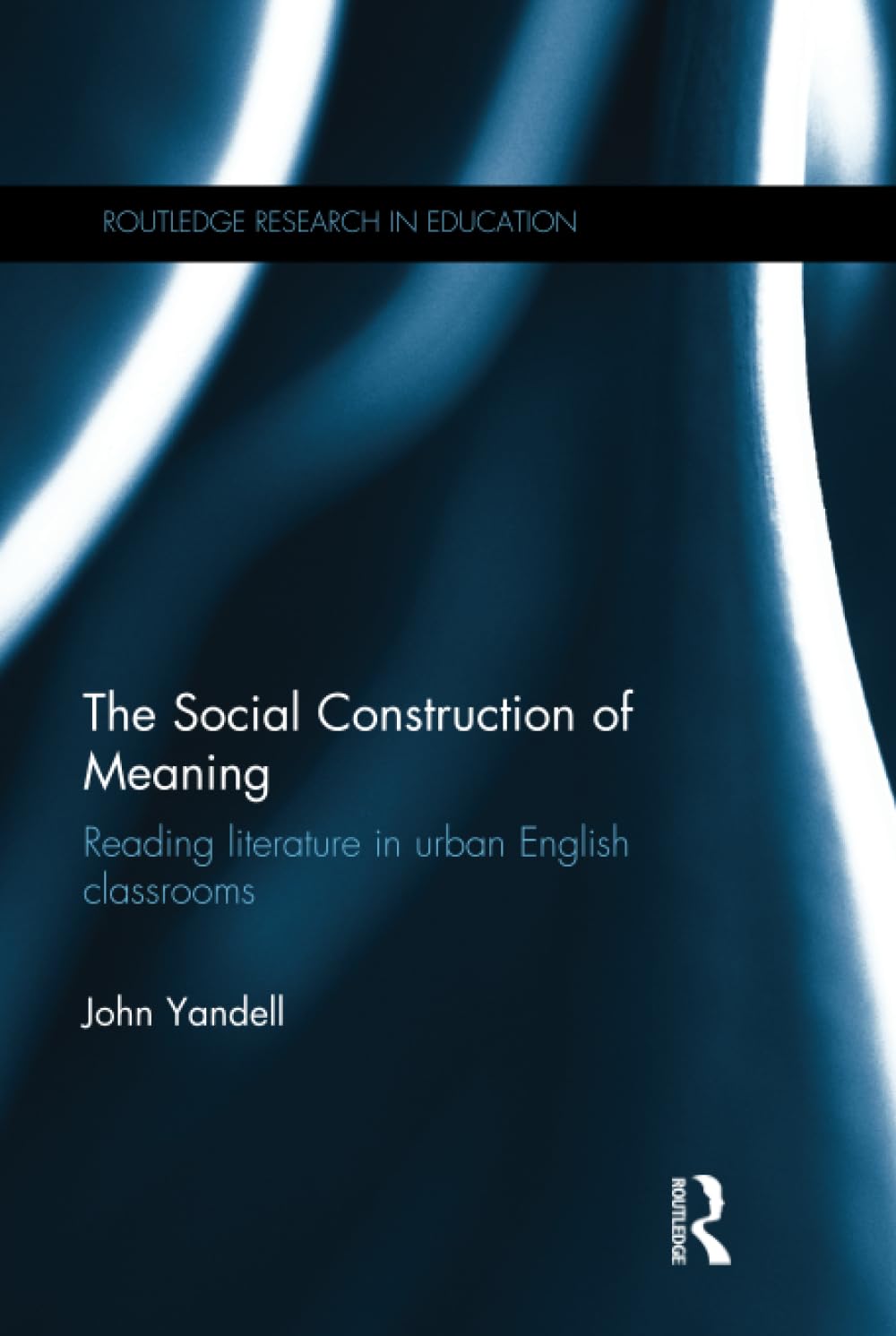
The Social Construction of Meaning: Reading literature in urban
The Social Construction of Meaning: Reading literature in urban
Price subject to change. Tap below for current.
Couldn't load pickup availability
In this review of The Social Construction of Meaning, John Yandell offers a focused analysis for teachers and researchers interested in how literature functions in secondary urban English classrooms. The book's single biggest contribution is its detailed, minute-by-minute examination of classroom interaction that reframes reading as collaborative cultural work rather than solitary consumption. Readers looking for practical, evidence-informed insight into discussion dynamics and how texts become tools of cultural production will find it especially valuable.
Key Features
- Close classroom observation: Provides minute-by-minute accounts of English lessons so readers can see how reading unfolds in real time and how interactions shape meaning.
- Reframing of reading: Argues that texts serve as resources for students' cultural production and contestation, offering a new perspective on classroom practice.
- Focus on urban settings: Grounds analysis in secondary urban English classrooms, making the findings especially relevant to teachers working in similar contexts.
- Theoretical and practical link: Connects theory about literacy and reading with concrete classroom episodes to inform both researchers and practitioners.
- Critical stance on conventional literacy ideals: Challenges the idea that classroom reading is merely preparation for private literary consumption, prompting re-evaluation of teaching goals.
Who It's For
The book is primarily aimed at secondary English teachers, teacher educators, and educational researchers who want to understand how literary texts operate as tools in classroom cultural work. Those designing curriculum or facilitating discussions will benefit from the detailed classroom transcripts and the argument that reading is collaborative and contested.
It is less useful for readers seeking a step-by-step lesson plan manual or a general introduction to literary theory; the emphasis is analytic and observational rather than a collection of ready-to-teach activities. If you need quick classroom resources, look elsewhere, but if you want deeper understanding of classroom interaction, this book is appropriate.
Pros & Cons
Pros
- Detailed observational evidence helps teachers see how discussion produces meaning.
- The reframing of reading as cultural production broadens pedagogical thinking.
- Particularly relevant examples for practitioners in urban secondary settings.
Cons
- The book is analytical rather than a source of ready-made lesson plans, which may limit immediate classroom application for some teachers.
Specifications
| Title | The Social Construction of Meaning |
| Subtitle | Reading literature in urban English classrooms |
| Author | John Yandell |
| Primary focus | Secondary urban English classrooms and classroom reading |
| Approach | Minute-by-minute classroom observation and analysis |
| Main argument | Reading functions as collaborative cultural production and contestation |
Our Verdict
The Social Construction of Meaning is a worthwhile read for teachers and researchers who want to rethink how literature is used in classrooms; its close observational approach illuminates the social processes of reading and offers strong intellectual value even if it does not provide turnkey lesson plans. For practitioners seeking deeper understanding of interactional dynamics and the cultural role of texts, it represents good value.
Frequently Asked Questions
Is this book practical for classroom teachers?
It is practical in the sense that it informs practice through detailed observation, but it is not a book of ready-made lesson plans.
Does the book focus on specific texts or genres?
The emphasis is on classroom interaction and reading as practice rather than on particular literary genres; texts are treated as resources within lessons.
Who is the author and what is his perspective?
John Yandell is the author, and his perspective centers on how reading in urban secondary classrooms is a collaborative cultural process rather than private consumption.
Editor's Take
The Social Construction of Meaning is a valuable, observation-driven book for teachers and researchers who want to understand how reading functions as collaborative cultural work in urban secondary English classrooms; it informs practice though it does not offer ready-made lesson plans.

Recently viewed
Recently viewed products will appear here as customers browse the store.