

The Social Value of Drug Addicts: Uses of the Useless - Critical
The Social Value of Drug Addicts: Uses of the Useless - Critical
Price subject to change. Tap below for current.
Couldn't load pickup availability
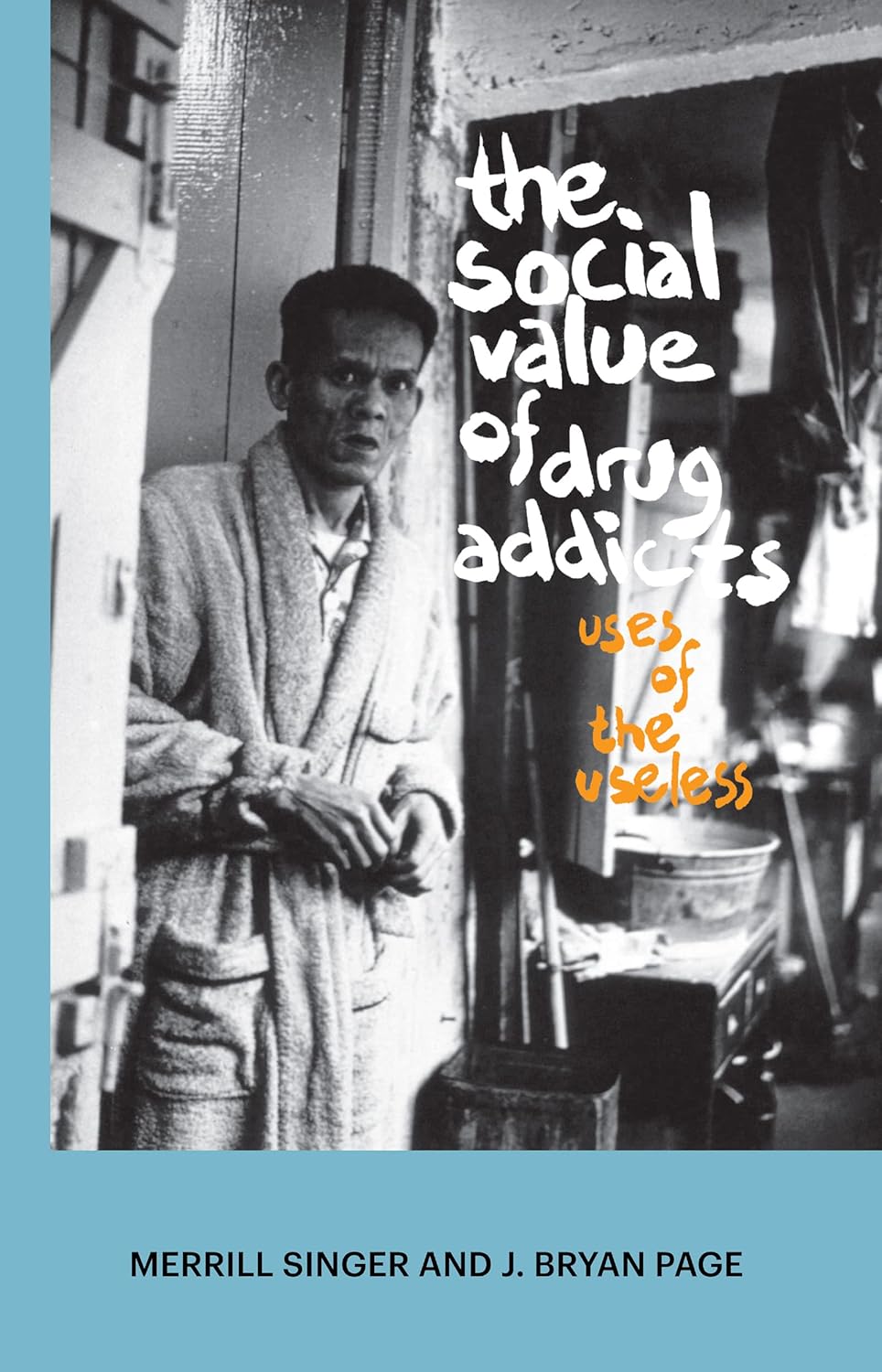
In this review of The Social Value of Drug Addicts: Uses of the Useless, the authors Merrill Singer and J Bryan Page offer a challenging, research-driven reassessment of how societies construct and benefit from labeling some people as "useless". The book is for readers who want a rigorous, anthropological and public health perspective on drug policy and cultural representation; its biggest reason to read is the central argument that the social construction of addicts serves tangible institutional and economic functions, not merely moral judgments. This reviewer found the work compelling for students, scholars, and policy analysts seeking evidence-based critique rather than moralizing narratives.
Key Features
- Critical thesis: The book convincingly argues that labeling drug users as useless generates social and economic benefits for certain institutions, reframing addiction as a social construct with functions.
- Interdisciplinary approach: By synthesizing medical anthropology, public health, and analysis of media and policy, it provides readers with multiple lenses to understand drug-related stigma.
- Policy analysis: Discussion of drug policy shows how criminalization and demonization create predictable outcomes that advantage some social sectors, useful for anyone studying public policy.
- Media critique: Examination of media representations helps readers see how cultural narratives about addicts are produced and sustained, aiding critical media studies.
- Accessible scholarship: Although scholarly, the prose remains readable enough for advanced undergraduates while offering new arguments for experienced researchers.
Who It's For
This book is primarily aimed at medical anthropologists, public health professionals, policy analysts, and graduate students interested in the structural and cultural forces shaping drug policy. It will be most valuable to readers who want a theoretical and empirical account of how stigma and criminalization are embedded in social institutions.
Those seeking a practical self-help guide, clinical treatment manual, or a purely biomedical account of addiction should look elsewhere, since the focus is sociocultural critique rather than individual-level clinical strategies or pharmacology.
Pros & Cons
Pros
- Illuminates the often-overlooked institutional benefits that follow from labeling people as worthless.
- Combines public health and anthropological perspectives for a richer analysis.
- Clear examples of media and policy mechanisms that reproduce stigma.
- Useful synthesis for teaching and research on drug policy and social inequality.
Cons
- The book is analytic rather than prescriptive, so readers wanting concrete policy solutions may find it limited.
- Some readers outside academia may find the theoretical framing dense.
Specifications
| Title | The Social Value of Drug Addicts: Uses of the Useless |
| Authors | Merrill Singer, J Bryan Page |
| Subject areas | Medical anthropology, public health, drug policy |
| Approach | Interdisciplinary analysis of media, policy, and social structure |
| Intended audience | Scholars, policy analysts, graduate students |
| Main argument | Social construction of "useless" serves functions for institutions |
Our Verdict
The Social Value of Drug Addicts is a thought-provoking, well-researched contribution that reframes addiction as a socially produced category with concrete institutional effects. Scholars and policy-minded readers will find strong value in its interdisciplinary critique and evidence synthesis, while those seeking clinical guidance should consult complementary texts. Overall, it is an excellent investment for anyone studying the intersections of stigma, policy, and public health.
Frequently Asked Questions
Does this book focus on clinical treatment of addiction?
No. The emphasis is on sociocultural analysis and policy critique rather than clinical or pharmacological treatments.
Is this accessible to non-academic readers?
Yes, the prose is readable, but the theoretical framing and evidence synthesis are geared toward students and professionals.
What disciplines does the book draw from?
It synthesizes medical anthropology, public health, media studies, and policy analysis to make its central argument.
Editor's Take
A rigorous, interdisciplinary critique that shows how labeling drug users as "useless" serves institutional functions; recommended for scholars and policy analysts seeking a sociocultural perspective.

Recently viewed
Recently viewed products will appear here as customers browse the store.