

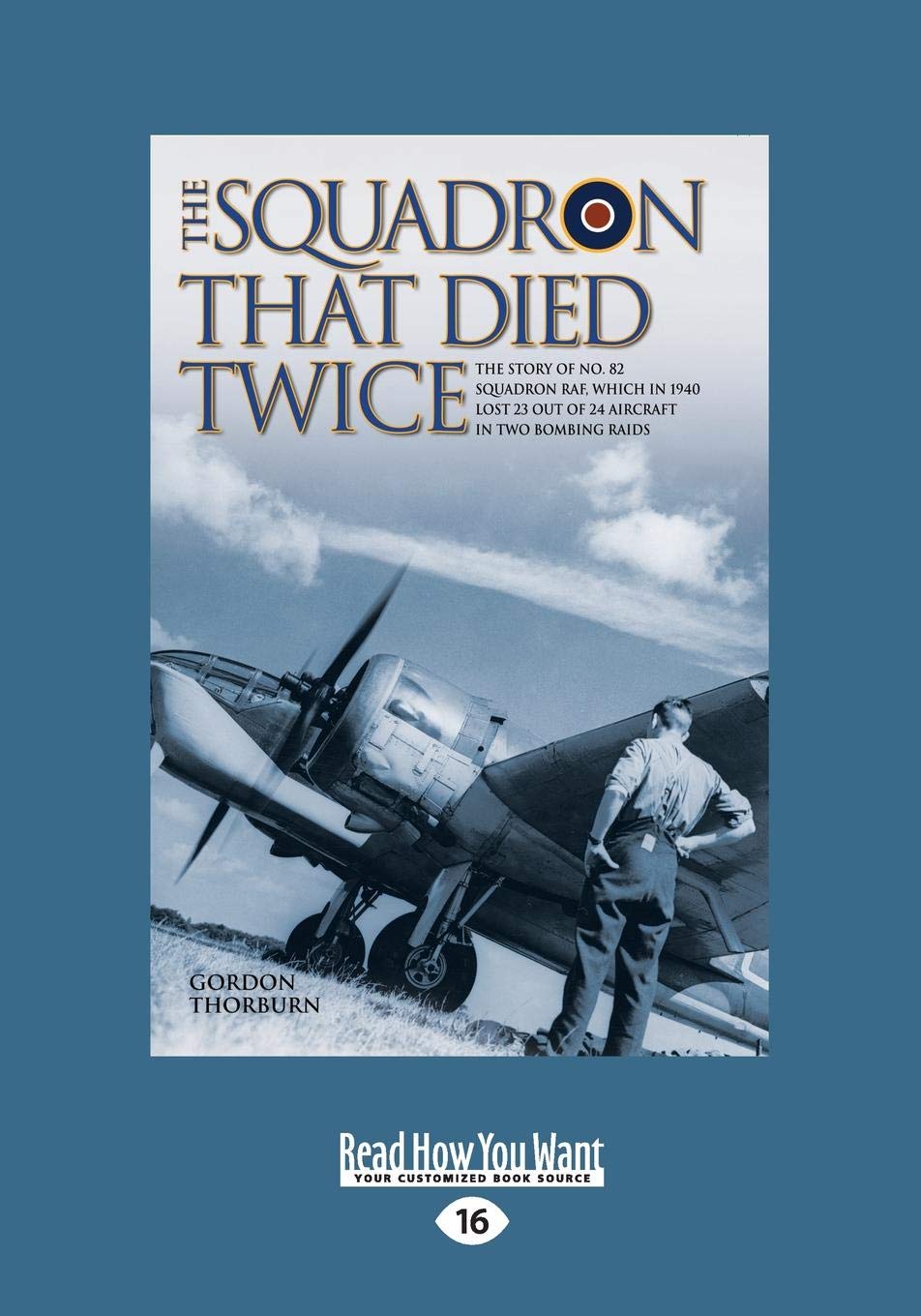
The Squadron That Died Twice - True Story of No. 82 Squadron RAF
The Squadron That Died Twice - True Story of No. 82 Squadron RAF
Price subject to change. Tap below for current.
Couldn't load pickup availability
In this review of The Squadron That Died Twice the bottom line is simple: this is a focused wartime narrative for readers who want a close, human account of a single catastrophic RAF action rather than a broad survey of the campaign. Gordon Thorburn reconstructs the May 1940 mission from Watton with a clear, solemn eye, and the single biggest reason to buy is the book's detailed, scene-driven telling of how twelve twin-engined bombers set out and only one crew returned, which makes the event immediate and affecting.
Key Features
- Eyewitness atmosphere: The opening scenes capture the stunned silence on the aerodrome, conveying the human shock that followed the losses in a way that helps readers empathize with aircrew and ground staff.
- Focused narrative: Concentrating on No. 82 Squadron allows the author to trace one mission in depth, providing a clearer picture of decisions, failures and bravery than a broader overview would.
- Operational detail: Descriptions of the squadron taking off from Watton and the subsequent encounters with flak and fighters give readers a concrete sense of the mission's dangers.
- Character-driven scenes: Individual figures such as Sergeant Thomas 'Jock' Morrison, the sole survivor, are given enough presence to make the losses personal rather than abstract.
- Historical context: The account situates the raid within the larger May 1940 fighting in Belgium, helping readers understand why the sortie was attempted despite the risks.
Who It's For
This book will appeal to readers of military history who prefer tightly focused, narrative-driven accounts over encyclopedic tomes. It suits those interested in RAF operations, aircrew experiences and the human cost of early Second World War bombing raids.
Readers seeking a comprehensive campaign history or a technical analysis of aircraft performance should look elsewhere; this is not a technical manual nor a full strategic study, but rather a poignant microhistory centered on one squadron's tragic day.
Pros & Cons
Pros
- Powerful, human storytelling brings the squadron's fate to life for readers.
- Well-paced reconstruction of the mission gives clarity to a chaotic event.
- Specific details such as the Watton departure and Morrison's lone return anchor the narrative in place and person.
Cons
- Not a broad operational or technical study, so readers seeking exhaustive campaign analysis may find it narrow.
Specifications
| Title | The Squadron That Died Twice |
| Subject | No. 82 Squadron RAF, May 1940 |
| Author | Gordon Thorburn |
| Event covered | Losses during two bombing raids in May 1940 |
| Notable outcome | 23 out of 24 aircraft lost across two raids; one aircraft returned from the first mission |
| Setting | Watton, Norfolk and the Belgium/France border |
Our Verdict
The Squadron That Died Twice is a compact, emotionally strong account that belongs on the shelf of anyone interested in aircrew experience and small-scale wartime narratives; it delivers clear value by turning a single catastrophic mission into a vivid human story rather than a detached statistic.
Frequently Asked Questions
Does the book focus on one mission?
Yes, the narrative centers on the May 1940 sorties by No. 82 Squadron that resulted in devastating losses.
Is this a technical history of aircraft?
No, the emphasis is on the people and events of the squadron rather than detailed aircraft specifications or technical analysis.
Who is the central figure in the account?
Sergeant Thomas 'Jock' Morrison is highlighted as the pilot of the only aircraft to return from the described mission.
Editor's Take
A compact, emotionally strong account that turns the catastrophic May 1940 mission of No. 82 Squadron RAF into a vivid human story; ideal for readers of focused military narratives.

Recently viewed
Recently viewed products will appear here as customers browse the store.