

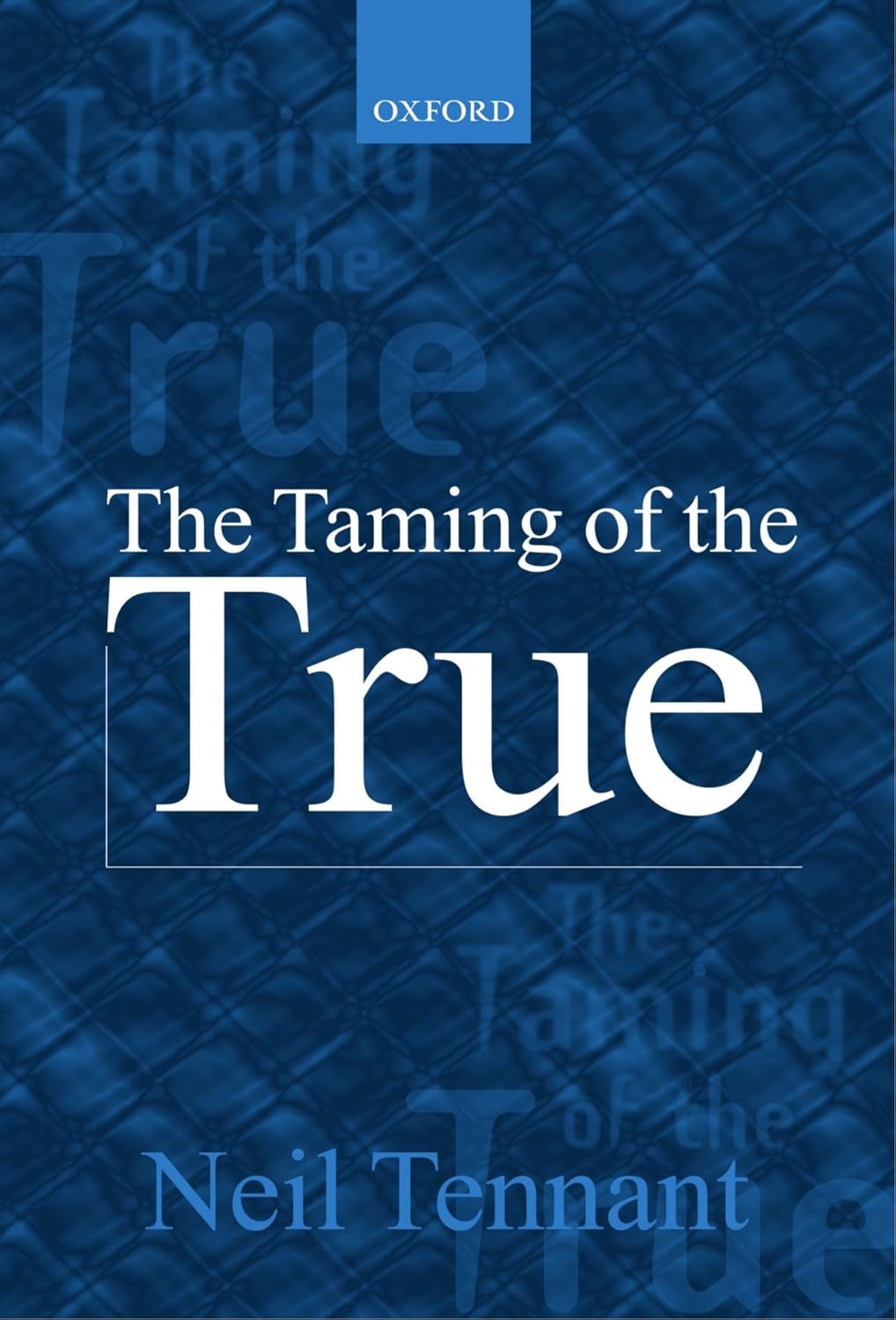
The Taming of the True - of Semantic Anti-Realism by Neil Tennant
The Taming of the True - of Semantic Anti-Realism by Neil Tennant
Price subject to change. Tap below for current.
Couldn't load pickup availability
In this review of The Taming of the True, the bottom line is clear: this book is for readers who want a rigorous, philosophical defense of semantic anti-realism that connects meaning, logic, and empirical discourse. Neil Tennant offers a sustained argument that every truth is knowable and that manifestationism in the theory of meaning requires rethinking logical form, making the volume most valuable to professional philosophers, advanced students, and anyone interested in the theory of meaning. The book challenges standard positions and proposes constructive moves with consequences across logic, mathematics and epistemology.
Key Features
- Defends semantic anti-realism: Tennant presents a systematic case that truth should be understood in anti-realist terms, offering conceptual tools for re-evaluating classic debates.
- Knowability thesis extended: The book argues persuasively that every truth is knowable, which reframes questions about justification and epistemic access.
- Manifestationism and meaning: By tying manifestationism to the theory of meaning, Tennant shows how semantic commitments can prompt logical reform.
- Application to empirical discourse: Anti-realism is extended beyond abstract domains to empirical statements, giving readers new ways to think about scientific and observational claims.
- Impact on philosophy of mathematics and logic: The treatment has tangible consequences for how mathematical and logical statements are interpreted under constructive perspectives.
- New accounts of analytic/synthetic distinction: The book develops contemporary approaches to analyticity, cognitive significance and constructive falsifiability, enriching debates about meaning and cognition.
Who It's For
The Taming of the True is aimed at professional philosophers, graduate students and philosophically sophisticated readers interested in theory of meaning, metaphysics and epistemology. Those working in philosophy of mathematics, logic or philosophy of language will find the arguments and proposed reforms particularly relevant to ongoing technical debates.
Readers seeking an introductory or popular overview of truth and realism should look elsewhere; Tennant's work presumes familiarity with analytic philosophy and formal issues in logic. This is not a casual read but a substantive contribution meant for an engaged, scholarly audience.
Pros & Cons
Pros
- Offers a coherent defense of semantic anti-realism that ties meaning to epistemic conditions, sharpening debates about truth.
- Extends the knowability perspective to empirical discourse, giving new tools for interpreting scientific claims.
- Engages implications for mathematics and logic, making the work relevant across several philosophical subfields.
Cons
- The treatment is technical and dense, so it may be challenging for general readers without background in analytic philosophy.
Specifications
| Title | The Taming of the True |
| Author | Neil Tennant |
| Primary topic | Semantic anti-realism and theory of meaning |
| Key claims | Every truth is knowable; manifestationism entails logical reform |
| Scope | Empirical discourse, philosophy of mathematics, logic, metaphysics, epistemology |
| Approach | Analytic argumentation and constructive proposals |
Our Verdict
The Taming of the True is a demanding but rewarding book for specialists and advanced students; it repays careful reading by linking epistemic commitments to semantic theory and by offering concrete consequences for logic and the philosophy of mathematics. Buy it if you want a serious, original defense of anti-realism that will shape technical discussion.
Frequently Asked Questions
Does this book argue that all truths are knowable?
Yes. Tennant defends the knowability thesis as a central component of his semantic anti-realist position, and uses it to motivate broader changes in logical theory.
Is the book accessible to non-specialists?
The book is technical and aimed at readers with background in analytic philosophy, so general readers may find it challenging.
What areas of philosophy does it affect?
The arguments are relevant to the theory of meaning, epistemology, metaphysics, philosophy of mathematics and formal logic.
Editor's Take
The Taming of the True is a demanding but rewarding defense of semantic anti-realism that links knowability to meaning and proposes logical reforms; recommended for specialists and advanced students.

Recently viewed
Recently viewed products will appear here as customers browse the store.