

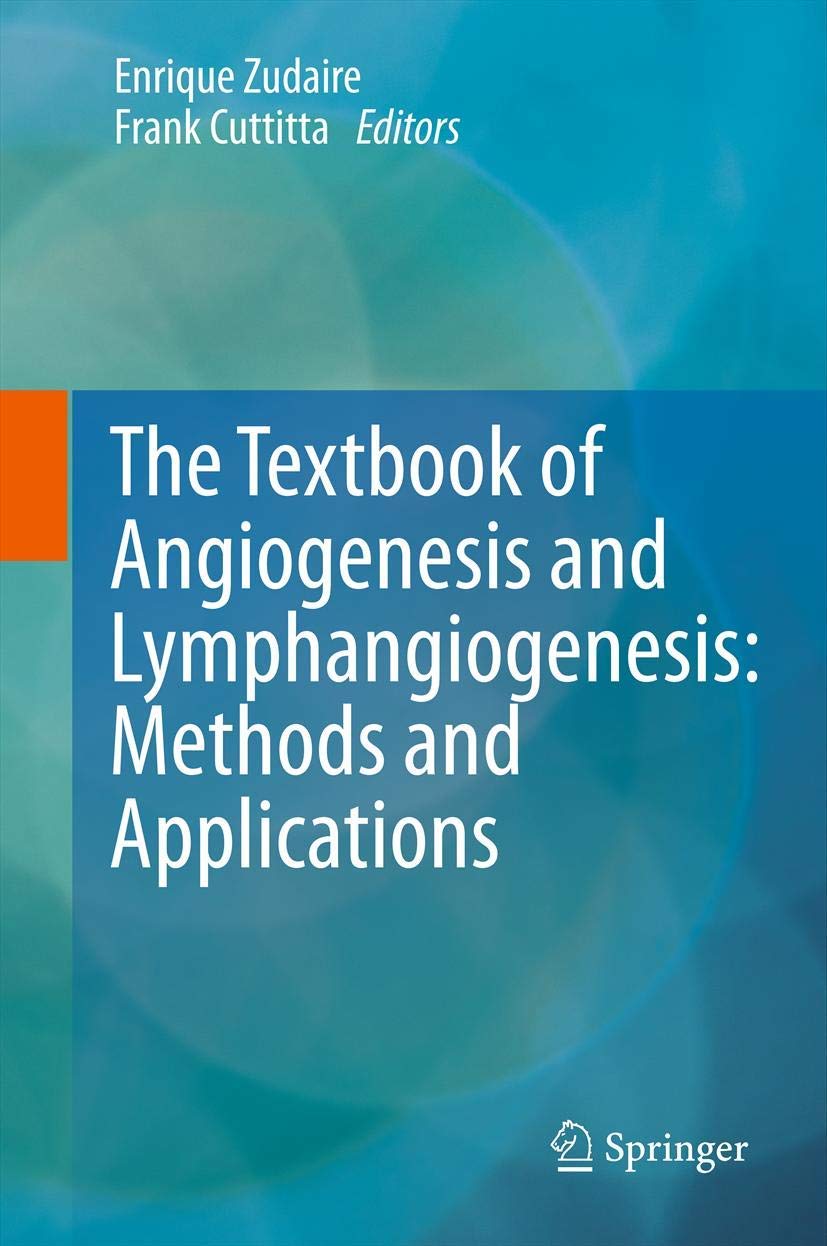
The Textbook of Angiogenesis and Lymphangiogenesis - Methods
The Textbook of Angiogenesis and Lymphangiogenesis - Methods
Price subject to change. Tap below for current.
Couldn't load pickup availability
In this review of The Textbook of Angiogenesis and Lymphangiogenesis: Methods and Applications, the book is best suited to researchers and clinicians who need a practical, method-focused reference on vascular biology. The bottom line: it compiles diverse experimental techniques and contextualizes them within disease-relevant research, making it a useful laboratory companion rather than a general physiology primer. This reviewer found the text most valuable for its emphasis on experimental approaches and translational relevance to conditions from macular degeneration to tumor metastasis.
Key Features
- Comprehensive methods: The book gathers a broad array of laboratory techniques developed worldwide, helping investigators select appropriate assays for angiogenesis and lymphangiogenesis studies.
- Disease context: Each method is presented with links to pathological states such as macular degeneration and tumor growth, clarifying clinical relevance.
- Evolution of techniques: Coverage highlights how assays have adapted to different experimental needs, providing historical and practical perspective for protocol choice.
- Translational focus: Emphasis on applications supports researchers aiming to move from basic mechanistic work toward therapeutic development.
- Multi-author expertise: Contributions reflect diverse global practices, offering varied solutions and troubleshooting tips for experimental setups.
Who It's For
This volume is aimed at biomedical researchers, graduate students, and clinician-scientists working on vascular biology, oncology, ophthalmology, or lymphatic research who require a methods-centered resource. It is particularly useful for labs planning experiments or adapting published assays to new model systems.
Those seeking a concise textbook of general cardiovascular physiology or an introductory text for undergraduates should look elsewhere; this is a specialized compendium designed around experimental approaches and disease-focused applications rather than basic textbook learning.
Pros & Cons
Pros
- Practical collection of protocols and analytical techniques that support experimental planning and execution.
- Clear links between methods and clinical problems such as macular degeneration and tumor metastasis, aiding translational thinking.
- Contributions reflect a range of worldwide practices, offering multiple methodological options and troubleshooting insights.
Cons
- Not a basic introductory textbook; readers without foundational vascular biology background may find some chapters dense or highly technical.
Specifications
| Title | The Textbook of Angiogenesis and Lymphangiogenesis: Methods and Applications |
| Authors / Brand | Enrique Zudaire, Frank Cuttitta |
| Scope | Methods and experimental applications in angiogenesis and lymphangiogenesis |
| Clinical relevance | Applications to macular degeneration, tumor growth and metastasis |
| Approach | Collection of diverse analytical techniques developed globally |
| Audience | Researchers, clinician-scientists, graduate students |
Our Verdict
The Textbook of Angiogenesis and Lymphangiogenesis is a valuable, method-focused reference for researchers and clinicians working on vascular-related diseases. Its strength lies in compiling diverse protocols with disease context, making it good value for labs planning translational experiments or adapting techniques across models.
Frequently Asked Questions
Does this book focus on clinical trials?
Answer. It emphasizes experimental methods and applications with clinical relevance rather than serving as a review of clinical trial data.
Is it suitable for beginners?
Answer. It is best for readers with some background in vascular biology; complete beginners may find parts technical.
Does it cover both angiogenesis and lymphangiogenesis?
Answer. Yes, the text treats both processes and provides techniques relevant to each.
Editor's Take
A methods-centered reference valuable for researchers and clinician-scientists, this textbook compiles diverse techniques with disease context, making it a practical guide for translational vascular research.

Recently viewed
Recently viewed products will appear here as customers browse the store.