

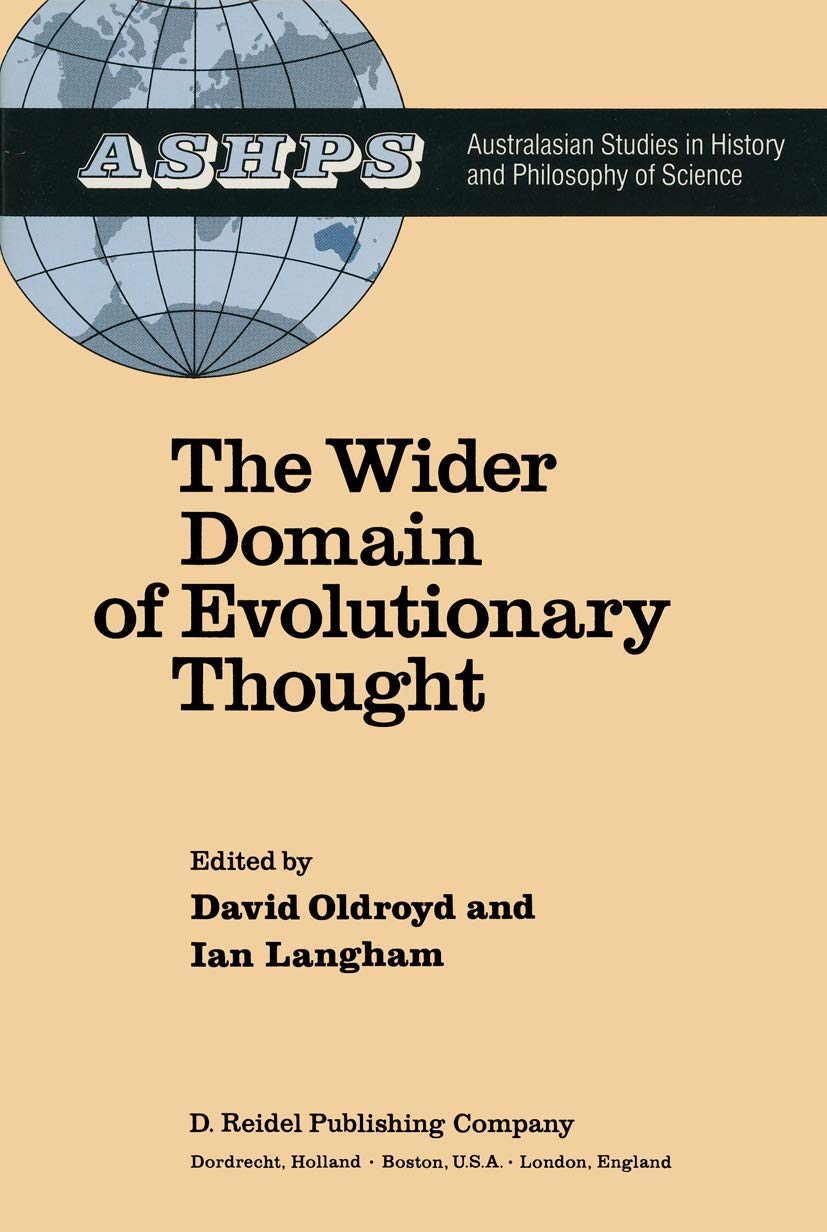
The Wider Domain of Evolutionary Thought - Scholarly History
The Wider Domain of Evolutionary Thought - Scholarly History
Price subject to change. Tap below for current.
Couldn't load pickup availability
In this review of The Wider Domain of Evolutionary Thought the reviewer finds a focused, historically grounded work for readers interested in the growth of History and Philosophy of Science as an academic field. The book is best for scholars, graduate students and informed readers who want a clear account of how the discipline gained institutional footing, particularly in the Australasian region; its single biggest reason to buy is the detailed narrative of early appointments and departmental development that contextualizes later scholarly work. This review highlights the book's usefulness as a reference and its strengths as a concise historical synthesis.
Key Features
- Historical focus: The book traces the institutional emergence of History and Philosophy of Science, clarifying how early appointments shaped the field in Australia.
- Regional perspective: It provides valuable detail on the Australasian experience, which is useful for readers studying national or regional academic development.
- Chronological narrative: The text follows the post-World War II expansion of the subject, making the timeline of growth easy to follow.
- Academic context: Readers gain insight into how the field related intellectually and socially to existing university structures.
- Concise synthesis: The book offers a compact account rather than an exhaustive anthology, so it is accessible for readers seeking overview material.
Who It's For
The Wider Domain of Evolutionary Thought is best suited to historians of science, philosophy of science scholars, graduate students, and librarians building academic collections. It is particularly valuable for readers researching the post-1945 period and the institutionalization of scholarly disciplines in Australia and nearby regions.
Readers seeking a textbook-style introduction to evolutionary theory itself, popular science readers looking for broad general-interest essays, or those expecting extensive contemporary case studies should look elsewhere, since the emphasis here is on historical institutional development rather than on scientific exposition or wide-ranging popular analysis.
Pros & Cons
Pros
- Clear account of early appointments and departmental formation that illuminates the field's roots in the Australasian region.
- Useful chronological approach that helps situate the expansion of History and Philosophy of Science after World War II.
- Concise and focused synthesis makes it a practical reference for researchers and librarians.
Cons
- Not a comprehensive global history; readers seeking broader international coverage may find the regional focus limiting.
Specifications
| Title | The Wider Domain of Evolutionary Thought |
| Series | Studies in History and Philosophy of Science |
| Authors | D.R. Oldroyd, K. Langham |
| Subject focus | History and Philosophy of Science; institutional history |
| Geographic focus | Australasian region (Australia) |
| Historical period | Post-World War II expansion (from 1946 onward) |
Our Verdict
The Wider Domain of Evolutionary Thought is a valuable, well-focused study for academics and students tracing the institutional emergence of History and Philosophy of Science in Australia. Its concise historical narrative and emphasis on early appointments make it good value for research libraries and specialists seeking a regional, scholarly account rather than a general popular introduction.
Frequently Asked Questions
Does this book cover global developments in the field?
Answer. The book concentrates on the Australasian experience and post-1945 institutional growth, so global coverage is limited.
Who authored the work?
Answer. The volume is by D.R. Oldroyd and K. Langham, authors with a focus on the history and philosophy of science.
Is this suitable for undergraduate courses?
Answer. It is most useful for upper-level undergraduates or graduate students in history or philosophy of science, and as a reference for those studying academic institutional history.
Editor's Take
A focused, concise study that traces the institutional emergence of History and Philosophy of Science in Australasia; ideal for scholars, graduate students, and research libraries seeking a regional, historical synthesis.

Recently viewed
Recently viewed products will appear here as customers browse the store.