

The Working of Econometric Models - Rigorous Empirical Analysis
The Working of Econometric Models - Rigorous Empirical Analysis
Price subject to change. Tap below for current.
Couldn't load pickup availability
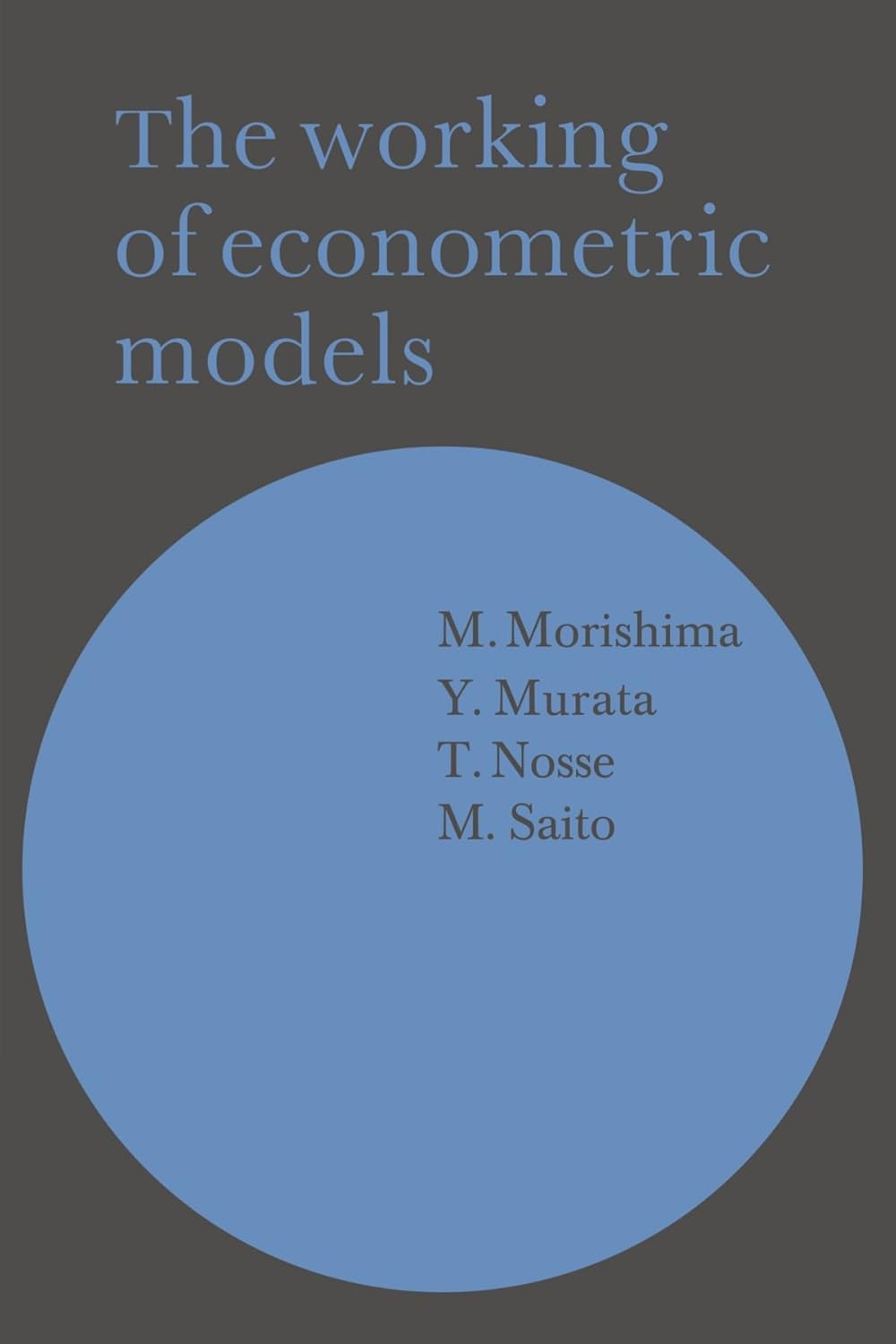
In this review of The Working of Econometric Models the bottom line is clear: this is a specialist academic book for readers who need rigorous empirical studies of general equilibrium applications. Compiled from five empirical studies led by Professor Morishima, the volume is most valuable for economists, graduate students, and researchers seeking concrete model construction across the USA, the UK and Japan. The single biggest reason to buy is its focused presentation of four distinct econometric models that connect theory to historical data and address stability, growth paths and policy trade-offs.
Key Features
- Empirical scope: Presents five empirical studies carried out in the early seventies that anchor abstract theory in observed economic patterns for three major economies.
- Model variety: Constructs four main econometric models that let readers compare structural features and outcomes across the USA, the UK and Japan.
- Theoretical linkage: Uses the models to discuss existence and stability of neoclassical and von Neumann-type growth paths, helping readers see theoretical implications in applied settings.
- Policy discussion: Explores practical tensions such as the antinomy between price stability and full employment, providing material for policy-oriented research.
- Conceptual depth: Examines classic principles like the Samuelson-LeChatelier principle and balanced-budget multiplier within an empirical framework to enrich theoretical understanding.
Who It's For
This book is best for academic economists, advanced graduate students and researchers in macroeconomics and econometrics who want detailed case studies of general equilibrium models applied to national economies. It suits readers who can follow formal discussion of stability, growth equilibria and comparative model diagnostics.
Those seeking a gentle introduction to econometrics or a modern textbook with contemporary data and software examples should look elsewhere; the studies date from the early seventies and the text assumes familiarity with theoretical apparatus and historical context.
Pros & Cons
Pros
- Provides concrete empirical constructions of four econometric models across three countries, useful for comparative research.
- Connects applied model results to core theoretical issues like growth path stability and the balanced-budget multiplier.
- Contains focused, research-grade discussion of policy trade-offs such as price stability versus full employment.
Cons
- The material reflects studies from the early seventies and does not include modern data or estimation techniques.
Specifications
| Title | The Working of Econometric Models |
| Authors / Brand | M. Morishima, Y. Murata, T. Nosse, M. Saito |
| Content focus | Five empirical studies on general equilibrium model applications |
| Economies covered | USA, UK, Japan |
| Main topics | Stability of growth paths, price-stability vs full employment, multiplier theory |
| Models included | Four main econometric models |
Our Verdict
The Working of Econometric Models is a strong research resource for specialists who need historical, model-based analyses linking theory and data across major economies. It offers clear value for graduate-level study and comparative econometric research, though readers should be prepared for older data and a theoretical treatment rather than a hands-on modern methods textbook.
Frequently Asked Questions
Does the book include empirical models for multiple countries?
Yes. The volume constructs four main econometric models covering the USA, the UK and Japan.
Is this book suitable for beginners in econometrics?
No. The text assumes familiarity with theoretical concepts and is best for advanced students and researchers.
What theoretical issues does it address?
It discusses growth path existence and stability, the conflict between price stability and full employment, Samuelson-LeChatelier effects, and balanced-budget multiplier theory.
Editor's Take
A research-quality volume that constructs four econometric models for the USA, UK and Japan and links empirical results to core theoretical issues; best for advanced students and specialist researchers who value historical, model-based analysis.

Recently viewed
Recently viewed products will appear here as customers browse the store.