

Theories of Modern Capitalism - Concise Guide to Marxist
Theories of Modern Capitalism - Concise Guide to Marxist
Price subject to change. Tap below for current.
Couldn't load pickup availability
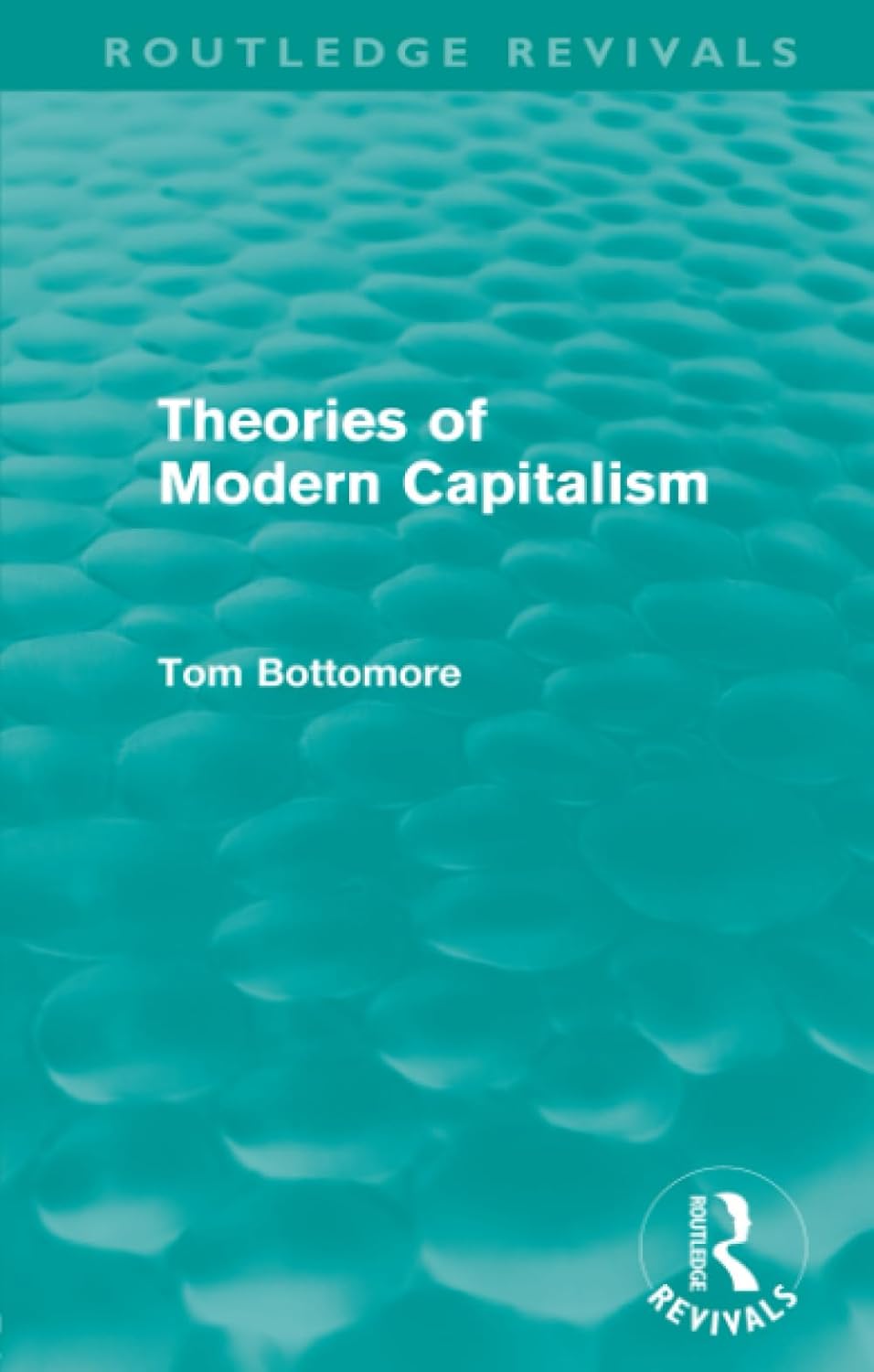
In this review of Theories of Modern Capitalism, readers looking for a compact, comparative survey of major thinkers will find a focused resource. Tom Bottomore offers a clear account of Marx, Weber, Schumpeter and Hayek and then moves to later Marxist debates about organised or late capitalism, making this edition useful for students and general readers seeking a readable, critical introduction. The single biggest reason to buy is its disciplined comparison of divergent theories, which saves time for anyone wanting a map of the main arguments without wading through the original texts.
Key Features
- Comparative analysis: The book lays out and contrasts the theories of Marx, Weber, Schumpeter and Hayek so readers can trace where their explanations of capitalism converge and diverge.
- Contemporary phase discussion: Bottomore examines later Marxist labels such as organised capitalism, state monopoly and late capitalism to contextualise recent developments.
- Transition debate: The text evaluates differing interpretations of a transition to socialism, presenting arguments from Marxists and critics in balanced form.
- Concise format: As a succinct study first published in 1985, the book is practical for coursework or an introductory reading list where depth is needed without overwhelming length.
- Critical perspective: Bottomore maintains a critical stance, comparing strengths and weaknesses of each theorist which helps readers form their own assessment.
Who It's For
Students of politics, sociology or political economy who need a readable synthesis of major theories will benefit most; the book works well as preparatory reading before tackling primary sources. It is also suited to general readers with an interest in ideologies who want an organised overview rather than a partisan polemic.
Scholars seeking exhaustive archival scholarship or the latest empirical research on contemporary capitalism should look elsewhere, since the book is a compact theoretical survey and reflects the debates and tone of its original publication era.
Pros & Cons
Pros
- Clear comparative framework makes complex theories accessible to non-specialists.
- Includes treatment of later Marxist concepts so readers see continuities in debate about capitalism's evolution.
- Concise and well focused, suitable for classroom use and quick reference.
Cons
- As a concise revival edition, it does not provide extensive new empirical updates on late 20th or 21st century capitalism.
Specifications
| Title | Theories of Modern Capitalism |
| Author | Tom Bottomore |
| Edition | Routledge Revivals (reprint of 1985 study) |
| Subject | Marxist and nonMarxist theories of capitalism |
| Topics covered | Marx, Weber, Schumpeter, Hayek; organised/state monopoly/late capitalism; transition to socialism |
| Use case | Introductory comparative study and classroom reference |
Our Verdict
Theories of Modern Capitalism is a valuable, concise guide for students and interested readers who need a clear comparative account of major theorists and later Marxist debates. Its limited scope is an asset for focused study, making it good value for people seeking orientation rather than exhaustive contemporary analysis.
Frequently Asked Questions
Does this book compare different thinkers directly?
Yes, Bottomore explicitly examines and compares Marx, Weber, Schumpeter and Hayek to highlight similarities and differences.
Is it suitable for course reading?
Yes, its concise format and critical clarity make it appropriate for undergraduate courses or seminar preparation.
Does it cover recent developments in capitalism?
It discusses later Marxist concepts like organised and late capitalism but is not a source of uptotheminute empirical research.
Editor's Take
Theories of Modern Capitalism is a concise, wellfocused guide for students and interested readers, offering a clear comparative account of major theorists and later Marxist debates; its compact scope is valuable for orientation though it does not provide extensive contemporary empirical updates.

Recently viewed
Recently viewed products will appear here as customers browse the store.