

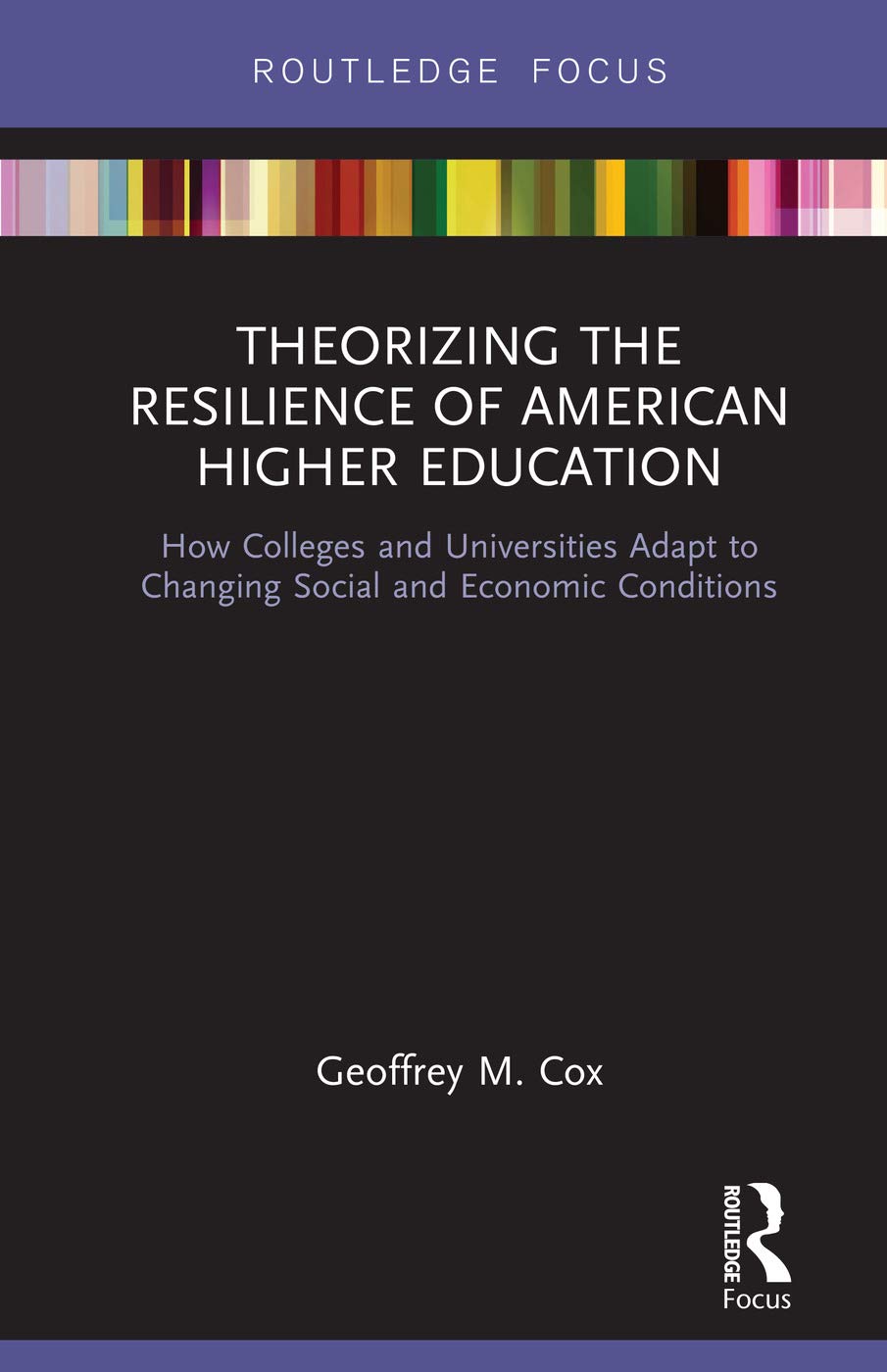
Theorizing the Resilience of American Higher Education
Theorizing the Resilience of American Higher Education
Price subject to change. Tap below for current.
Couldn't load pickup availability
Our review of Theorizing the Resilience of American Higher Education finds it most useful for scholars, administrators, and policy students interested in institutional change. Geoffrey M. Cox offers a clear, theory-driven explanation for how colleges and universities adapt to shifting social and economic forces, making this book a strong choice for readers seeking a conceptual framework rather than a how-to manual. The single biggest reason to pick up this volume is its central argument - the theory of accretive change - which ties together governance, finance, and mission adaptation in a way that clarifies why institutional diversity persists.
Key Features
- Theory of accretive change: Presents a single coherent theory that explains how institutions accumulate changes to remain resilient in new environments.
- Focus on institutional diversity: Demonstrates how differing demands for missions and governance models generate a variety of viable university forms.
- Attention to finance and capital: Explores how new sources of capital and investment models influence the capacity for innovation in higher education.
- Forward-looking analysis: Uses the theory to predict how technologies like artificial intelligence will reshape educational institutions.
- Connections to social entrepreneurship: Argues that social investment models will be important in the next wave of university development, linking theory to practice.
Who It's For
Academics in education theory and higher education administration will find this book valuable for its rigorous conceptual framework and its ability to connect governance, finance, and mission change. Graduate students researching the future of universities or institutional resilience will also benefit from Cox's clear exposition.
Practitioners seeking step-by-step implementation guidance or a handbook of policy tactics should look elsewhere, since the book is theoretical and analytical rather than a manual of operational reform. Those wanting case-by-case operational toolkits may find the focus on theory less immediately practical.
Pros & Cons
Pros
- Provides a coherent explanatory model that integrates multiple drivers of change, useful for research and high-level planning.
- Connects financial innovation and governance to mission evolution, offering a broader perspective than narrow policy briefs.
- Thoughtful forecasting of how AI and social investment could influence future institutional forms.
Cons
- Primarily theoretical in nature, so readers seeking concrete implementation steps may find it limited.
Specifications
| Title | Theorizing the Resilience of American Higher Education |
| Author | Geoffrey M. Cox |
| Subject | Higher education theory and institutional change |
| Core concept | Theory of accretive change |
| Key themes | Institutional diversity, governance, finance, AI influence |
| Intended audience | Scholars, administrators, graduate students |
Our Verdict
Theorizing the Resilience of American Higher Education is a valuable, theory-forward contribution for anyone studying how universities adapt; its strength is in synthesis and prediction rather than tactical advice, making it good value for researchers and senior planners who need a clear conceptual lens on future change.
Frequently Asked Questions
Does this book offer practical implementation steps?
Answer. No, the volume focuses on theory and prediction, not operational toolkits or step-by-step guides.
Who benefits most from reading it?
Answer. Scholars, higher education administrators, and graduate students researching institutional change will gain the most from its framework.
Does the book address technology like AI?
Answer. Yes, it discusses how the rise of artificial intelligence is likely to shape the next wave of universities and educational institutions.
Editor's Take
Theorizing the Resilience of American Higher Education is a theory-focused, valuable book for scholars and senior planners that explains how colleges adapt via accretive change and predicts the impact of AI and new investment models.

Recently viewed
Recently viewed products will appear here as customers browse the store.