

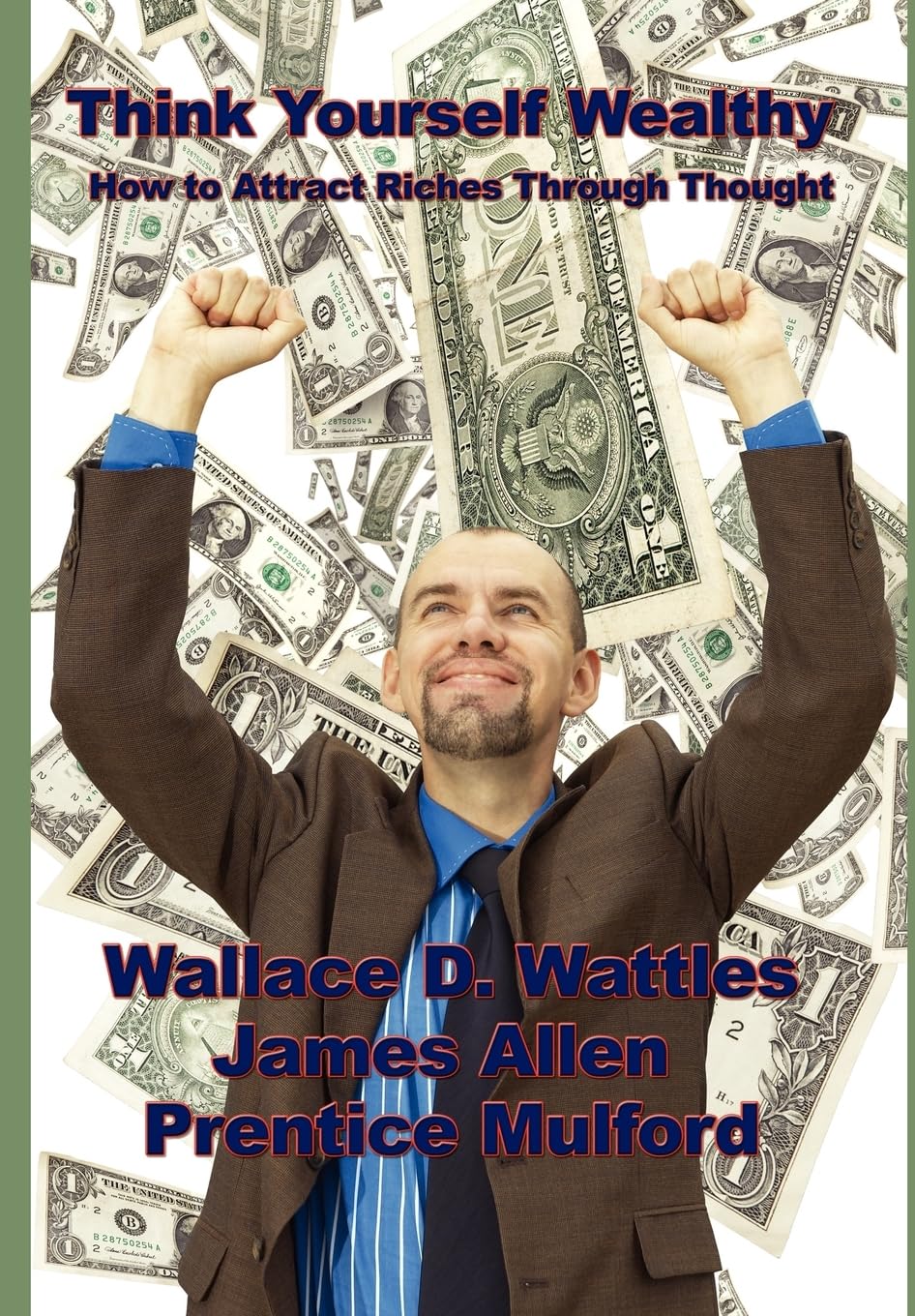
Think Yourself Wealthy: How to Attract Riches Through Thought
Think Yourself Wealthy: How to Attract Riches Through Thought
Price subject to change. Tap below for current.
Couldn't load pickup availability
In this review of Think Yourself Wealthy: How to Attract Riches Through Thought, the reviewer finds a compact, historically important collection best suited for readers curious about the roots of positive thinking. Combining three seminal works, this volume is for people who want to trace modern self-help back to its pioneers and to apply simple, mindset-focused principles to personal finance and success. The single biggest reason to buy is that it gathers The Science of Getting Rich, As a Man Thinketh, and Thoughts are Things in one place, making it easy to study the original phrasing and arguments that influenced later Law of Attraction literature.
Key Features
- Three classic titles included: Provides immediate access to foundational texts so readers can compare the primary sources behind modern prosperity teachings.
- Historical perspective: Shows how Wallace D. Wattles, James Allen, and Prentice Mulford framed the idea of thought influencing material results, useful for study and reflection.
- Concise philosophical writing: Each work is presented in its original, readable form, which makes complex ideas approachable without modern paraphrase.
- Actionable mental principles: Emphasizes thought discipline and constructive focus, offering practical guidance for readers who want habits they can practice daily.
- Reference value: Serves as a primary-source companion for anyone researching the development of prosperity literature and motivational movements.
Who It's For
This collection is ideal for students of self-improvement, entrepreneurs exploring mindset tools, and readers who prefer original texts over modern reinterpretations. It suits anyone who wants to study the language and reasoning that shaped later books about attracting wealth and success.
It is less appropriate for readers seeking step-by-step financial tactics, contemporary psychology citations, or evidence-based financial planning; those readers should look for modern texts that pair mindset with empirical strategies.
Pros & Cons
Pros
- Collects three influential texts in a single volume, making historical comparison straightforward.
- Preserves original phrasing so readers can engage directly with the primary authors.
- Offers simple, practice-oriented mental disciplines that are easy to adopt and reflect on.
Cons
- Does not include modern commentary or research, so readers seeking contemporary context may need supplementary material.
Specifications
| Title | Think Yourself Wealthy: How to Attract Riches Through Thought |
| Contents | The Science of Getting Rich; As a Man Thinketh; Thoughts are Things |
| Authors | Wallace D. Wattles; James Allen; Prentice Mulford |
| Subject | Mindset, prosperity philosophy, self-improvement |
| Use | Historical study and practical thought discipline |
| Good for | Readers exploring the roots of modern Law of Attraction texts |
Our Verdict
Think Yourself Wealthy is a valuable, economical collection for readers who want direct access to the origins of positive-thinking and prosperity literature. Its strength is in preserving three influential works together, making it a worthwhile buy for students, curious readers, and those building a foundational mindset practice, though it is best paired with contemporary resources for practical financial planning.
Frequently Asked Questions
Are the three works presented in full?
Yes; the volume gathers the original texts so readers can read each complete work as written by its author.
Is there modern commentary or analysis included?
No; this edition focuses on the primary texts themselves and does not provide contemporary annotations or research summaries.
Who influenced by these authors should read this?
Anyone studying the history of self-help or the Law of Attraction will find this collection particularly useful as a primary-source reference.
Editor's Take
This collection brings three foundational works together, offering readers direct access to the original writings that influenced modern prosperity thinking; it is excellent for study and mindset practice though it lacks modern commentary.

Recently viewed
Recently viewed products will appear here as customers browse the store.