

Thinking about Deterrence: Enduring Questions in a Time of Rising
Thinking about Deterrence: Enduring Questions in a Time of Rising
Price subject to change. Tap below for current.
Couldn't load pickup availability
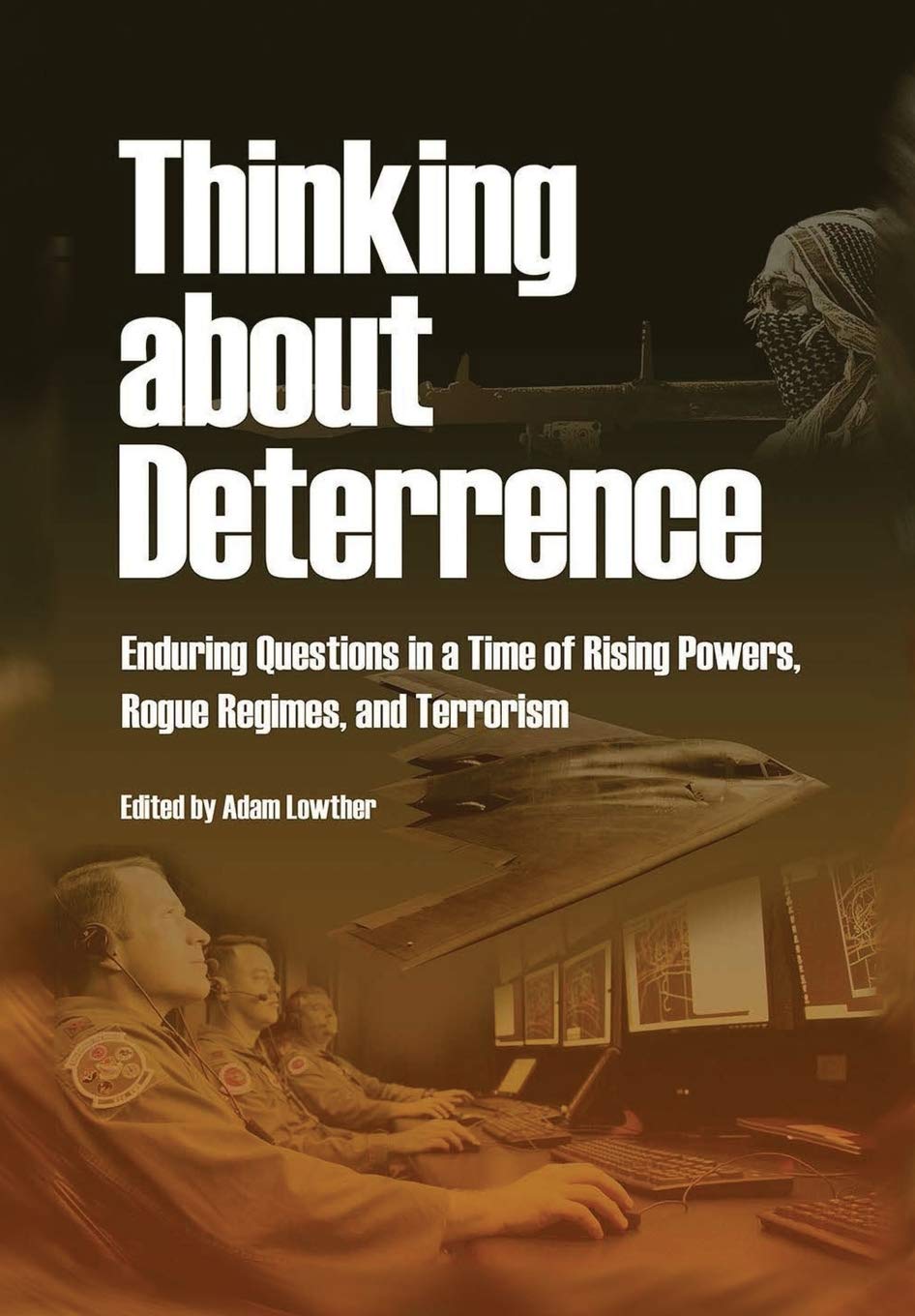
In this review of Thinking about Deterrence: Enduring Questions in a Time of Rising Powers, Rogue Regimes, and Terrorism, the bottom line is clear: scholars, policy analysts, and graduate students seeking a contemporary reappraisal of deterrence theory will find sustained, thoughtful arguments that extend deterrence beyond Cold War nuclear thinking. The collection moves deliberately into space, cyberspace, and non-state threats, making a persuasive case that deterrence remains a useful analytic lens. Readers should approach it expecting careful essays rather than a single unified theory.
Key Features
- Contemporary scope: The volume examines how deterrence theory applies to space and cyberspace, offering perspectives that update older debates for twenty-first century technologies.
- Non-state focus: Several essays explore deterrence against non-state actors, helping readers assess limits and possible strategies when adversaries lack clear centers of gravity.
- Nuclear reassessment: Contributors revisit the role of nuclear deterrence in the modern era, weighing its continuing relevance amid rising powers and rogue regimes.
- Policy relevance: The collection links theory to practice, providing material useful for analysts crafting deterrence policy in complex security environments.
- Edited volume format: Multiple scholars contribute varied viewpoints, which gives a broad survey rather than a single-author prescription.
Who It's For
This book is aimed at policy professionals, academic researchers, and advanced students in international security who want a contemporary, multiperspective take on deterrence. It is particularly useful for readers who already understand classical deterrence literature and are looking for extensions into cyberspace and space.
Those seeking a concise textbook, a practitioner manual, or a single unified theory should look elsewhere; the edited format means readers must synthesize viewpoints across essays rather than expect a streamlined playbook.
Pros & Cons
Pros
- Broad thematic range that makes deterrence theory relevant to modern domains like space and cyber.
- Nuanced treatment of non-state actors, helping clarify where deterrence may or may not be applicable.
- Thoughtful reassessment of nuclear deterrence that provokes reassessment rather than repeating Cold War orthodoxies.
Cons
- The edited volume format means arguments vary in depth and style, so readers should expect some unevenness between chapters.
- Not a step-by-step policy manual; readers seeking operational guidance will need supplementary sources.
Specifications
| Title | Thinking about Deterrence: Enduring Questions in a Time of Rising Powers, Rogue Regimes, and Terrorism |
| Editor / Brand | Air University Press, Adam Lowther |
| Subject areas | Deterrence theory, nuclear deterrence, cyber, space, non-state actors |
| Intended audience | Scholars, policy analysts, graduate students |
| Format | Edited academic volume |
| Analytic focus | Contemporary application of deterrence beyond Cold War contexts |
Our Verdict
Thinking about Deterrence is a valuable collection for those who want to update their understanding of deterrence for modern security domains. It is good value for researchers and policymakers who appreciate multiple expert voices and a careful reassessment of nuclear, space, and cyber deterrence, though readers seeking a unified doctrine should plan to synthesize the chapters themselves.
Frequently Asked Questions
Does this book address cyber deterrence?
Yes. Several essays extend deterrence theory into cyberspace, discussing conceptual and practical challenges.
Is it focused only on nuclear deterrence?
No. While nuclear deterrence is reassessed, the volume explicitly moves beyond Cold War nuclear frameworks to include space, cyber, and non-state threats.
Who contributed to the book?
The book is an edited volume published by Air University Press with Adam Lowther as the editor, featuring contributions from multiple scholars and analysts.
Editor's Take
Thinking about Deterrence is a valuable edited collection that updates deterrence theory for nuclear, space, cyber, and non-state threats; ideal for scholars and policymakers who can synthesize multiple expert perspectives.

Recently viewed
Recently viewed products will appear here as customers browse the store.