

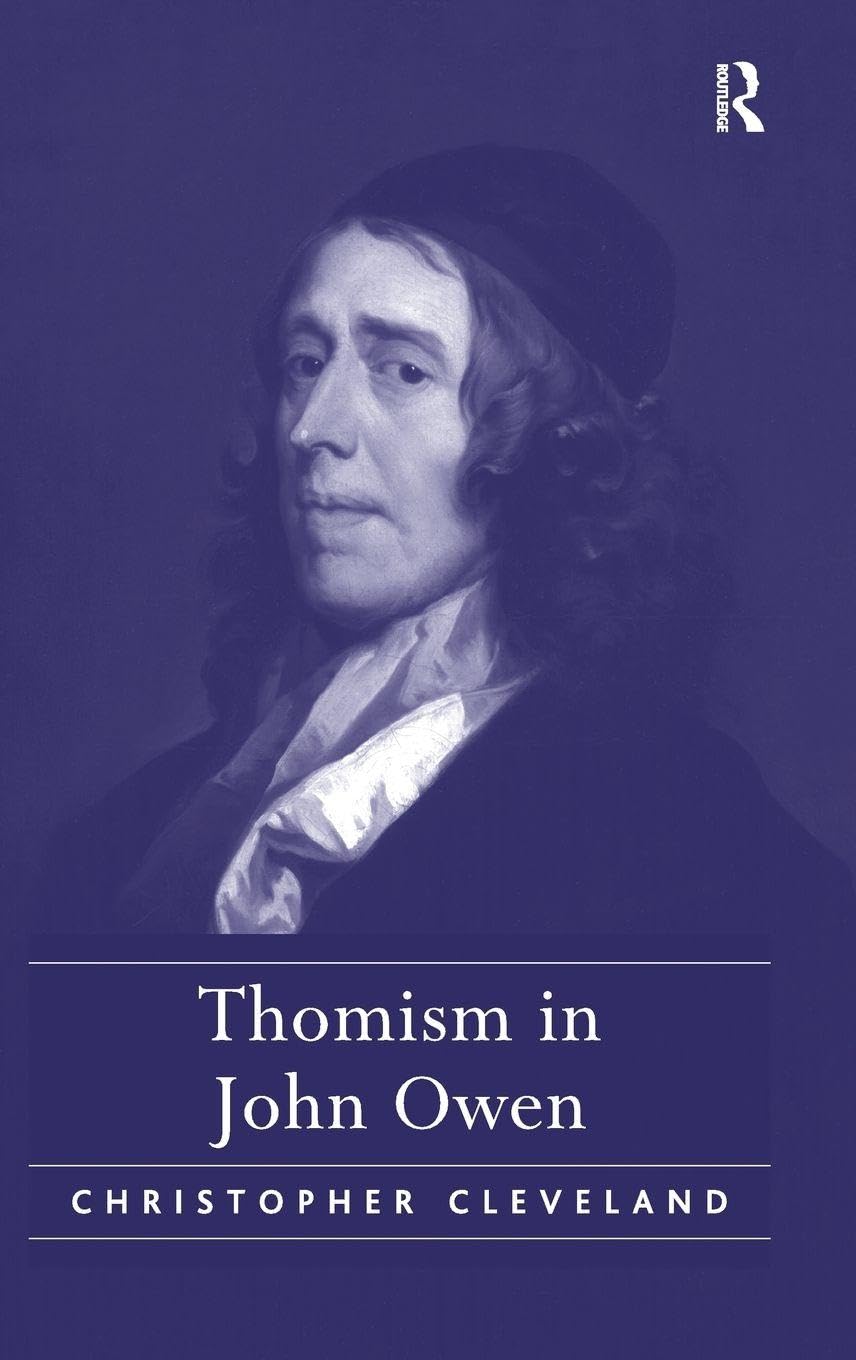
Thomism in John Owen - Scholarly Study of Aquinas' Influence
Thomism in John Owen - Scholarly Study of Aquinas' Influence
Price subject to change. Tap below for current.
Couldn't load pickup availability
In this review of Thomism in John Owen, the reviewer recommends the book for scholars and advanced students of Reformed theology interested in how medieval thought shaped seventeenth century Protestant minds. Christopher Cleveland's study argues clearly that John Owen drew from Thomistic resources both in an Augustinian polemic against Pelagian tendencies and in a Trinitarian framework that reshaped Owen's theological categories; the single biggest reason to buy is the book's careful recovery of a neglected intellectual route connecting Thomas Aquinas to Reformed scholasticism.
Key Features
- Historical argument: The book traces how Thomistic ideas reached and influenced John Owen, clarifying a pathway often overlooked in studies of Reformed theology.
- Twofold thesis: Cleveland demonstrates Owen's use of Thomistic thought in both an Augustinian anti-Pelagian register and a Trinitarian register, offering readers a coherent interpretive frame.
- Scholarly engagement: The study engages primary Owen texts alongside medieval sources, which benefits readers seeking evidence-based connections rather than speculative parallels.
- Theological clarity: The book explains how Thomistic categories produce a Western and Orthodox formulation in Owen's work, helpful for those reexamining theological method.
- Model for formulation: Cleveland presents Owen's synthesis as a constructive model for those who want to build contemporary theology on a Western Christian foundation.
Who It's For
This volume is best suited to seminary students, academic theologians, and pastors with a strong interest in church history and doctrinal development who can follow sustained historical-theological argumentation. It is particularly useful for readers who want to see concrete examples of how medieval scholastic ideas were received and repurposed in the Reformed tradition.
Readers looking for a popular introduction to John Owen, a brief overview of Aquinas, or a general audience survey should look elsewhere; this is an academic study that assumes familiarity with theological categories and historical context.
Pros & Cons
Pros
- Careful archival-style argumentation supports the central claim about Thomistic influence on Owen.
- Clear articulation of the two ways Owen uses Thomistic ideas helps readers track doctrinal development.
- Serves as a constructive model for those seeking a Western theological foundation.
Cons
- It is an academic work and will be dense for casual readers or those without prior background in historical theology.
Specifications
| Title | Thomism in John Owen |
| Author | Christopher Cleveland |
| Subject | History of theology / Reformed scholasticism |
| Focus | Influence of Thomas Aquinas on John Owen |
| Approach | Historical-theological analysis |
| Key themes | Augustinian anti-Pelagianism; Trinitarian theology |
Our Verdict
Thomism in John Owen is a valuable, well-argued academic study for specialists who want a rigorous account of medieval influence on Reformed theology; its focused thesis and textual engagement make it a worthwhile purchase for libraries, graduate students, and pastors who aim to ground contemporary doctrinal work in historical Western categories.
Frequently Asked Questions
Does this book argue that Owen was a Thomist?
Answer. No; Cleveland argues Owen used Thomistic ideas in specific ways rather than adopting Thomism wholesale.
Is this suitable for beginners in theology?
Answer. The book is aimed at readers with some background in theological history and may be challenging for general readers.
What are the main themes explored?
Answer. The study focuses on Owen's Augustinian anti-Pelagian usage and a Thomistically inflected Trinitarian formulation.
Editor's Take
Thomism in John Owen is a focused, scholarly study showing how Thomistic ideas informed Owen's anti-Pelagian and Trinitarian theology; it is recommended for advanced students, pastors, and scholars seeking a historically grounded model for Western theological formulation.

Recently viewed
Recently viewed products will appear here as customers browse the store.