

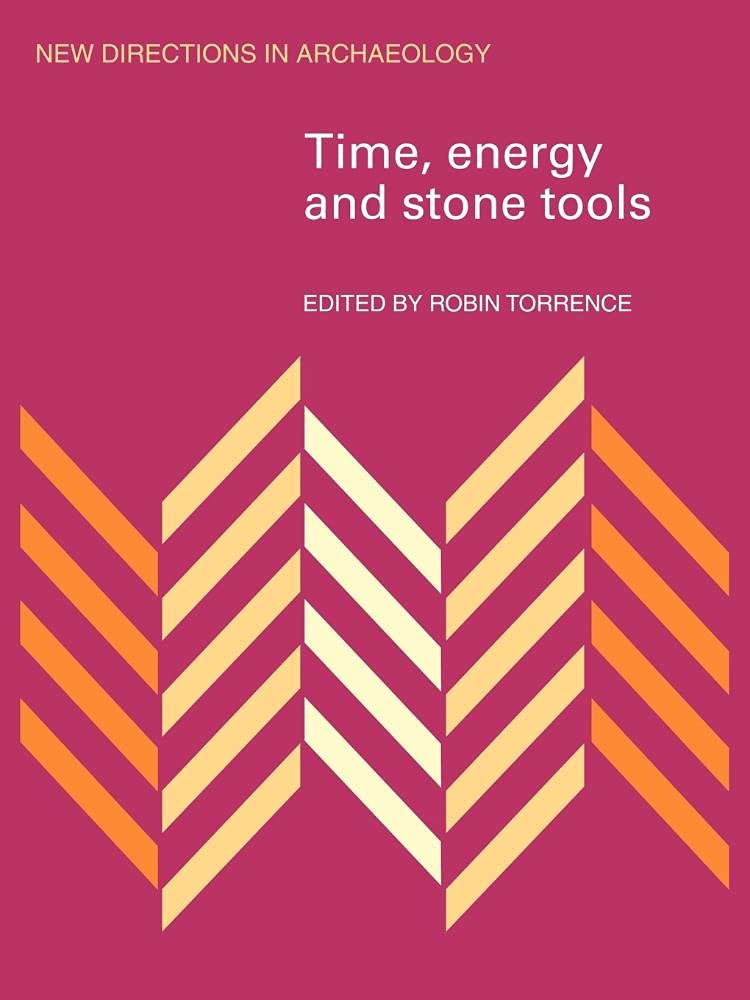
Time, Energy and Stone Tools - Theory for Techno-archaeology
Time, Energy and Stone Tools - Theory for Techno-archaeology
Price subject to change. Tap below for current.
Couldn't load pickup availability
In this review of Time, Energy and Stone Tools the book's bottom line is clear: it is for archaeology and anthropology readers who want a theoretical framework linking tool manufacture to environment and social needs. The collection demonstrates that practical theory-building is possible by applying concepts like optimisation theory to prehistory, and it brings together case studies from hunter-gatherer contexts to early agricultural change. Readers seeking a focused, intellectually challenging synthesis will find this volume rewarding because it foregrounds technology as behavior rather than as isolated artifacts.
Key Features
- Theoretical focus: Chapters connect tool manufacture and use to broader theory, helping readers move from description to explanation.
- Interdisciplinary approach: Contributors draw on ecology and optimisation theory to offer fresh perspectives on artifact variability and decision-making.
- Temporal range: Essays cover broad spatial and temporal frameworks, allowing comparisons between hunter-gatherer and agricultural contexts.
- Practical case studies: Most papers concentrate on hunter-gatherer adaptation, providing concrete examples that illustrate theoretical points.
- Social context: The book highlights information flow, risk management and social relationships as drivers of technological choices.
Who It's For
Time, Energy and Stone Tools is aimed at graduate students, researchers and informed readers interested in prehistoric technology, archaeological theory and the application of ecological models to human behavior. It benefits those who want a conceptual toolkit for interpreting lithic assemblages and comparing adaptation strategies across environments.
Those seeking a beginner's primer or a how-to field manual on stone tool knapping should look elsewhere; the book assumes some background in archaeology and comfort with theoretical argument rather than step-by-step method instruction.
Pros & Cons
Pros
- Conceptually rich essays that push readers to think of tool production as adaptive behavior.
- Good balance between theory and case studies, especially on hunter-gatherer adaptations.
- Cross-disciplinary perspective brings ecological optimisation ideas into archaeological interpretation.
Cons
- Not an introductory text; readers without prior archaeological background may find some chapters dense.
Specifications
| Title | Time, Energy and Stone Tools |
| Series | New Directions in Archaeology |
| Editor / Author | Robin Torrence |
| Scope | Theory-building using environmental and social variables |
| Main focus | Stone tool manufacture and use in hunter-gatherer and agricultural contexts |
| Theoretical lens | Optimisation theory and ecological models |
Our Verdict
Time, Energy and Stone Tools is a valuable collection for readers who want to deepen their theoretical understanding of prehistoric technology; its interdisciplinary essays make a persuasive case for treating tools as outcomes of environmental constraints and social needs, offering good value for scholars seeking conceptual breadth rather than introductory instruction.
Frequently Asked Questions
Does this book include practical knapping instructions?
Answer. No, the book focuses on theory and case studies rather than step-by-step toolmaking techniques.
Is the content suitable for undergraduate study?
Answer. It is better suited to advanced undergraduates or graduate students who already have foundational knowledge in archaeology.
Are both hunter-gatherer and agricultural contexts covered?
Answer. Yes, most papers concentrate on hunter-gatherer adaptation, with key contributions examining agricultural impact and social complexity.
Editor's Take
Time, Energy and Stone Tools is a valuable, theory-driven collection for archaeology scholars; it persuasively links stone tool production to environmental constraints and social needs and is best for readers seeking conceptual depth.

Recently viewed
Recently viewed products will appear here as customers browse the store.