

Tone Sandhi: Patterns across Chinese Dialects - Cambridge Linguistics
Tone Sandhi: Patterns across Chinese Dialects - Cambridge Linguistics
Price subject to change. Tap below for current.
Couldn't load pickup availability
In this review of Tone Sandhi: Patterns across Chinese Dialects, Matthew Y. Chen presents the most comprehensive single-volume study of tonal alternations in Chinese languages available to scholars and advanced students. The book is best for linguists and graduate students who need dense empirical data and theoretical analysis; its decade-long research foundation and cross-dialectal scope make it uniquely useful for comparative work. The principal reason to buy is the depth of documented tone sandhi patterns across multiple Chinese dialects, offering both raw data and sustained theoretical discussion.
Key Features
- Comprehensive cross-dialectal data: The book compiles tone sandhi patterns from a wide variety of Chinese dialects, providing material rarely available in one place.
- Theoretical engagement: Chen uses the empirical findings to explore major theoretical issues in phonology, helping readers connect data to broader analysis.
- Long-term research basis: The book reflects a ten-year research project, giving readers confidence in the breadth and reliability of the evidence presented.
- Readable scholarly prose: The treatment balances descriptive detail with argument, making dense material accessible to specialists who need clear exposition.
- Reference value: The work serves as a point of reference for future studies in Chinese phonology and comparative dialectology.
Who It's For
The primary audience is academic: phonologists, field linguists, and graduate students focused on Chinese languages or tone systems will get the most from Chen's exhaustive documentation and theoretical discussion. Those working on comparative dialectology or who require reliable empirical examples for teaching will also value the volume.
Readers seeking a general introduction to Chinese for language learners or casual readers should look elsewhere, as the book assumes familiarity with phonological terminology and presents detailed analyses rather than beginner-level explanations.
Pros & Cons
Pros
- Extensive empirical coverage of tone sandhi across multiple Chinese dialects provides a rich dataset for research.
- Clear linkage between data and theoretical issues helps readers apply findings to phonological models.
- The results of a decade-long research project give the work depth and scholarly authority.
Cons
- The book's technical density and assumed background in phonology limit accessibility for non-specialists.
Specifications
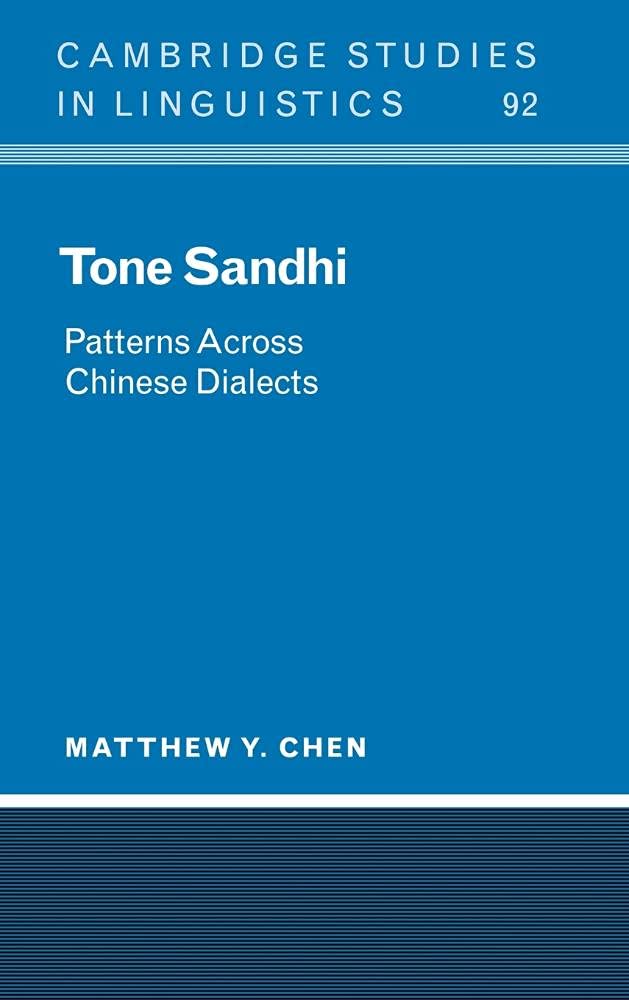
| Title | Tone Sandhi: Patterns across Chinese Dialects |
| Author | Matthew Y. Chen |
| Series | Cambridge Studies in Linguistics, no. 92 |
| Subject | Chinese phonology; tone sandhi |
| Scope | Cross-dialectal empirical and theoretical analysis |
| Research basis | Ten-year research project |
Our Verdict
Tone Sandhi by Matthew Y. Chen is essential for scholars and advanced students who need authoritative, cross-dialectal documentation and thoughtful theoretical discussion of tone alternation. Its depth and research grounding make it excellent value for academic use, but its technical focus means it is not aimed at casual readers or beginners.
Frequently Asked Questions
Does this book include data from multiple Chinese dialects?
Yes. The book examines tone sandhi phenomena across a variety of Chinese dialects, assembling data not previously accessible in one volume.
Is this suitable for beginners learning about tone?
No. The book assumes familiarity with phonological terminology and is best for specialists or advanced students rather than beginners.
What is the scholarly value of the book?
Its decade-long research basis and comprehensive empirical coverage make it a strong reference for research and teaching in Chinese phonology and comparative dialectology.
Editor's Take
Tone Sandhi is an essential, research-driven study for scholars and advanced students of Chinese phonology, offering extensive cross-dialectal data and clear theoretical analysis, though it is too technical for casual readers.

Recently viewed
Recently viewed products will appear here as customers browse the store.