

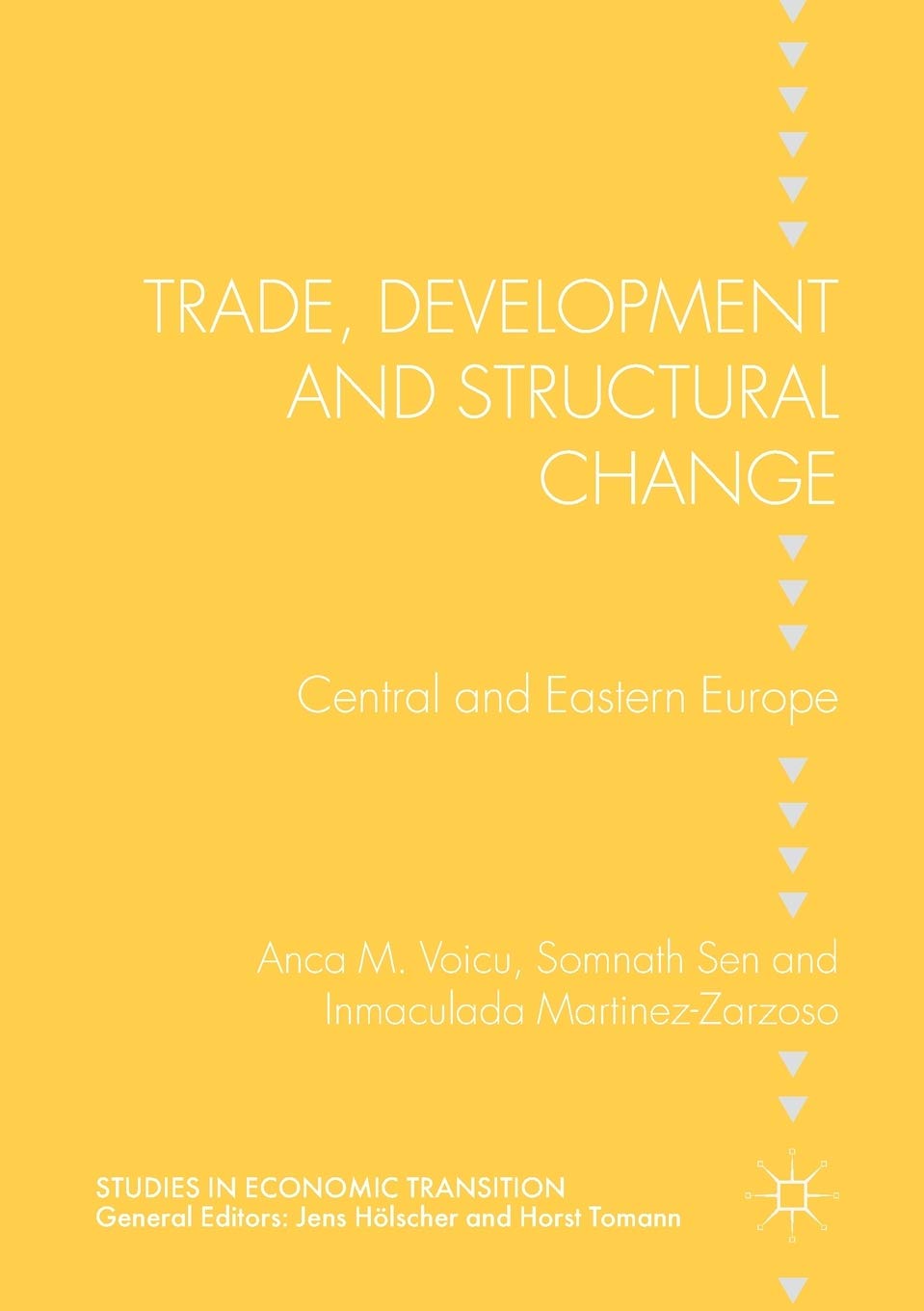
Trade, Development and Structural Change: Central and Eastern Europe
Trade, Development and Structural Change: Central and Eastern Europe
Price subject to change. Tap below for current.
Couldn't load pickup availability
Our review examines Trade, Development and Structural Change: Central and Eastern Europe as a focused academic study for readers interested in post-1989 economic transition. The book is best for researchers, graduate students and policy analysts who want a concentrated account of how trade shaped structural change across former communist economies. Its single biggest reason to buy is the clear argument that trade acted as the primary engine of growth in Central and Eastern European countries, supported by chapters that synthesize original research and integration-focused analysis.
Key Features
- Historical focus: The book traces developments from the fall of the Iron Curtain in 1989, providing a timeline that helps readers understand the sequence of trade and policy changes.
- Trade-driven thesis: Authors argue convincingly that trade was the main engine for economic growth and transition, useful for researchers testing that hypothesis.
- Policy relevance: The chapters assess implications of trade patterns on structural change and economic development, offering lessons for modern policy debates.
- Original research included: Several chapters incorporate the authors' own empirical studies, making the volume a source of data and evidence rather than only narrative.
- Regional integration lens: The book focuses on international and European trade integration, which clarifies how CEECs entered broader markets.
Who It's For
This volume suits academics, graduate students and policy practitioners looking for a compact, research-oriented treatment of trade and structural change in Central and Eastern Europe. It is especially valuable for those studying economic transition, regional integration or comparative development within the European context.
Readers seeking an introductory textbook or a broad survey of global trade theory should look elsewhere; this book assumes familiarity with transition economics and is strongest as a targeted collection of studies rather than a general primer.
Pros & Cons
Pros
- Concentrated examination of post-1989 trade patterns gives clear historical and analytical focus.
- Combines synthesis with original empirical work, offering evidence for readers to build on.
- Policy-oriented chapters link trade patterns to structural change, useful for practitioners.
Cons
- The book is specialized and assumes prior knowledge, so it may not suit casual readers or those new to economic transition studies.
Specifications
| Title | Trade, Development and Structural Change: Central and Eastern Europe |
| Authors | Anca M. Voicu, Somnath Sen, Inmaculada Martinez-Zarzoso |
| Subject area | Economic transition; trade and structural change |
| Regional focus | Central and Eastern European countries |
| Starting point | Fall of the Iron Curtain, 1989 |
| Approach | Combination of synthesis and original empirical studies |
Our Verdict
This book is a solid, value-minded choice for specialists who need a focused, evidence-backed account of how trade influenced economic transition in the CEECs. It is most valuable to researchers and policy analysts because of its trade-driven thesis and inclusion of original studies, though its specialist tone means it is not aimed at general readers.
Frequently Asked Questions
Does this book cover the period before 1989?
The book uses 1989 as its starting point and concentrates on developments from the fall of the Iron Curtain onward.
Is original research included?
Yes, several chapters incorporate original empirical studies conducted by the authors related to international and European trade integration.
Who benefits most from this volume?
Researchers, graduate students and policy practitioners focusing on economic transition and trade in Central and Eastern Europe will benefit most.
Editor's Take
A focused, evidence-backed study arguing that trade was the main engine of growth in Central and Eastern Europe after 1989; best suited to researchers and policy analysts interested in economic transition.

Recently viewed
Recently viewed products will appear here as customers browse the store.