

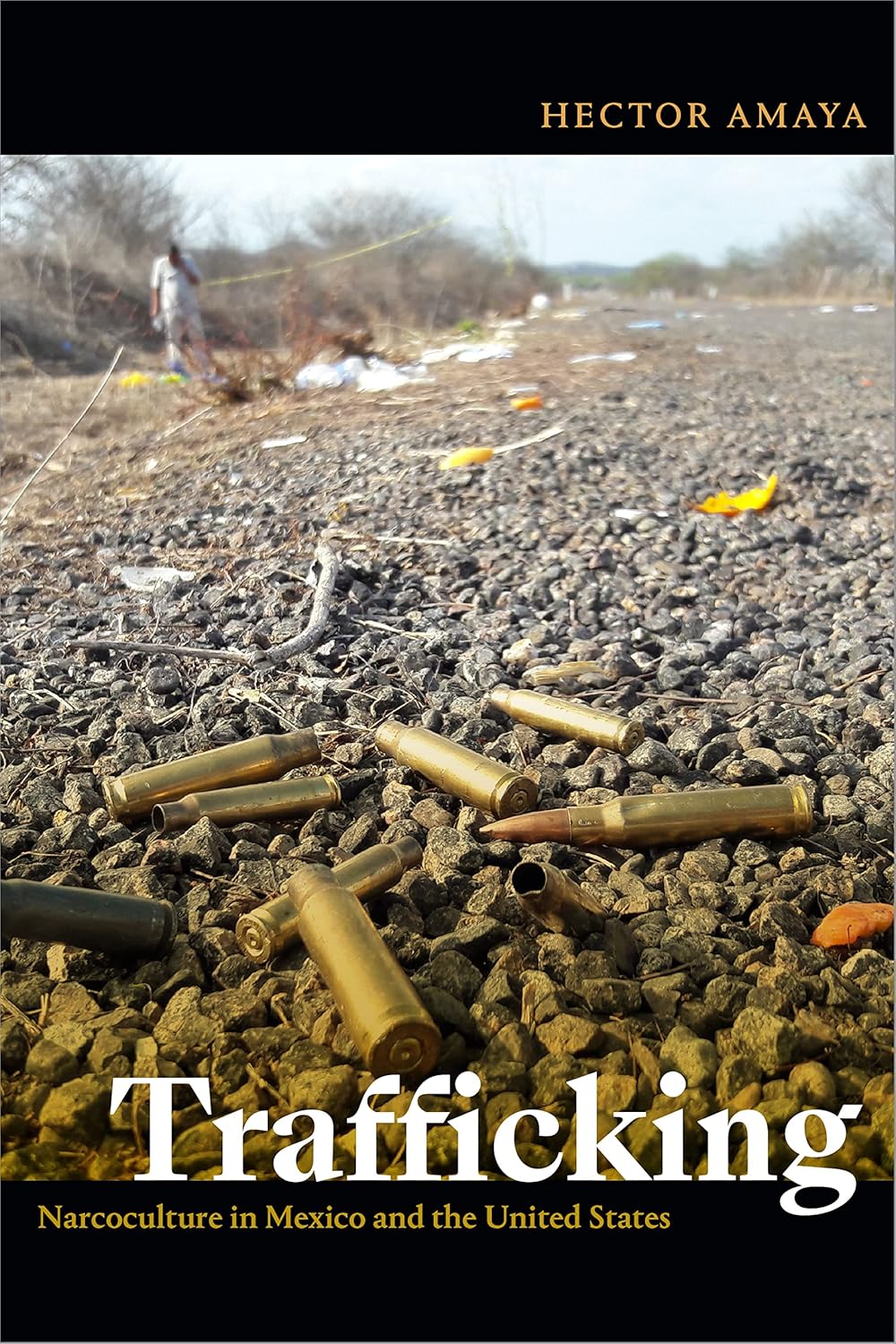
Trafficking: Narcoculture in Mexico and the United States - Book
Trafficking: Narcoculture in Mexico and the United States - Book
Price subject to change. Tap below for current.
Couldn't load pickup availability
In this review of Trafficking: Narcoculture in Mexico and the United States the bottom line is clear: this is an academically rigorous, readable study for anyone seeking to understand how drug violence reshaped public culture across the US-Mexico border. Hector Amaya traces the 2008 escalation in violence to new forms of public participation, and the book's strongest asset is its analysis of how musicians, bloggers and digital practices bypassed censorship and transformed debate. Readers who value close cultural analysis and contemporary history will find this review-worthy book especially useful.
Key Features
- Historical focus: The book examines the dramatic escalation of drug violence in Mexico in 2008 and places events in a broader political and cultural timeline.
- Transnational perspective: Amaya connects developments in Mexico with public culture in the United States to show cross-border flows of information and expression.
- Cultural analysis: The text explores how debates about the state and freedom of expression were reshaped by narcoculture and publicness.
- Media case studies: The work looks at narcocorrido musicians using digital production and distribution to evade censors, illustrating practical outcomes of cultural change.
- Digital-era attention: Amaya gives detailed attention to anonymous bloggers and online actors who covered trafficking from relative safety and influenced public debate.
- Accessible writing: The prose balances scholarly argument with readable examples, making complex ideas approachable for non-specialists.
Who It's For
This book is best for students, researchers, and informed readers interested in contemporary Mexican history, media studies, and transnational cultural politics. Those studying censorship, digital media, or the social effects of criminal violence will find the case studies and theoretical framing particularly useful.
Readers searching for a general narrative history of cartels or a reader-friendly memoir should look elsewhere; the emphasis here is analytical and cultural rather than an exhaustive timeline of cartel activity or personal storytelling.
Pros & Cons
Pros
- Clear linkage between violence and changing modes of publicness provides a strong analytical throughline.
- Detailed examples of narcocorrido musicians and bloggers make abstract arguments tangible and current.
- Transnational framing helps readers see how US and Mexican public cultures interact around trafficking topics.
- Accessible writing allows non-specialists to engage with scholarly themes without excessive jargon.
Cons
- The focus on cultural practices means readers seeking comprehensive operational history of trafficking may feel some gaps.
Specifications
| Title | Trafficking: Narcoculture in Mexico and the United States |
| Author | Hector Amaya |
| Primary topic | Drug violence and public culture |
| Geographic focus | Mexico and the United States |
| Key year analyzed | 2008 escalation |
| Methods | Cultural analysis with case studies of musicians and bloggers |
Our Verdict
Trafficking is a focused, well-argued study that fills a gap between media studies and contemporary history; it is a smart purchase for academic readers and engaged generalists who want to understand how narcoculture reshaped public participation and debates about the state across borders.
Frequently Asked Questions
Does this book focus on violence itself?
It examines violence as a catalyst for changes in public culture rather than providing an operational history of criminal groups.
Are there modern media examples in the book?
Yes; the author analyzes narcocorrido musicians using digital distribution and anonymous bloggers who covered trafficking.
Is it suitable for nonacademic readers?
Yes; the writing is accessible though the book retains scholarly framing and analytical depth.
Editor's Take
A focused, well-argued study that links the 2008 escalation of drug violence to new forms of public participation; ideal for academics and informed readers interested in media, culture, and transnational history.

Recently viewed
Recently viewed products will appear here as customers browse the store.