

Transactional Perspectives on Occupation - A Pragmatic
Transactional Perspectives on Occupation - A Pragmatic
Price subject to change. Tap below for current.
Couldn't load pickup availability
In this review of Transactional Perspectives on Occupation, the bottom line is clear: this collection is best for occupational therapy scholars, researchers, and graduate students seeking a fresh theoretical lens grounded in pragmatist thought. The book gathers international contributors to reframe occupation through John Dewey's transactional ideas, offering challenging arguments and concrete case studies that push readers beyond conventional definitions. It is not light reading or a clinical manual, but for those interested in theory and interdisciplinary dialogue, it provides sustained, thoughtful engagement with transactional approaches to occupation.
Key Features
- Pragmatist foundation: Chapters draw on John Dewey and other pragmatists to present a coherent alternative framework for understanding occupation.
- International contributors: Scholars from Europe, North America, and Australasia provide diverse perspectives and comparative examples that broaden theoretical reach.
- Theoretical and applied mix: The book balances conceptual argument with case studies and methodological discussion relevant for research and practice.
- Interdisciplinary connections: Contributors link occupation to ideas from other disciplines, clarifying roles and implications beyond occupational therapy alone.
- Lively dialogues: Each chapter presents multifaceted exchanges and debates that stimulate critical reflection and future research directions.
Who It's For
This volume is aimed at occupational therapy academics, postgraduate students, and social science researchers who want a rigorous, conceptually rich treatment of occupation that challenges accepted ideas. It works well for those preparing literature reviews, theoretical chapters, or designing studies that incorporate transactional models.
Practitioners seeking quick clinical guidance or a concise handbook of interventions should look elsewhere; this book prioritizes conceptual exploration and scholarly dialogue rather than step-by-step practice protocols or easy summaries.
Pros & Cons
Pros
- Provides a clear alternative theoretical lens by grounding discussion in Deweyan pragmatism, useful for scholarly work.
- Offers geographical and disciplinary breadth with contributors from multiple regions, enhancing comparative insight.
- Combines theory, methodology, and case studies, which helps bridge abstract ideas and applied questions.
Cons
- The book is primarily theoretical and may feel dense for readers seeking practical, clinic-focused guidance.
Specifications
| Title | Transactional Perspectives on Occupation |
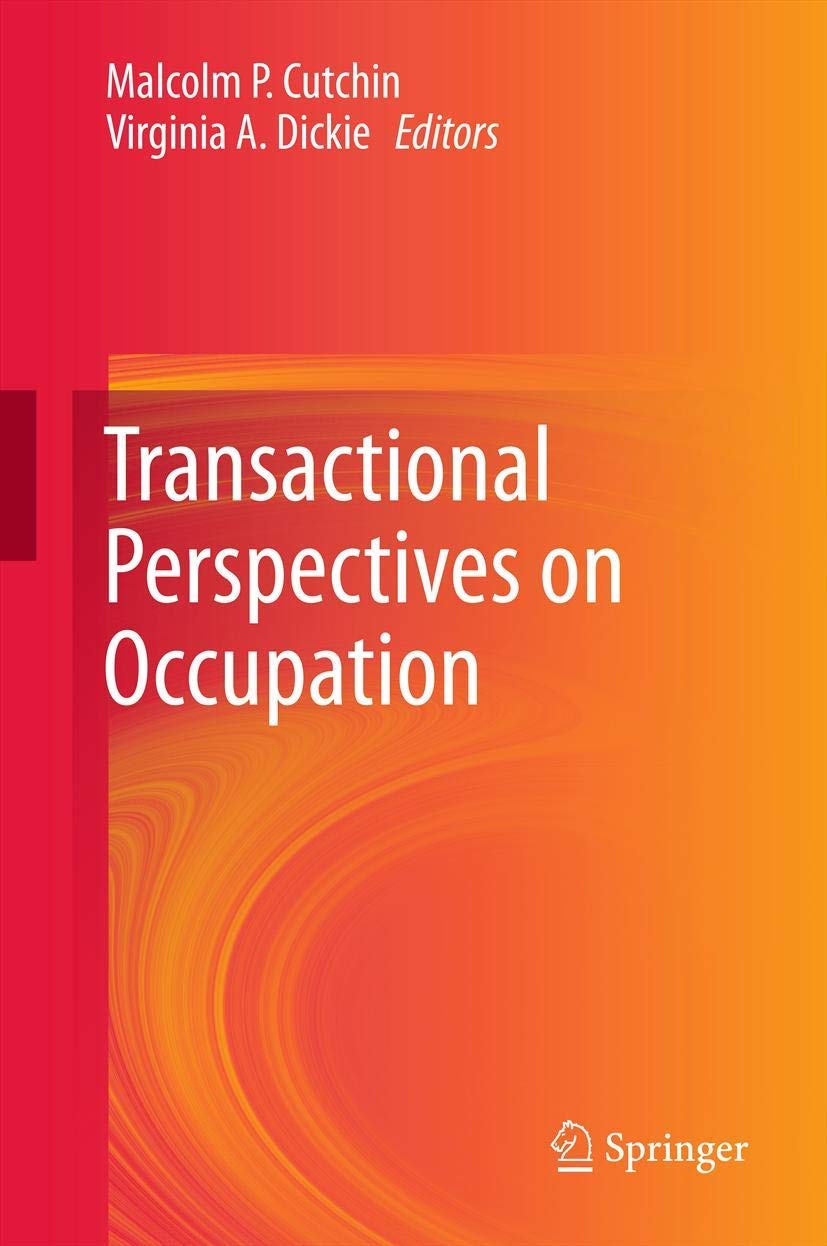
| Authors | Malcolm P. Cutchin, Virginia A. Dickie |
| Subject area | Occupation theory, occupational therapy, pragmatism |
| Contributors | Scholars from Europe, North America, Australasia |
| Content mix | Theory, methodology, case studies |
| Intended audience | Researchers, graduate students, academics |
Our Verdict
Transactional Perspectives on Occupation is a valuable scholarly collection for those invested in advancing occupation theory; it delivers intellectually robust arguments and comparative case studies that justify its place on academic bookshelves. While not designed as a clinical guide, it represents good value for researchers seeking a well-argued, pragmatist-informed alternative to mainstream accounts of occupation.
Frequently Asked Questions
Does this book include practical clinical protocols?
The focus is theoretical and methodological with case studies, not step-by-step clinical protocols.
Who are the main authors or editors?
The volume is presented by Malcolm P. Cutchin and Virginia A. Dickie with contributions from international scholars.
Is the approach grounded in a specific philosophy?
Yes, much of the discussion is grounded in John Dewey's pragmatism and related transactional ideas.
Editor's Take
Transactional Perspectives on Occupation is a rigorous, pragmatist-informed collection ideal for researchers and graduate students; it offers rich theoretical argument and comparative case studies but is not a clinical manual.

Recently viewed
Recently viewed products will appear here as customers browse the store.