

Transcending Modernity with Relational Thinking - Scholarly
Transcending Modernity with Relational Thinking - Scholarly
Price subject to change. Tap below for current.
Couldn't load pickup availability
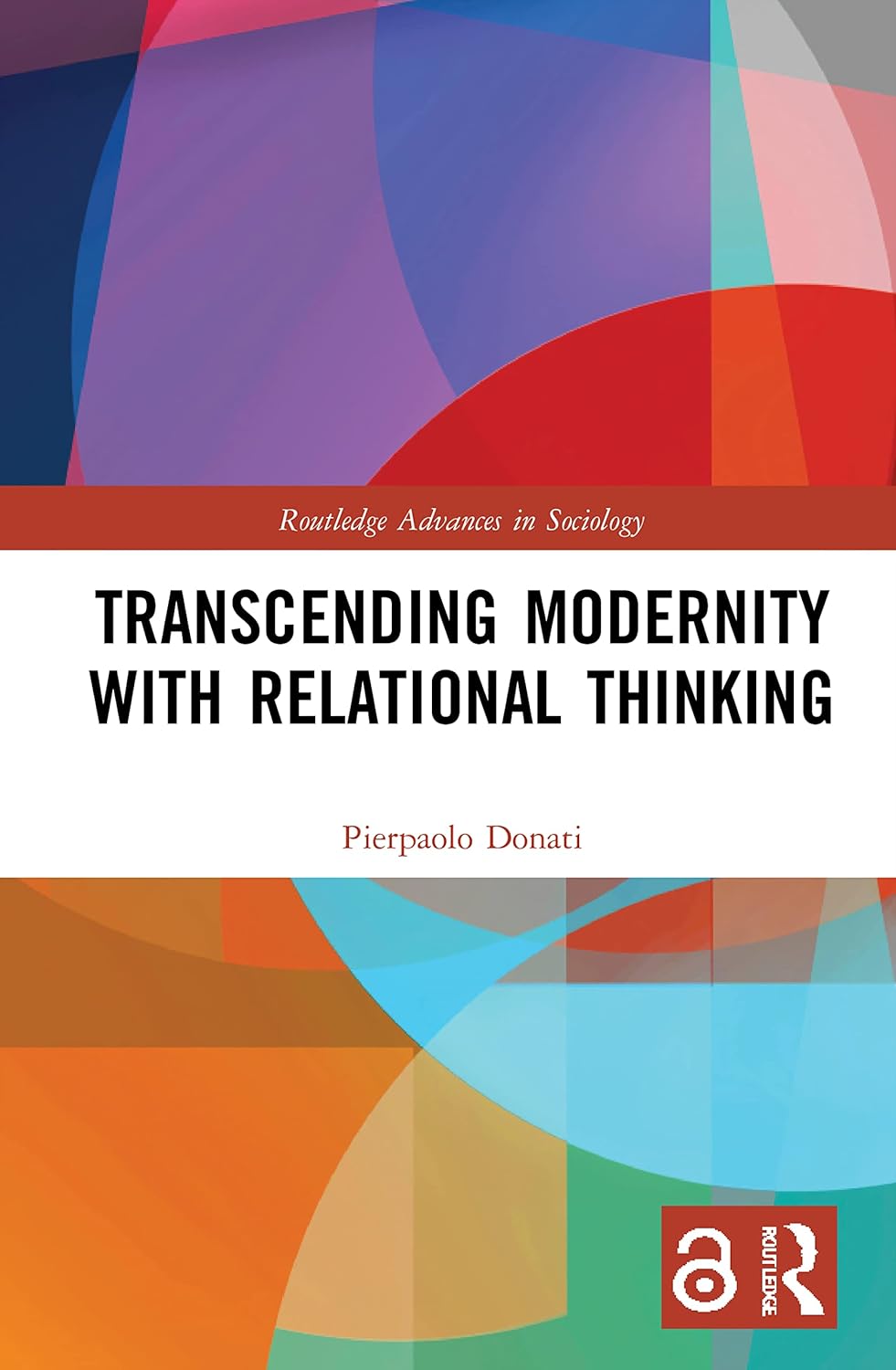
In this review of Transcending Modernity with Relational Thinking, the reviewer finds a rigorous, concept-driven contribution for readers interested in contemporary social theory. Pierpaolo Donati advances a realist relational sociology that frames society as constituted by social relations rather than solely by individuals or structures, and the biggest reason to read this book is its persistent theoretical focus on how relations generate an "aftermodern" or relational society. The Open Access orientation and explicit theoretical lineage from Simmel make it particularly suited to scholars seeking a clear account of relational morphogenesis.
Key Features
- Relational ontology: Argues that social relations are a distinct reality that reshape the foundations of modern society and lead toward an aftermodern social form.
- Theoretical lineage: Draws on the thought of Simmel to extend and clarify the claim that society consists essentially of relations rather than atomized agents.
- Morphogenetic focus: Examines the operation of dichotomous forces and the emergence of a "third" in social processes, offering a framework for understanding structural change.
- Realist and critical approach: Combines critical sociology with realist commitments to avoid purely idealist or reductionist readings of social dynamics.
- Open Access availability: The book is available under a Creative Commons Attribution-Non Commercial-No Derivatives 4.0 license, improving accessibility for researchers and students.
Who It's For
This work is aimed at advanced students, researchers, and theorists in sociology and related social sciences who seek a coherent alternative to individualist or purely structural approaches. It will appeal to those interested in conceptual clarity about how relations function as emergent social realities and to readers familiar with classical sociological theory.
Readers looking for empirical case studies, step-by-step methodological guidance, or introductory textbooks on sociology should look elsewhere; this is primarily a theoretical and philosophical intervention that assumes some prior grounding in sociological debate.
Pros & Cons
Pros
- Provides a sustained, original defense of relational sociology that clarifies the ontological status of relations.
- Engages classical theory by drawing on Simmel to extend contemporary debates in a disciplined way.
- Open Access licensing increases reach and makes the text readily available for teaching and research.
Cons
- Its theoretical density and limited empirical examples may make the book challenging for readers seeking applied research or practical methods.
Specifications
| Title | Transcending Modernity with Relational Thinking |
| Series | Routledge Advances in Sociology |
| Author | Pierpaolo Donati |
| Availability | Open Access via Taylor & Francis with CC BY-NC-ND 4.0 |
| Core focus | Realist relational sociology and morphogenetic processes |
| Theoretical influence | Draws on the thought of Simmel |
Our Verdict
Transcending Modernity with Relational Thinking is a valuable theoretical intervention for scholars committed to rethinking society through the lens of relations. Its clarity about relational ontology and morphogenetic dynamics makes it a good value for graduate seminars and researchers, though readers seeking empirical breadth or methodological instruction may need to supplement it with case-based studies.
Frequently Asked Questions
Is this book freely available?
Yes. The Open Access version is available under a Creative Commons Attribution-Non Commercial-No Derivatives 4.0 license.
Does it include empirical case studies?
The book is primarily theoretical and focuses on relational theory and morphogenetic concepts rather than extensive empirical case studies.
Who is the author?
Pierpaolo Donati, who situates the argument in a realist relational sociology and engages classical theorists such as Simmel.
Editor's Take
A rigorous theoretical intervention advocating realist relational sociology; valuable for advanced students and researchers who want a clear account of how social relations drive societal transformation.

Recently viewed
Recently viewed products will appear here as customers browse the store.