

Twentieth Century Eugenics and Nature-Nurture Debate
Twentieth Century Eugenics and Nature-Nurture Debate
Price subject to change. Tap below for current.
Couldn't load pickup availability
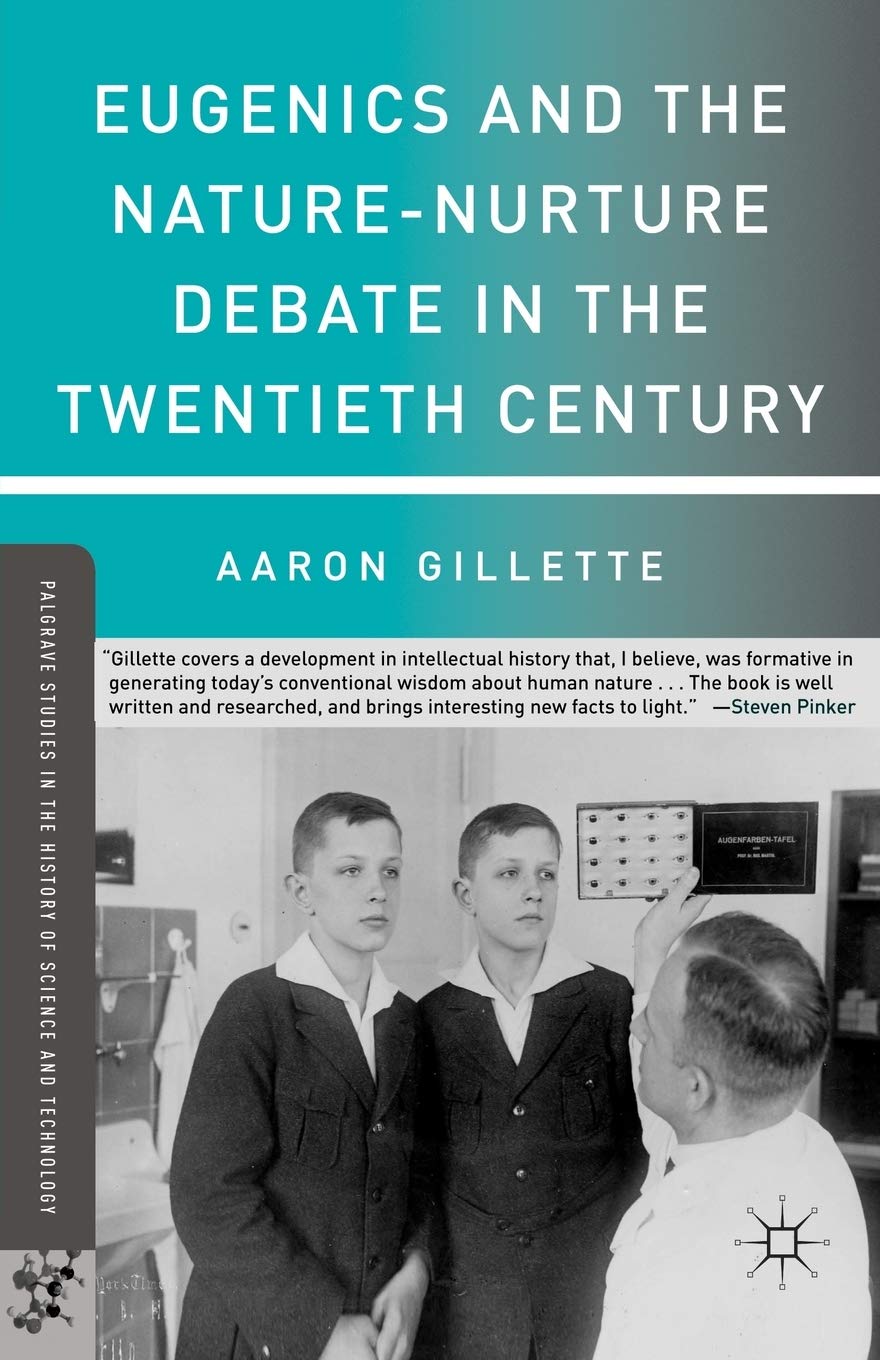
In this review of Eugenics and the Nature-Nurture Debate in the Twentieth Century, the reviewer identifies the book as a focused academic study best suited to students and scholars of history of science, sociology, and race relations. The bottom line: A. Gillette argues that early developments in sociobiology and evolutionary psychology were closely entangled with eugenic thought, and that the rise of behaviourism and anti-eugenics politics in the 1930s suppressed heredity-based claims about behaviour. This clear, archival-minded account is valuable for readers seeking historical context on how scientific ideas and ideology interacted.
Key Features
- Historical focus: Traces the development of sociobiology and evolutionary psychology in the early twentieth century to show how these fields emerged alongside eugenic thinking.
- Archival analysis: Uses primary material and historical interpretation to explain why heredity-based claims about behaviour were politically suppressed in the 1930s.
- Interdisciplinary relevance: Connects history of science with sociology and race relations, making it useful for cross-disciplinary study.
- Critical perspective: Highlights the ideological pressures, including the rise of behaviourism, that reshaped scientific discourse on heredity and behaviour.
- Concise argument: Presents a focused thesis about suppression of hereditarian claims rather than a broad textbook treatment, which aids focused research.
Who It's For
This book is for graduate students, historians of science, and social scientists interested in the intellectual history of behaviour genetics, sociobiology, and race-related scientific debates. It is helpful for readers seeking a critical account of how political and ideological shifts affected scientific claims about heredity and human behaviour.
Those looking for a general introduction to genetics, a contemporary survey of evolutionary psychology methods, or a popular history for casual reading should look elsewhere; Gillette offers a scholarly, evidence-driven study rather than a broad or accessible primer.
Pros & Cons
Pros
- Clear linkage between early sociobiological research and eugenic movements, which illuminates a sensitive historical relationship.
- Focused archival and historical argument that explains how political reaction altered scientific discourse in the 1930s.
- Useful interdisciplinary framing for students of sociology, race relations, and history of science.
Cons
- The study is narrowly focused on the historical debate and does not serve as an introduction to modern genetics or current evolutionary psychology research.
Specifications
| Title | Eugenics and the Nature-Nurture Debate in the Twentieth Century |
| Author | A. Gillette |
| Series | Palgrave Studies in the History of Science and Technology |
| Subject focus | History of science, sociobiology, evolutionary psychology, eugenics |
| Historical period | Early twentieth century through 1930s |
| Approach | Archival and historical analysis emphasizing political and ideological effects |
Our Verdict
Gillette's study is a compact, well-argued contribution for readers who want a deeper understanding of how eugenic ideology intersected with early sociobiology and evolutionary psychology. It is good value for scholars needing a focused historical analysis and for courses that examine the politics of scientific claims about heredity and behaviour.
Frequently Asked Questions
Does this book cover modern evolutionary psychology methods?
The book focuses on early twentieth-century developments and ideological contexts rather than contemporary experimental methods.
Is the work suitable for undergraduate courses?
It is most suitable for upper-level undergraduates or graduate seminars that examine history of science or race relations rather than introductory surveys.
Does the author take a critical position on eugenics?
Yes; the author critically examines how eugenic thought influenced early researchers and how political reactions suppressed hereditarian claims.
Editor's Take
Gillette offers a focused, archival study showing how eugenic ideology shaped early sociobiology and how political reactions in the 1930s suppressed hereditarian claims; a strong pick for scholars and advanced students.

Recently viewed
Recently viewed products will appear here as customers browse the store.