

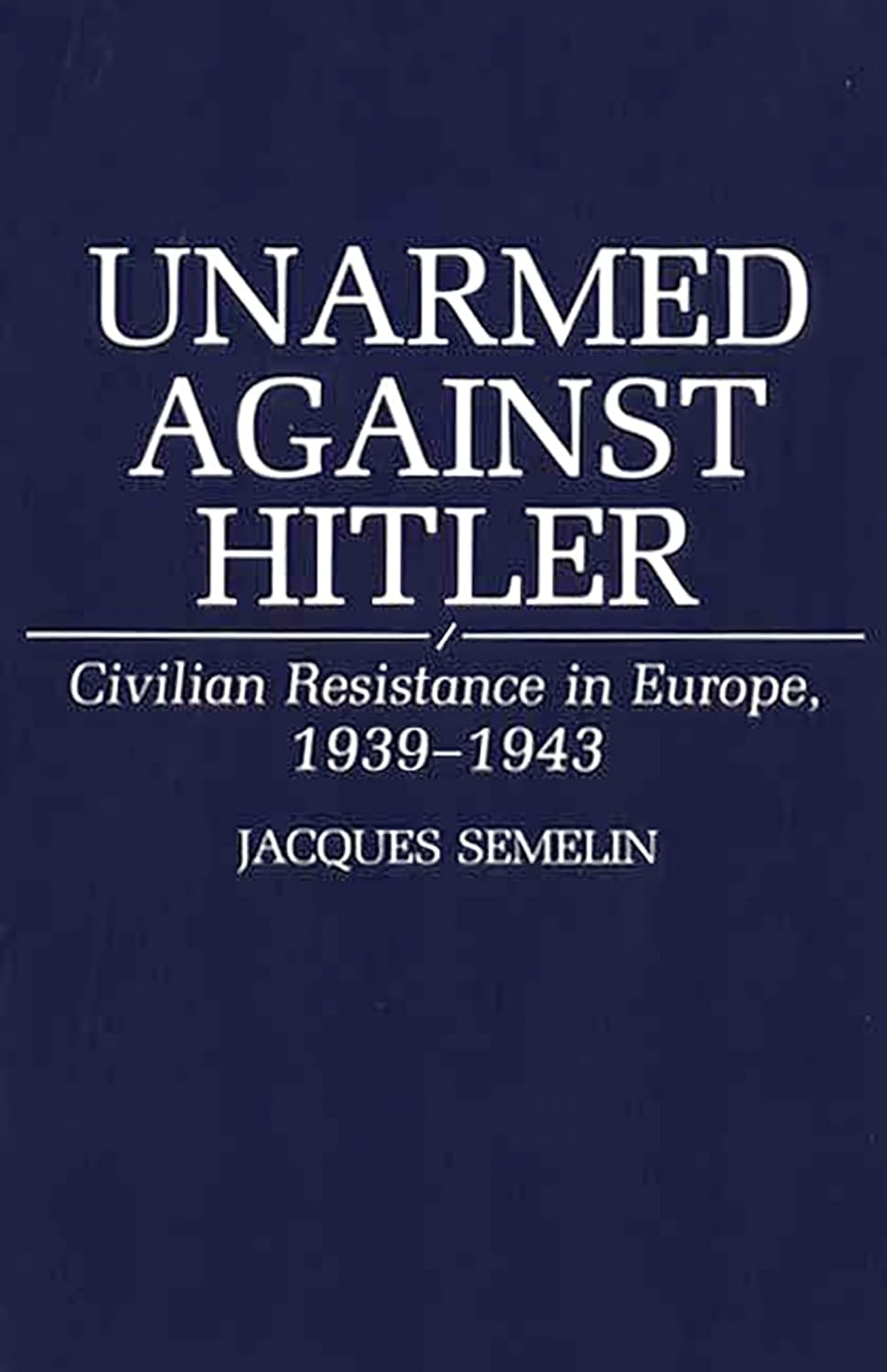
Unarmed Against Hitler: Civilian Resistance in Europe
Unarmed Against Hitler: Civilian Resistance in Europe
Price subject to change. Tap below for current.
Couldn't load pickup availability
In this review of Unarmed Against Hitler: Civilian Resistance in Europe, 1939-1943 the reviewer finds a clear, focused study for readers interested in nonviolent responses to occupation. Jacques Semelin assembles documented examples from France, Belgium, the Netherlands, Norway, Denmark, Poland, Czechoslovakia, Romania and Germany itself to argue that civil disobedience shaped wartime opposition. The single biggest reason to read this book is its reconstruction of widespread civilian strategies - strikes, demonstrations, church and medical action - that preceded and helped enable later armed resistance.
Key Features
- Geographic scope: The book covers multiple occupied countries, giving a comparative view that helps readers grasp patterns across national contexts.
- Focus on nonviolence: Semelin documents civil disobedience, showing how strikes, legal institutions and churches acted as forms of resistance and social contestation.
- Evidence-based narrative: The study compiles archival and contemporary sources to make a sustained historical case rather than relying on anecdote.
- Ethical framing: The author situates resistance within broader questions of civilian preparedness and moral strategy during aggression.
- Pre-armament perspective: The book explains how early civilian actions paved the way for subsequent armed uprisings and contributed to the eventual defeat of the Nazis.
Who It's For
This book is best for readers of World War II history, scholars of social movements, and students seeking a nuanced account of how ordinary people resisted occupation without weapons. It will appeal to those who want a comparative, ethically minded study rather than a biography of famous partisans.
Readers expecting a blow-by-blow military narrative or a handbook on guerrilla tactics should look elsewhere, since the emphasis here is on civil disobedience, institutions like courts and churches, and the social conditions that enabled later violence rather than operational military detail.
Pros & Cons
Pros
- Illuminates a neglected facet of wartime opposition by documenting nonviolent campaigns across several countries.
- Provides a comparative framework that helps identify common civilian strategies under occupation.
- Engages ethical questions about civilian responsibility and preparedness in the face of aggression.
Cons
- The scope and academic tone may feel dense for casual readers seeking a narrative-driven account.
Specifications
| Title | Unarmed Against Hitler: Civilian Resistance in Europe, 1939-1943 |
| Author | Jacques Semelin |
| Subject | Civil resistance and occupation in World War II Europe |
| Geographic coverage | France, Belgium, Netherlands, Norway, Denmark, Poland, Czechoslovakia, Romania, Germany |
| Focus | Civil disobedience, strikes, demonstrations, medical organizations, courts, churches |
| Scope | 1939-1943, pre-armament civilian campaigns |
Our Verdict
Unarmed Against Hitler is a worthwhile read for historians and students who want to broaden their understanding of resistance beyond armed struggle; its comparative, evidence-based approach and ethical focus make it good value for anyone researching social responses to occupation, though the academic tone limits its appeal for casual readers.
Frequently Asked Questions
Does this book cover armed resistance?
The primary emphasis is on civilian nonviolent actions that preceded and influenced later armed resistance, not on detailed armed operations.
Which countries are examined?
Semelin examines a range of occupied countries including France, Belgium, the Netherlands, Norway, Denmark, Poland, Czechoslovakia, Romania and Germany itself.
Is this a scholarly work or a popular history?
The book takes an academic, evidence-based approach with ethical framing, making it best suited to scholars and serious students rather than casual readers.
Editor's Take
Unarmed Against Hitler provides a comparative, evidence-based account of civilian nonviolent resistance in occupied Europe; valuable for historians and students seeking how strikes, churches and institutions shaped later armed opposition.

Recently viewed
Recently viewed products will appear here as customers browse the store.