

Underwater SLAM for Structured Environments - Imaging Sonar SLAM
Underwater SLAM for Structured Environments - Imaging Sonar SLAM
Price subject to change. Tap below for current.
Couldn't load pickup availability
In this review of Underwater SLAM for Structured Environments Using an Imaging Sonar, the bottom line is clear: this book is aimed at researchers and advanced practitioners who need practical methods for navigation of Autonomous Underwater Vehicles in built or constrained underwater spaces. It presents recent research and focused techniques rather than introductory theory, so the single biggest reason to buy is its direct attention to using a mechanically scanned imaging sonar as a sensor for mapping and localization in structured environments.
Key Features
- Targeted SLAM methods: The book provides concrete solutions for simultaneous localization and mapping tailored to Autonomous Underwater Vehicles operating where structure and symmetry affect navigation.
- Imaging sonar focus: It presents techniques for feature extraction that are specifically capable of handling data from a mechanically scanned imaging sonar, which many generic SLAM texts do not address.
- Application-driven research: Recent research is gathered with an emphasis on practical application to autonomous underwater research problems rather than purely theoretical treatments.
- Structured environment emphasis: The content pays attention to the challenges and opportunities posed by structured underwater settings such as wrecks, pipes, and confined passages.
- Accessible methods: Algorithms and techniques are presented with the intent to be applied by engineers developing navigation stacks for AUVs.
Who It's For
This title is best for robotics researchers, graduate students, and AUV engineers who already have a background in SLAM or underwater sensing and who need methods specifically adapted to imaging sonar data. Its focus on practical solutions makes it useful as a reference when developing or validating sonar-based mapping and localization systems.
Readers seeking a beginner textbook on SLAM fundamentals or a general survey of robotic perception should look elsewhere; this book assumes familiarity with core SLAM concepts and concentrates on extending them to mechanically scanned imaging sonar in structured settings.
Pros & Cons
Pros
- Addresses a niche but important problem: SLAM for AUVs in structured underwater environments.
- Provides sonar-specific feature extraction techniques that are directly applicable to mechanically scanned imaging sonar.
- Collects recent research with an emphasis on implementation and practical navigation solutions.
Cons
- Not an introductory text; readers without prior SLAM knowledge may find the material dense.
Specifications
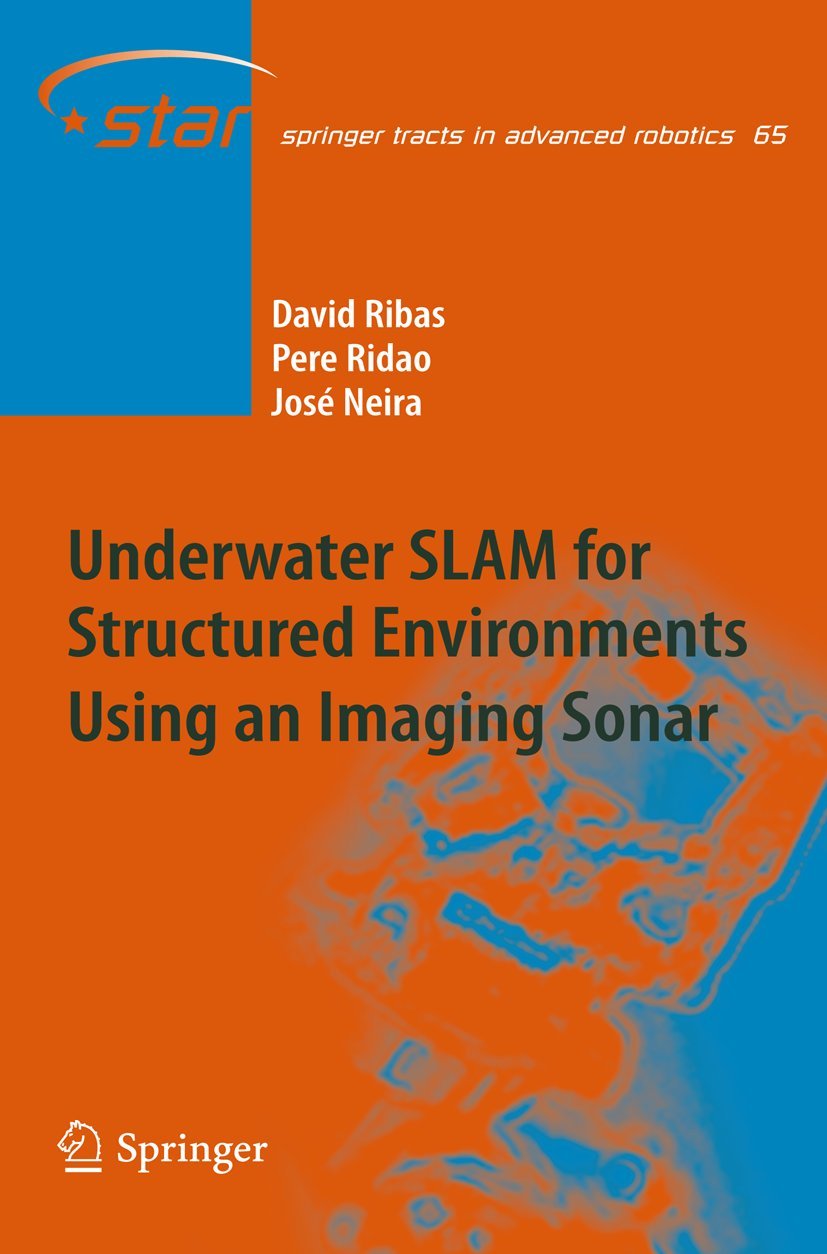
| Title | Underwater SLAM for Structured Environments Using an Imaging Sonar |
| Series | Springer Tracts in Advanced Robotics, 65 |
| Authors | Jose NeiraDavid Ribas |
| Primary focus | Navigation and SLAM for Autonomous Underwater Vehicles |
| Sensor emphasis | Mechanically scanned imaging sonar feature extraction |
| Audience | Researchers, AUV engineers, graduate students |
Our Verdict
Underwater SLAM for Structured Environments Using an Imaging Sonar is a focused, practical resource for professionals and researchers working on AUV navigation in structured underwater settings. It is good value for teams needing sonar-specific SLAM techniques and feature extraction guidance, but it is best used alongside foundational SLAM texts if the reader lacks prior experience.
Frequently Asked Questions
Does this book cover general SLAM theory?
The book concentrates on applied methods for underwater SLAM with imaging sonar and assumes familiarity with general SLAM concepts rather than serving as a general theory primer.
Is the content practical for implementation?
Yes, the emphasis is on techniques and recent research intended to be applied in real AUV navigation and mapping systems.
Which sensor does the book focus on?
The work focuses on feature extraction and SLAM methods specifically for mechanically scanned imaging sonar used on Autonomous Underwater Vehicles.
Editor's Take
A focused, practical resource for researchers and AUV engineers needing sonar-specific SLAM and feature extraction for navigation in structured underwater environments; best paired with foundational SLAM texts if you lack prior experience.

Recently viewed
Recently viewed products will appear here as customers browse the store.