

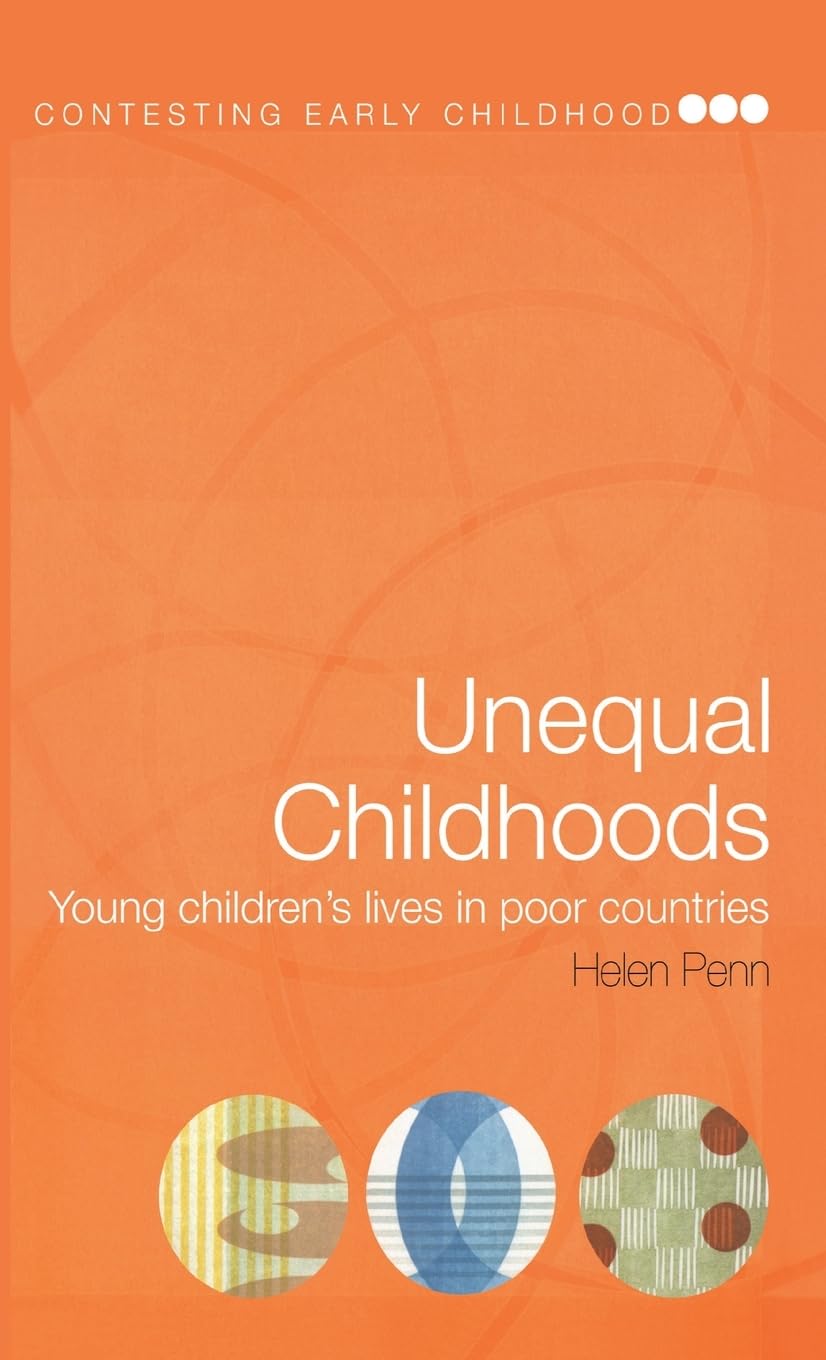
Unequal Childhoods (Contesting Early Childhood) - Comparative Poverty
Unequal Childhoods (Contesting Early Childhood) - Comparative Poverty
Price subject to change. Tap below for current.
Couldn't load pickup availability
In this review of Unequal Childhoods (Contesting Early Childhood), the author Helen Penn explores how childhood poverty is experienced and defined across very different settings. This book is for readers who want a comparative, case-study driven analysis rather than a policy manual; its single biggest reason to buy is the clear presentation of four contrasting contexts that reveal how social, cultural and health factors shape childhood inequality. The review highlights the book's usefulness to educators, researchers and policymakers seeking concrete, place-based evidence about childhood in Kazakhstan, Swaziland, Himalayan India and Brazil.
Key Features
- Comparative case studies: Four detailed country case studies show how childhood poverty varies between a former Soviet republic, a southern African state, Himalayan India and an unequal Latin American nation.
- Contextual analysis: The narrative links local conditions to broader globalising forces, helping readers understand why similar interventions can have different outcomes.
- Focus on definition and recognition: Penn examines how poverty is identified and framed in each setting, which is useful for researchers designing culturally sensitive measures.
- Interdisciplinary perspective: The book draws on social, health and policy dimensions, offering a rounded picture for those studying childhood inequality.
- Accessible case narratives: The writing grounds theoretical points in specific examples, making complex ideas easier for non-specialists to follow.
Who It's For
Academics and graduate students in education, development studies and social policy will find the book a useful comparative resource, especially when researching how local context shapes childhood experience. Practitioners designing programs in low-resource or unequal settings will appreciate the grounded case material that highlights pitfalls in applying one-size-fits-all approaches.
Readers seeking a step-by-step policy handbook or a grid of actionable interventions should look elsewhere; the book is stronger on analysis and description than on prescriptive implementation guidance. It is not a textbook of methods, though it offers valuable conceptual framing for methodological choices.
Pros & Cons
Pros
- Provides clear, contrasting case studies that illuminate the diversity of childhood poverty experiences.
- Connects local realities to globalising trends, aiding broader comparative interpretation.
- Useful for interdisciplinary readers because it integrates health, social and policy perspectives.
Cons
- The book is analytical rather than prescriptive, so readers looking for actionable program designs may find it limited.
Specifications
| Title | Unequal Childhoods (Contesting Early Childhood) |
| Author | Helen Penn |
| Primary focus | Childhood poverty and inequality |
| Case study countries | Kazakhstan, Swaziland, Himalayan India, Brazil |
| Approach | Comparative case-study analysis |
| Intended audience | Researchers, educators, policymakers |
Our Verdict
Unequal Childhoods is a well-argued, comparative study that will repay readers who need grounded examples of how childhood inequality is experienced across diverse contexts. It is good value for researchers and practitioners who want conceptual clarity and concrete case evidence, though readers seeking step-by-step program guidance should supplement it with implementation-focused texts.
Frequently Asked Questions
Does the book cover multiple countries?
Yes; it presents four country case studies: Kazakhstan, Swaziland, Himalayan India and Brazil.
Is this a practical program guide?
No; the emphasis is on analysis and comparison rather than prescriptive program design.
Who benefits most from reading it?
Researchers, educators and policymakers interested in comparative perspectives on childhood poverty benefit most from the book.
Editor's Take
Unequal Childhoods is a comparative, case-study driven analysis that clarifies how childhood poverty differs across diverse settings; recommended for researchers and policymakers who need context-rich evidence rather than program how-to guidance.

Recently viewed
Recently viewed products will appear here as customers browse the store.